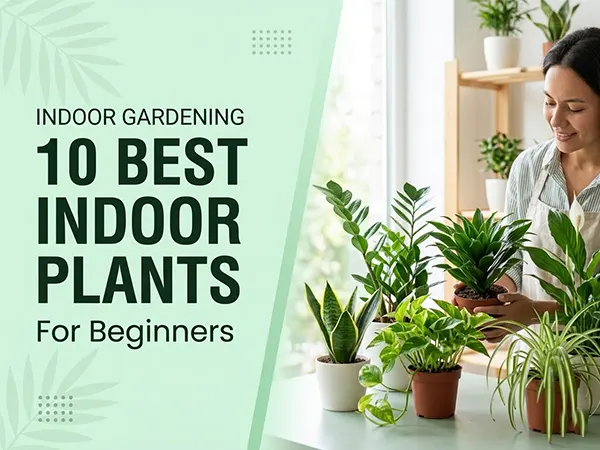
Why indoor plants are worth growing
Beyond aesthetics, indoor plants do something remarkable for your everyday environment. Studies consistently show that being around greenery reduces stress, improves focus, and even helps with sleep. Plants also subtly improve air quality by releasing oxygen and absorbing carbon dioxide. But perhaps the most underrated benefit is the routine they create — a small, daily act of care that grounds you. Once you start, most people find it hard to stop at just one plant.
The 10 best plants for beginners
1. Pothos (Epipremnum aureum)
Pothos is arguably the most forgiving houseplant on the planet. It thrives in low light, tolerates irregular watering, and grows fast enough to keep things exciting. Its trailing vines look stunning on shelves or hanging baskets. If you forget it for two weeks, it’ll droop dramatically — then bounce back completely once you water it.
2. Snake Plant (Sansevieria)
The snake plant is practically indestructible. It stores water in its thick leaves, meaning it’s perfectly fine being ignored for weeks. It tolerates low light, dry air, and inconsistent watering better than almost any other houseplant. It also looks incredibly architectural and modern in any room.
3. ZZ Plant (Zamioculcas zamiifolia)
ZZ plants have thick, waxy leaves and underground rhizomes that store water like a reservoir. You can go three to four weeks between waterings without any drama. They prefer indirect light and are perfectly comfortable in darker rooms where other plants would struggle.
4. Peace Lily (Spathiphyllum)
One of the few flowering plants that thrives indoors with minimal fuss. Peace lilies like shade, moderate watering, and will literally droop to tell you when they’re thirsty — then perk up again within hours. The elegant white blooms are a bonus.
5. Spider Plant (Chlorophytum comosum)
Spider plants are cheerful, fast-growing, and incredibly adaptable. They produce little “spiderettes” that hang off the mother plant — perfect for propagating and gifting. They do well in bright indirect light but can handle lower light conditions too.
6. Aloe Vera
Aloe is both decorative and functional. It stores water in its gel-filled leaves, so it only needs watering every two to three weeks. Keep it in a sunny spot and use a well-draining pot. The bonus: break off a leaf and use the gel directly on minor burns or skin irritation.
7. Rubber Plant (Ficus elastica)
If you want drama, the rubber plant delivers. Its large, glossy leaves in deep green or burgundy make an instant statement. It likes bright indirect light and only needs watering once the top inch of soil dries out. Wipe the leaves occasionally to keep them shiny and dust-free.
8. Chinese Evergreen (Aglaonema)
Chinese evergreens come in a stunning range of colors — from deep green to pink and red — and they’re incredibly tolerant plants. They adapt to low light and irregular watering, making them ideal for offices or rooms with small windows.
9. Heartleaf Philodendron
This fast-growing trailing plant looks similar to pothos but has heart-shaped, matte green leaves. It’s a reliable grower that thrives in indirect light and only needs water when the top of the soil feels dry. It’s one of the most satisfying plants for beginners because it visibly grows week by week.
10. Cast Iron Plant (Aspidistra elatior)
True to its name, this plant is almost impossible to kill. It tolerates deep shade, cold drafts, infrequent watering, and neglect. It grows slowly, but its deep green strap-like leaves stay consistently lush and elegant year-round.
Basic care tips for beginner plants
The most common mistake beginners make is overwatering. Most houseplants die from too much love, not too little. A good rule of thumb: push your finger an inch into the soil — if it still feels damp, wait a few more days. Beyond watering, pay attention to light. Read the label or research your specific plant, and place it where it’ll actually get the light it needs. Use a pot with drainage holes so roots never sit in standing water. Feed your plants with a balanced liquid fertilizer once a month during spring and summer, and skip feeding entirely in winter when growth slows.
Common mistakes beginners make
Overwatering is the biggest killer of houseplants, but it’s not the only one. Using pots without drainage holes traps moisture and leads to root rot. Placing shade-loving plants in harsh direct sun scorches their leaves. Repotting too soon can stress a plant that was perfectly comfortable in its current pot. And misting leaves excessively can encourage fungal issues, especially in low-airflow rooms. The good news: most of these mistakes are easily avoided once you know to look out for them, and even if you slip up, many plants will forgive you.
Where to buy your first plant
Local garden centers and nurseries are the best starting point — you can inspect the plant in person, ask staff for advice, and see exactly what you’re getting. Big box stores like Home Depot and Walmart often stock beginner plants at lower prices, though selection varies. Online retailers like The Sill, Bloomscape, and Etsy shops ship healthy, well-packaged plants directly to your door. If you’re on a budget, ask friends or neighbors — propagated cuttings are often free and already come with care tips from someone who grows the same plant.