

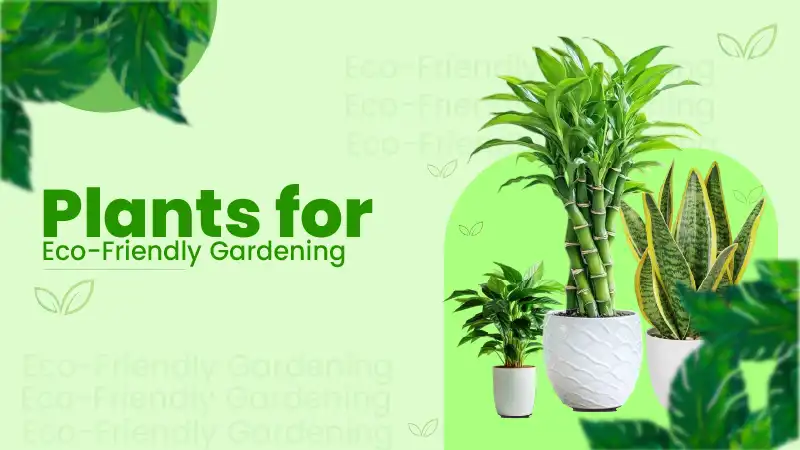
Watering plants every day can feel tiring, especially during hot summers. That is why I started exploring low-water plants for eco-friendly gardening. They are easy to maintain and can easily keep any indoor or garden space fresh and lively.
In this article, I am going to guide you on low-water planting that calls for less maintenance and attention but provides you with clean air and green surroundings.
What are Low Water Plants? Key Traits of These Species
Low-water plants need less water to thrive compared to other plants. They adapt naturally to conserve water and are heat-resilient. These plants are low-maintenance, resilient, and cost-effective. Being drought-tolerant, these plants usually store moisture in their leaves, stems, or roots.
I find them perfect for eco-friendly gardening because they save water, require minimal attention, and can even thrive in dry indoor or outdoor conditions.
Key Traits of Low Water Plants
Plants that can survive on less water are also known as xerophytes in scientific language. There are some key traits for low-water plants that help them to store water and adapt accordingly to conserve water. Some plants can even grow in dry conditions.
- Deep and Wide Roots: Low-water plants have deep and wide roots that help the plants to absorb water from deep into the soil that makes them, so they can survive easily with less water.
- Thick and fleshy leaves or stems: Some plants store water in their stems or leaves, which helps them to grow healthy with less water.
- Small Leaves: Some plants, like cacti, have small leaves. It reduces the surface area, which leads to less water loss.
- Lower Water Requirement: Once the plants grow bigger, they start to store water, which leads to a lower water requirement.
- Slow Growth Rate: These plants have a slow growth rate compared to other common plants. Since they survive on a lower water requirement.
How are Low-Water Plants Beneficial in Eco-Friendly Gardening?
Here are a few reasons why some drought-tolerant, low-water plants are beneficial in eco-friendly gardening.
- Helps conserve water by needing less frequent watering.
- Thrives well in dry and hot climates, being resilient.
- Can help save money on water bills.
- Can naturally improve indoor conditions.
- Perfect for busy or beginner plant lovers.
One of the primary reasons I recommend succulents to all homeowners is how effortlessly they can be managed.
New, low-water-growing plants need regular water and proper attention for the first or second year to establish strong and deep roots, but once they mature, their needs for maintenance and water are reduced.
Top 10 Low Water Plants For Your Garden Space
Now let’s look at the names of plants that are drought-tolerant. So, you can select according to your preference:
1: Snake Plant
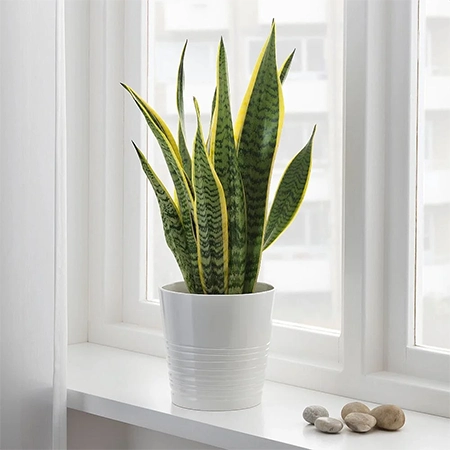
There is no denying the fact that the Snake Plant tops this list. It is a low-maintenance, drought-tolerant plant that can easily thrive in any indoor environment. They can survive without water for weeks and are adaptable to both bright and low-light areas.
| Botanical Name | Dracaena trifasciata |
| Native Region | Tropical West and West Central Africa |
| Hardiness Zone | 9-11 USDA |
2: Ponytail Palm
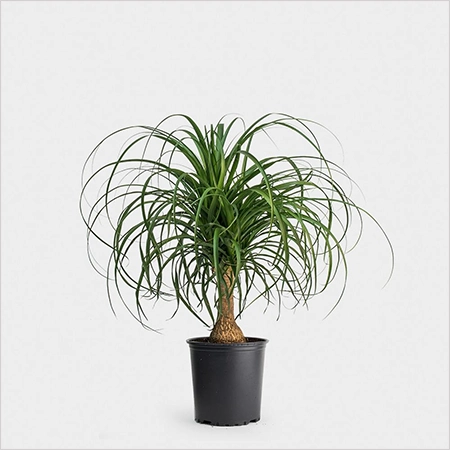
The Ponytail Palm is a stylish, low-water plant known for its swollen trunk that stores moisture for long periods. I love how it thrives with minimal watering, making it perfect for busy plant lovers, drought-tolerant areas, and sunny balconies. It can also be used as a stunning indoor plant, giving your space a tropical touch.
| Botanical Name | Beaucarnea recurvata |
| Native Region | Eastern Mexico |
| Hardiness Zone | 9-11 USDA |
3: Aloe
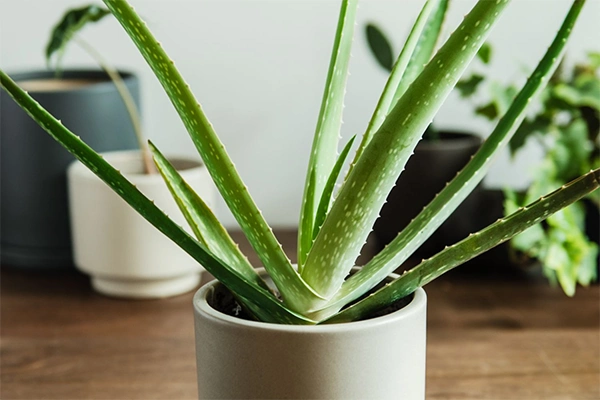
Aloe is widely appreciated for its spiky, plump leaves and is a hardy, low-water succulent plant. The genus is perfect for dry indoor spaces and can also be placed near any sunny window. It is beginner-friendly, and because it can store water, it can survive for long periods with very little care.
| Botanical Name | Aloe barbadensis Miller |
| Native Region | Sub-Saharan Africa, Arabian Peninsula |
| Hardiness Zone | 9-11 USDA |
4: Burro’s Tail
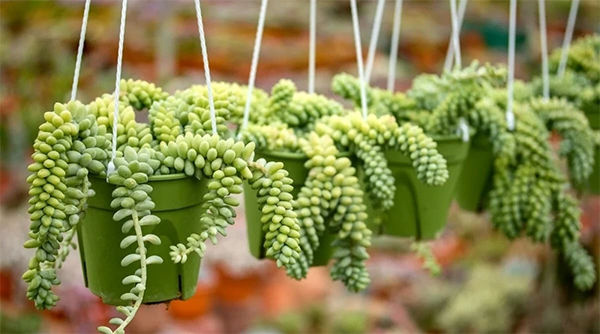
Burro’s Tail is an easy-to-care-for, low-water plant known for its trailing gray-green stems bearing blue-green leaves. I love using it in hanging baskets because it can tolerate drought conditions well, needs minimal watering, and adds a cascading look to my balcony garden.
| Botanical Name | Sedum morganianum |
| Native Region | Southern Mexico and Honduras |
| Hardiness Zone | 10-11 USDA |
5: Sago Palm
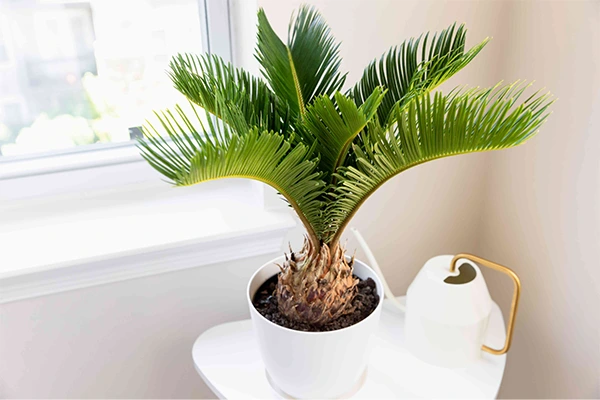
Sago Palm is a slow-growing, low-water plant admired for its feather-like leaves and tropical appearance. I like how it handles dry conditions once it is fully grown, and it can be an ideal addition for sunny patios, xeriscaping, and indoor decor with very minimal maintenance required.
| Botanical Name | Cycas revoluta |
| Native Region | Southern Japan |
| Hardiness Zone | 9-11 USDA |
6: Pothos
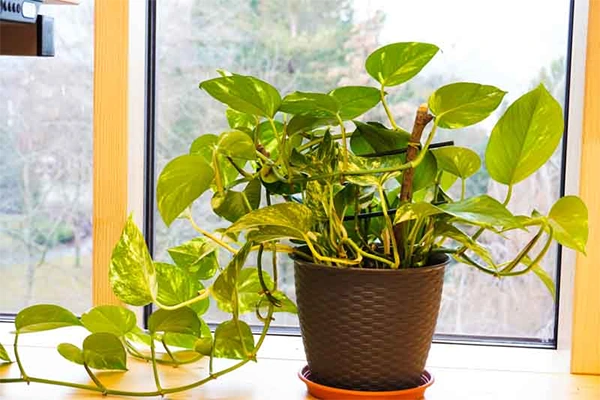
Pothos is a popular flowering plant for home gardens and is a versatile, drought-tolerant plant loved for its trailing vines and heart-shaped leaves. It is extremely easy to grow, adapts well to indoor conditions, and can survive with minimal watering. This plant is mostly used for decor in offices or living spaces.
| Botanical Name | Epipremnum aureum |
| Native Region | Solomon Islands |
| Hardiness Zone | 10-12 USDA |
7: Haworthia
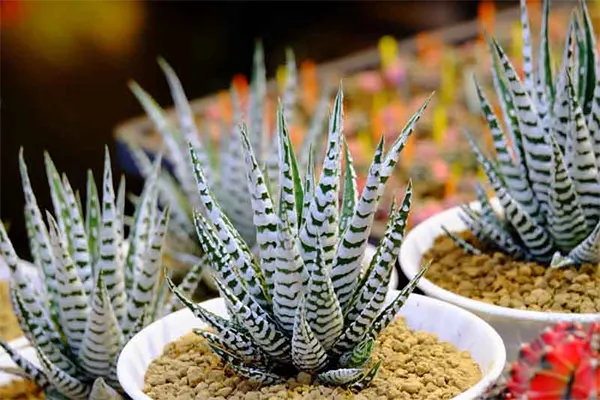
Better known as the Zebra plant, Haworthia is one of the most easily maintained low water succulent, admired for its white-striped leaves. It is a fascinating indoor species and needs very little watering. The species can tolerate drought conditions and can be easily grown in areas with partial shade.
| Botanical Name | Haworthia spp. |
| Native Region | South Africa |
| Hardiness Zone | 9-11 USDA |
8: Cast Iron Plant
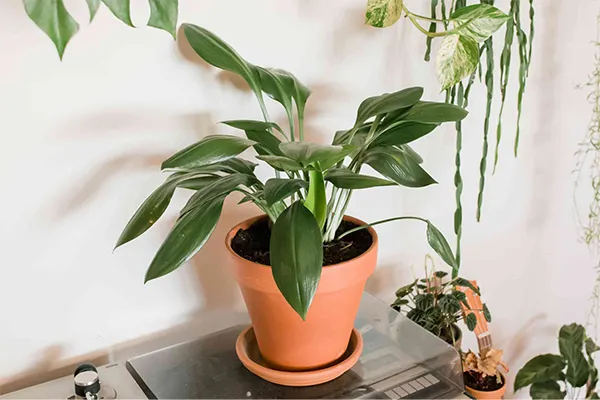
The Cast Iron Plant is often known as an indestructible species. If you have struggled to keep your houseplants alive, this durable, low-water plant is all you need. I find it perfect for beginners because it requires minimal care and can grow steadily even in low-light areas. This is typically planted in outdoor gardens as its leaves can grow tall and droopy.
| Botanical Name | Aspidistra elatior |
| Native Region | Japan and Taiwan |
| Hardiness Zone | 7-11 USDA |
9: Ox Tongue
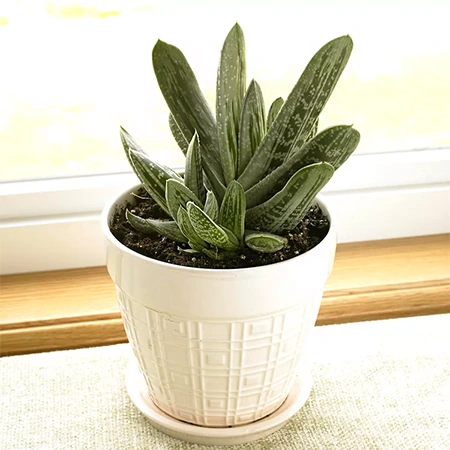
Ox Tongue is a hardy, rough-textured, low-water succulent known for its thick tongue-shaped leaves with spotted patterns. I like growing this plant indoors because it can store water efficiently, tolerates drought well, and can thrive with even minimal care. You can place the container in any sunny spot, and you are good to go.
| Botanical Name | Gasteria spp. |
| Native Region | South Africa |
| Hardiness Zone | 9-11 USDA |
10: ZZ Plant
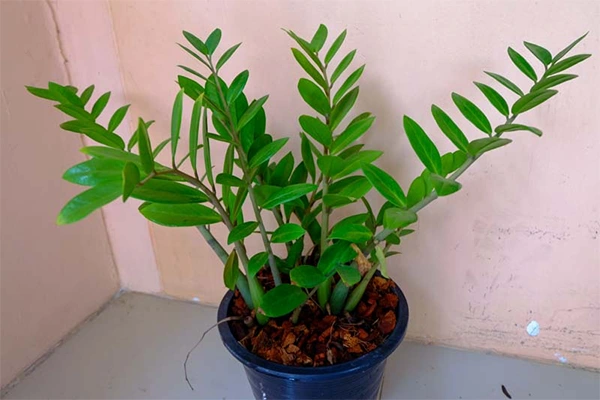
Prized for its glossy, dark green leaves, the ZZ plant is a low-maintenance succulent. You will be amazed at how it survives with minimal watering, adapts to low-light areas, and remains flourishing for long periods with effortless indoor care. They can grow three feet tall and wide and can make any garden space enigmatic.
| Botanical Name | Zamioculcas zamiifolia |
| Native Region | Tropical Eastern Africa |
| Hardiness Zone | 9-11 USDA |
Indoor and Outdoor Plants That Require Less Water
Low-water plants can be grown in different spaces, depending on the sunlight and growing conditions each plant prefers. Some of the plants listed above are better suited for the indoors, while others grow well outdoors. Choosing the right location based on each plant’s growing requirements can help it grow with minimal watering.
Best Low-Water Indoor Plants
These plants are generally suitable for indoor spaces and can be watered less often:
- Snake Plant
- Pothos
- ZZ Plant
- Cast Iron Plant
- Haworthia
Best Low-Water Outdoor Plants
These plants are suitable for outdoor gardens, a balcony, or for bright, sunny spots:
- Aloe
- Ponytail Palm
- Sago Palm
- Burro’s Tail
- Ox Tongue
Low-water plants still need some watering every once in a while. They may need more water in different conditions, including different climates, different types of soil, and indoors or outdoors.
Remember: Do not forget to water your plants properly for the first year to make sure they grow deep roots to thrive with less water. Once mature, they need less water and attention.
Planting Techniques for Low-Water Crops
Even for drought-tolerant plants, planting techniques are important. You need to prepare your garden well so that the plants can thrive and flourish. People often think that low-water plants do not need attention or water at all. However, it is not true. Proper planting and watering are required.
- Prepare Soil: First, start with the soil. Proper soil, according to the needs of the plant, is the foundation for them to grow. The soil must have a proper pH level. It must be fertilized and have vital nutrients and minerals. If the soil is barren, no matter how much effort you put in, plants will not survive.
- Purchase organic seeds: “Organic seeds” means that they are free from any chemical treatment and are healthy.
- Do proper mulching: Mulching means covering the soil surface around the plant so that the soil retains water and does not dry quickly. Mulching can be done with dry leaves, bark, wood chips, or stones on the soil.
- Water Wisely: Even though these plants need less water, in the initial days of planting, for one or two seasons, the need for proper and wise watering is crucial. Watering during early morning or late evening helps the plants to absorb it better. Water is necessary to grow deep roots in the soil, but do not overwater them at any time.
Quick Tip: You can also do rainwater harvesting and use that water. This is a very eco-friendly way to irrigate your plants and garden.
- Use Drip Irrigation: Since they need less water, do not misunderstand it as needing no water at all. To reduce your work and save water. Install drip irrigation; it helps to provide water to the plants in less quantity and also conserves the water supply. Other than this, this technique also maximizes efficiency.
- Companion Planting: Group plants together in one place with the same needs. It makes your garden responsibilities easy to handle, and plants can grow healthy and strong.
- Right Spot for the Plants: Select the right spot for them to have proper air and sunlight. Not only direct bright sunlight, but partial sunlight can also work. Sometimes direct sunlight can harm the growth of the plants; it is essential to keep the balance.
- Fertilizers: These plants do not need much fertilizer. Once a year, add fertilizer or compost manure to the soil. Make sure to keep the balance.
- Organic Pest Control: It is vital to control pests. To do this, the best option is to spray neem water or handpick the caterpillars and put them away in soapy water.
Factors to Keep in Mind for Drought-Tolerant Plants
Now, there are some concerns related to drought-tolerant planting that need to be understood for better plant health.
- Soil Condition: Soil condition should not be more acidic, hard, or sandy. Sandy soil drains water quickly, and hard soil does not allow roots to grow deeply into the soil. You can go to your local soil center to check the condition of the soil or use online services.
- Water Conditions: Some drought-tolerant plants need proper watering in the early days of growth. On the other hand, some plants are needed even after that, but it is still less compared to the common crops.
- Mulching: This is an essential requirement to remember. Mulching the soil around the plants helps to keep the soil moist. It benefits the growth of the cultivated plants.
- High Temperature: In high temperatures, some drought-tolerant plants tend to lose more water, and their growth gets hampered. So, choose the right place with partial sunlight that boosts the growth and does not allow water loss.
- Weed Management: Like every other plant, it needs weed management. Weeds absorb all the nutrients of the soil and the growing plant. From time to time, it is necessary to scrape out the weed.
- Slow Growth Rate: These plants have a slow growth rate as they conserve water. This slows down their natural process of photosynthesis. Thus, they grow slowly and remain small in size. That’s why most of the plants are herbs or shrubs. For example: tomatoes, lemongrass, etc.
Conclusion
Now, it’s time to sum up. I have shared my experienced views on low-water plants for eco-friendly gardening. This practice is simple and water-saving.
If you love gardening but do not have much time to invest, then these low-water plants are for you. Like every other plant, it demands initial care. However, later on, they need far less attention than common crops. They also make your surroundings greener and cleaner. It is a smart and wise choice to make by choosing water-saving plants.
Which plant needs the least watering?
Sago Palm, Pothos, Ponytail Palm, ZZ Plant, Aloe, and Ox Tongue are some examples of low-maintenance and drought-tolerant plants.
How do plants avoid water loss?
Low-water plants have natural key traits that prevent water loss, such as thick, waxy skin; small leaves; tiny pores (stomata); and fleshy stems.
Are there any low-water vegetable or fruit plants?
Yes, there are low-water vegetable and fruit plants such as eggplant, pomegranate, amla, okra, sweet potatoes, grapes, tomatoes, pole beans, corn, etc.
Why not water these plants in the morning sunlight?
It is not a good option to choose because in the morning, the sunlight evaporates water quickly. This process stops the water from being absorbed in the soil for the plants to grow, which leads to disrupting the healthy growth. Early morning or late evening is the best time to water the plants.
Why is soil considered the foundation of gardening?
Soil is considered the foundation of gardening because healthy soil determines the growth. It must have a proper pH value and vital minerals and nutrients for the plants to flourish. Too sandy soil will lose water quickly, and hard soil will not allow the roots to grow and go deep inside the soil.