

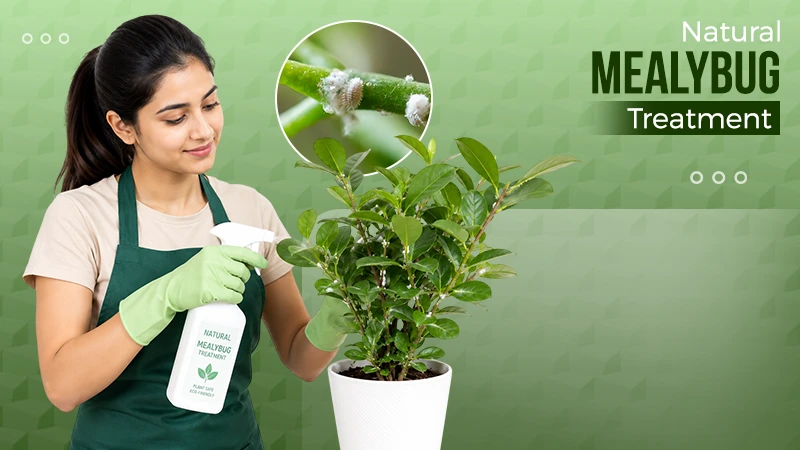
Maintaining a garden is a rewarding process, but pests on flowering plants can be a hassle and affect the health of the garden. In my journey as a gardener, mealybugs are one pest infestation that I have struggled with, precisely because they are quite difficult to get rid of and spread way too quickly; hence, it is important to act as soon as possible.
If you are also struggling to protect your plants from mealybugs, come along and dive in to explore the Natural mealybug treatment, along with some prevention measures.
Quick answer
The natural mealybug treatment involves using warm water and isopropyl alcohol on the leaves of the plant. These sap-sucking pests suck the protein and essential nutrients out of the plant and make it wilt, causing stunted growth, which is hard to get rid of, but with appropriate measures, the plant’s health can be revived easily.
What is a Mealybug?
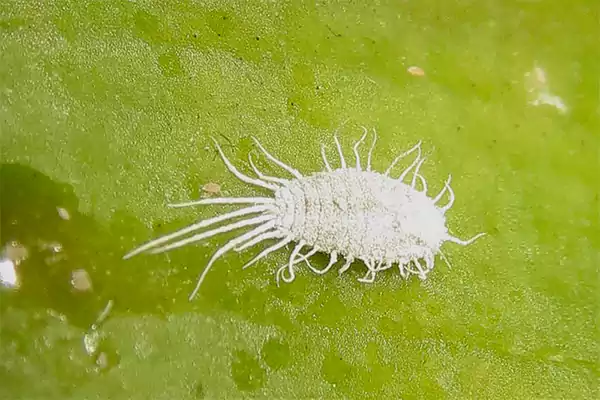
Mealybugs are considered sap-sucking insects with a white body that is covered with a waxy coating that is supposed to protect them from heat. These pests are extremely popular in houseplants and appear, generally, during spring and summer and leave a wax-type residue on the plants.
The mealybugs feed on the leaves and sometimes roots of the plants, causing yellowing of foliage and stunted growth. While they are small in size, it can be a little difficult to get rid of these pests as they spread quite easily.
Worry not, the next part of the article discusses some easy and reliable ways to get rid of the maleybugs.
How to Kill Mealybugs on Plants? Fast and Organic Solutions
Ideally, rubbing alcohol is the best way to treat mealybugs at home with minimal equipment and works better than anything else.
While pest infestation can make many gardeners anxious, especially newbies, let me tell you there is a lot of damage control that can be done if you act right away.
Take a look at these easy natural mealybug treatment:
1. Isopropyl Alcohol
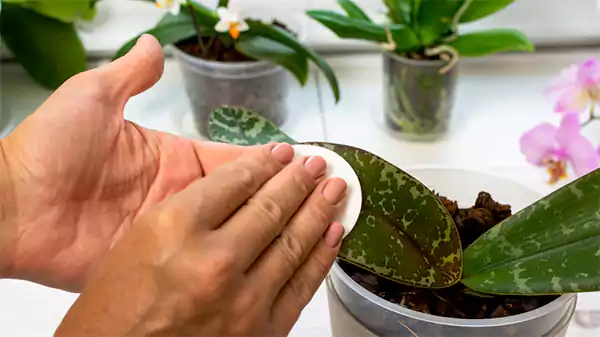
- Rubbing alcohol is the most effective way to get rid of mealybugs.
- Take a cotton pad and put the isopropyl alcohol solution on it, and remove the bugs manually.
- Note that rubbing alcohol is a specific solution created for pest treatment, and anything other than that sold with the same name may harm the plant.
2. Neem Oil
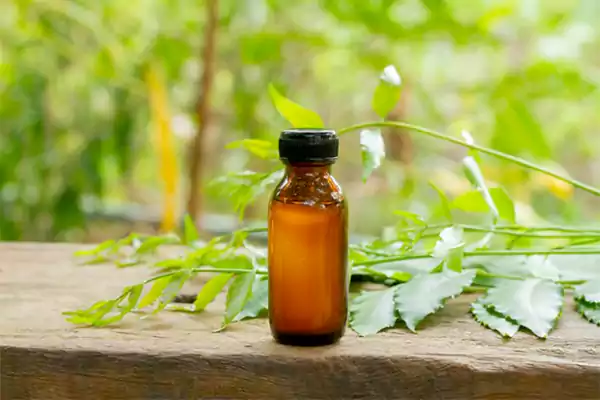
- The Neem oil solution is one of the oldest pesticides in the gardening world.
- For mealybugs, take 1 tablespoon of neem oil per 1 litre of water and add a soap solution to it.
- Mix well and spray gently on the plant, but make sure to do a patch test before applying it.
- This process requires you to repeat the same steps for a few weeks for it to work, and therefore, repeat until all the mealybugs are gone.
3. Spray Warm Water
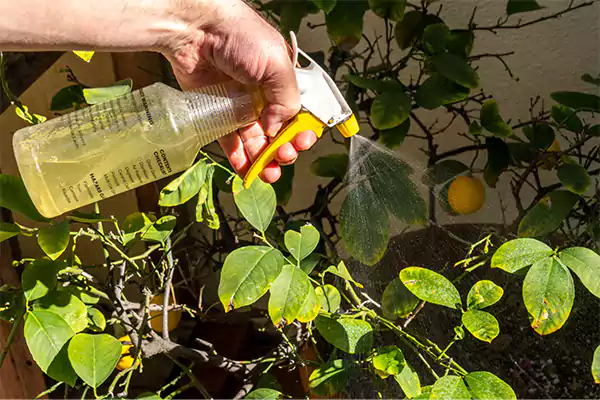
- Spraying warm water on the leaves of the plants is another effective natural mealybug treatment, but it only works if the infestation is significantly less.
- Also, do not use boiling hot water; it can burn the leaves.
If the infestation is mild, prune the infected plant immediately and discard the infected plant before it spreads to other parts of the plant.
4. Insecticidal Soap
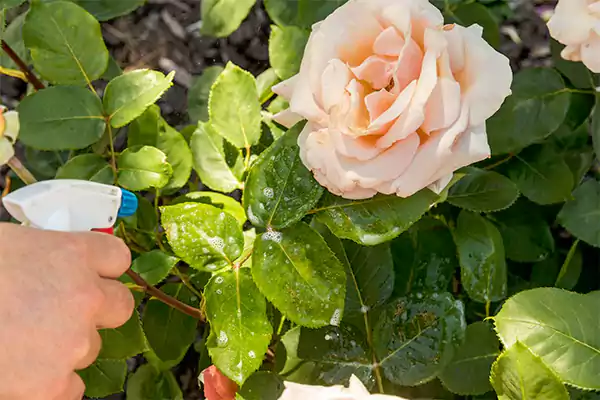
- Another commonly used treatment for pests is insecticidal soap.
- Take 1 tsp of soap solution and 1 gallon of water; mix well and spray on the affected area.
- Repeat this process weekly with the neem oil until the mealybugs completely disappear.
5. Chemical Pesticides
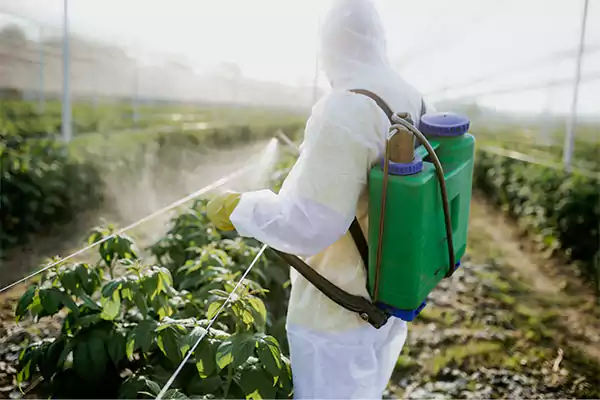
- Chemical pesticides for me are the last option because the mealybugs have a protective layer of wax which prevents these chemical pesticides from working.
- Choose the ones that are made and used for mealybugs only because there is a high chance that your plant might be harmed by them.
- Use them only if none of the options have worked for you because chemicals are generally not safe for plants and cause further damage. While using it as well, read the instructions carefully to avoid going overboard, which can burn the plant.
6. Introduce Predator Insects
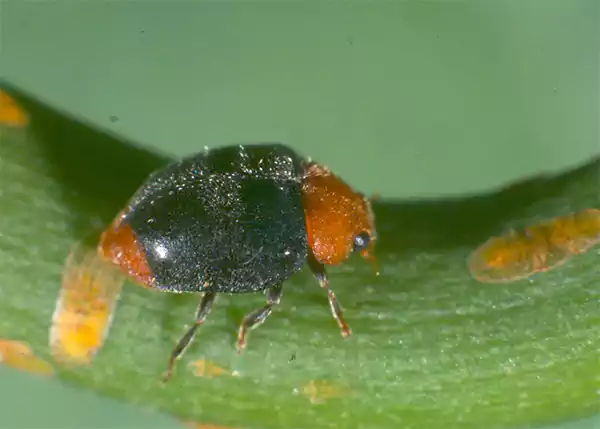
- The most natural way of dealing with mealybugs is to introduce predator insects like ladybird beetles (mealybug destroyers), pirate bugs and lacewings, which prey upon mealybugs.
- Just grow the host plant that attracts these predator insects, and you are good to go.
- Although really effective, these work for mild to low infestations, as they take a while to work and are best for greenhouse or outdoor planting.
Patch test
A patch test is used to analyse if the used solution is perfectly diluted or not.
Take the solution and spray it on the leaves. If, within 2 hours, it turns dull, the solution needs further dilution; otherwise, it is perfect.
Different Types of Mealybugs
Different mealybugs feed on different host plants, which are differentiated on the basis of their physical appearance and the plant they feed on.
Take a look at this table for a better analysis of the different types of mealybugs:
| Name | Image | Description |
| Citrus mealybug | 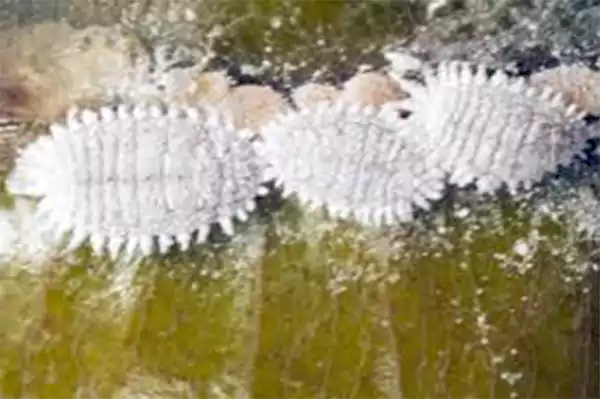 |
|
| Long-Tail Mealybug | 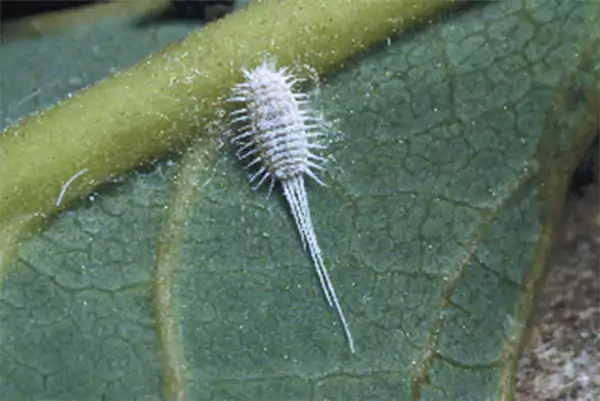 |
|
| Grape Mealybug | 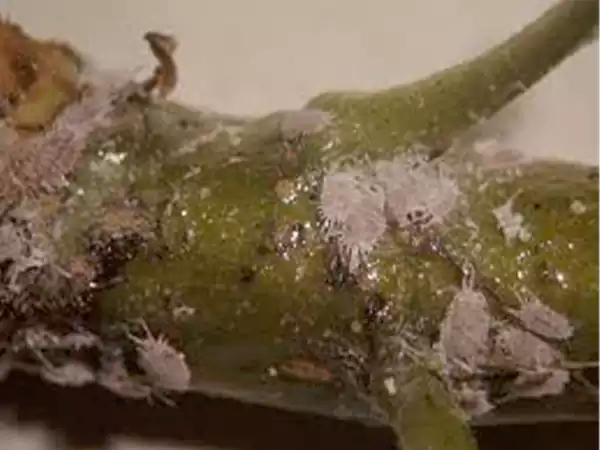 |
|
| Root Mealybug | 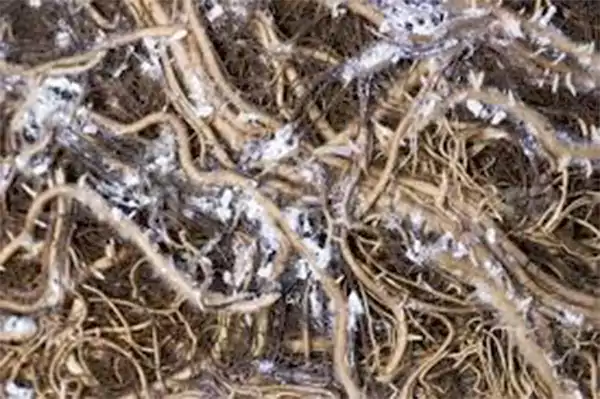 |
|
What are the Symptoms of Mealybugs in Plants?
Treating the mealybugs is of no use if they are not spotted early on. Sometimes, it is too late for gardeners to act, and the plant is already dead.
A mealybug infection shows some very prominent signs, which can help you treat it before it infects the neighbouring plant as well.
- You can spot the flowers and the leaves of the flowers losing their colour, and that is the first sign of a mealybug attack.
- There are also spotted egg sacs, which are basically white, cotton-like things on the leaves, which are a sign of pest infestation.
- Another prominent sign of mealybugs on outdoor plants is the curling up of leaves and imperfect corners, and that is because the mealybugs suck the protein out of the plant, which causes it to turn yellow and wilt.
- If your plant is flowering way less than it should, that is also a symptom of mealybug infestations.
How to Prevent Mealybugs From Affecting Plants?
Prevention is better than cure, and that is why it is significant that you take appropriate care steps while growing your green plants so that the chances of a mealybug attack are reduced.
Take a look at these basic care tips, which will help you maintain the health of a plant and prevent pests from infecting it:
- Do not overwater the plants, as waterlogged soil is prone to rot, and mushy soil can attract a variety of pests, including mealybugs.
- Avoidover-fertilizing, as going overboard with plant food, especially nitrogen-rich fertilizer, can make the plant prone to mealybugs.
- Inspect the plant regularly for any possible infections and isolate it as soon as possible.
- Treat in the early stages of the pest infestation, for instance, with warm water; otherwise, the last step usually is chemical pesticides, which are not good for the overall plant health.
Concluding Remarks
Mealybugs are troublesome, and removing them can feel like a lot of work. While initially I thought treating them was really expensive and difficult, more exposure and practice led me to some rather simple and natural mealybug treatment.
Rubbing alcohol is one of my most used solutions for these white, waxy pests, but I use warm water spray the moment I spot a mealybug on my plants.
Make sure you spot and observe before you act, and use solutions according to the degree of infection.
What naturally kills the mealybugs?
Depending on the intensity of the infestation, neem oil and rubbing alcohol with soap solution are the easiest remedies for killing mealybugs.
Does neem oil work effectively for the mealybugs?
Yes, neem oil with 1 litre of water works perfectly for the mealybugs. Ensure you spray the solution regularly until the infestation disappears.
How to make the homemade solution for mealybugs?
A homemade solution for mealybugs is a neem oil and soap solution mixed with water, which works perfectly for the mealybugs.
How to spot a mealybug infestation?
The first and most prominent sign of mealybug infestation is the discolouration of the leaves. The moment your leaves turn dull, there is most likely an underlying infection needing attention.
Can overfertilizing attract mealybugs?
Yes, overfertilizing can attract mealybugs towards the plants. Hence, always feed the plant according to its needs.
- Mealybugs– BBC Gardeners’ World
- Hot water treatment and insecticidal coatings for disinfesting limes of mealybugs (Homoptera: Pseudococcidae) – NCBI
- Mealybugs – NC State Extension