

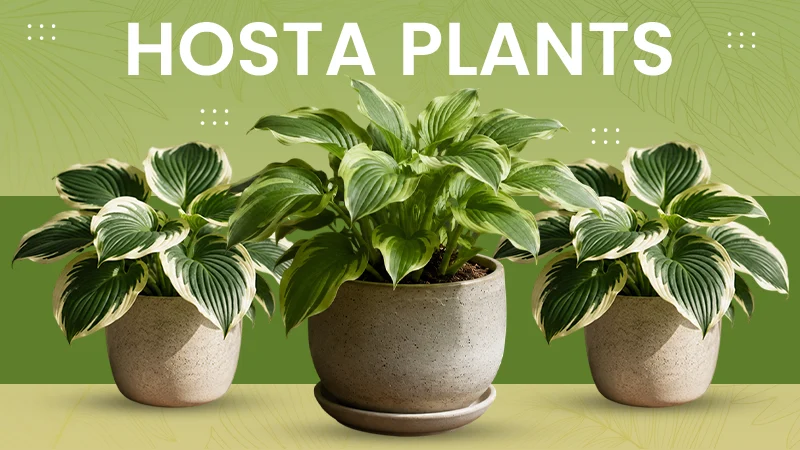
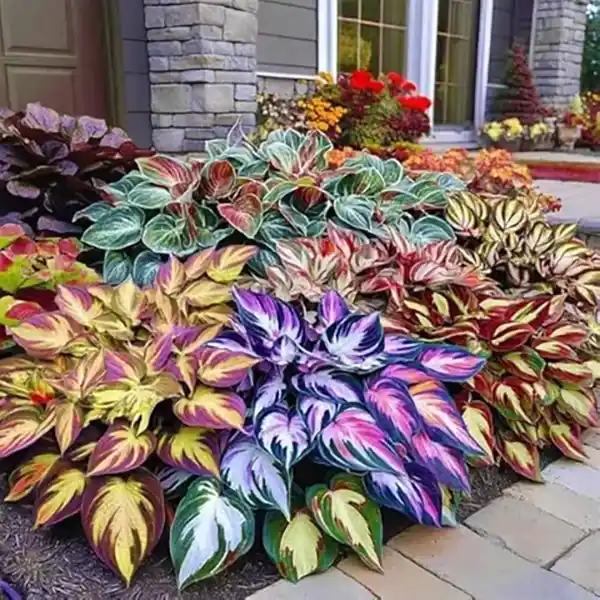
Hosta or Plantain Lily is a clumping Herbaceous perennial and is native to Russia, China, Japan, and Korea. The plant has around 40 species and many cultivars with unique needs and attributes. It is an easy-to-grow plant and requires low maintenance. They can easily be grown in pots on a shaded verandah or shady borders.
Hosta plants have flower scapes which appear in summer, bearing clusters of trumpet-shaped flowers in various hues of pink, white, purple, or lavender. It offers foliage of shades varying from green, blue, white, and purple.
To know more about hostas, read the article below, where I have discussed plant taxonomy, ideal growing conditions, care tips, and much more.
Taxonomy and Ideal Growing Conditions For Hosta Plant
Hostas are hardy plants grown for their aesthetic foliage, which comes in different sizes, colours, and textures. For more general information, here is the taxonomic overview and ideal growing conditions of the plant-
| Botanical name | Hosta |
| Kingdom | Plantae |
| Order | Asparagales |
| Family | Asparagaceae |
| Subfamily | Agavoideae |
| Genus | Hosta; Tratt., conserved name, not Jacq. (syn of Cornutia in Lamiaceae) Nor Vell. ex Pfeiff. (Primulaceae) |
| Characteristic | Showy |
| Hardiness | 3 to 9 USDA zone |
| Light Requirements | Bright, direct sunlight |
| Maintenance | Low |
| Plant type | Perennial |
| Foliage colours | Green, white, blue, gold, chartreuse, and variegated patterns |
| Soil | Well-drained, rich soil. |
| Water Requirements | Hosta Plants require regular watering as they prefer moist soil. Note- do not overwater the plant as it can cause root rot. Also, do not let the soil dry completely, as it can kill the plant. |
| Mature size | 4 ft. tall and 6 ft. wide |
| Fertilizers | The Hosta Plants are not heavy feeders. You can fertilise the plant in early spring. Apply a granular all-purpose time-release fertiliser. |
| Native area | Northeast Asia, specifically China, Japan, Korea, and Russia |
Popular Varieties of Hosta Plant
Hosta plants have around 40 species. Here is the list of the most popular varieties of hosta plants with their description.
| Plant | Description |
H. fortunei ‘Aureomarginata’ 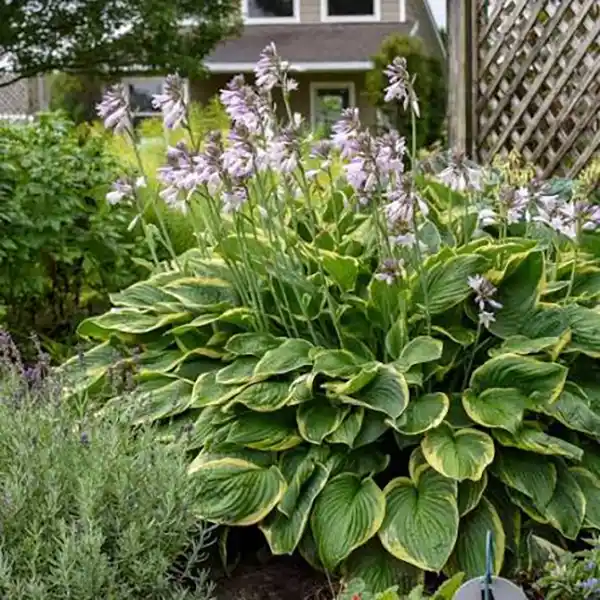 | This plant has deep green oval leaves with a golden edge. The plant grows 12 to 18 inches tall and 18 to 24 inches wide. |
H. x ‘Blue Cadet’ 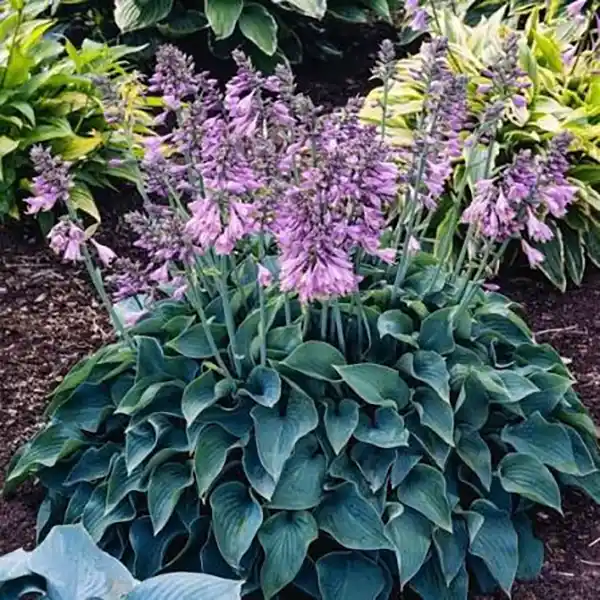 | Blue cadet is a medium hosta with heart-shaped, blue-green leaves. The plant grows about 10 to 16 inches tall and 2 to 3 ft. wide. |
Shadowland ‘Autumn Frost’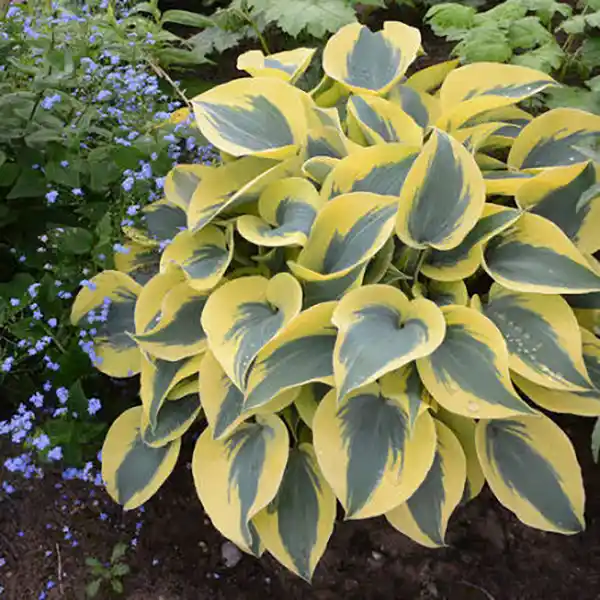 | Shadowland ‘Autumn Frost’ is known for its striking frosty blue leaves with bright yellow margins. The plant grows about 12 to 18 inches tall and 16 inches wide. It thrives best in part to full shade and produces lavender flowers in midsummer. |
Shadowland ‘Empress Wu’ 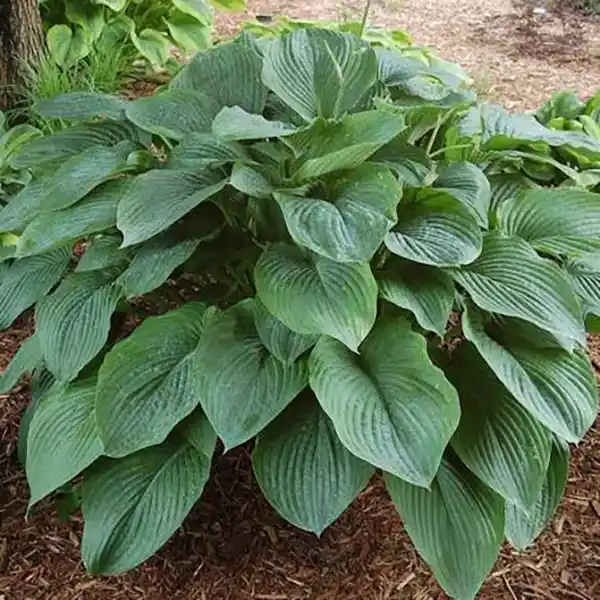 | Shadowland ‘Empress Wu’ is the largest hosta variety. It grows up to 4 ft. tall and 5 to 6 ft. wide. The plant produces deeply-veined leaves. Dark green coloured leaves and tall spikes of pale violet flowers in early summer. |
Shadowland ‘Diamond Lake’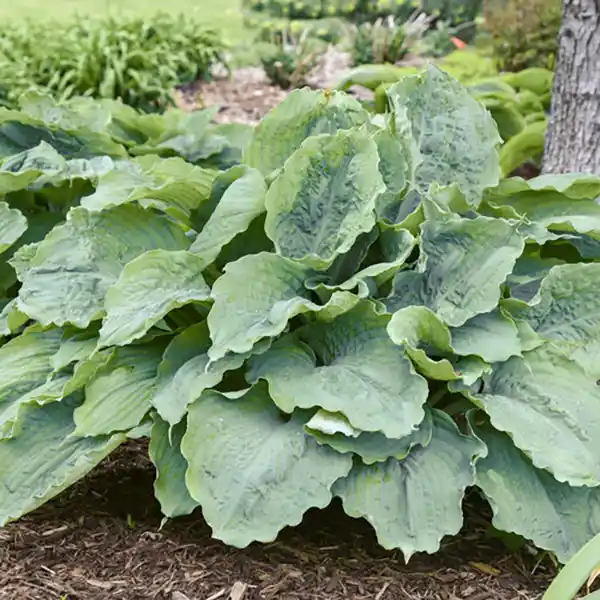 | Shadowland ‘Diamond Lake’ is a low-maintenance shade perennial plant known for thick, heavily corrugated blue leaves and wavy margins. The plant grows around 2 ft. tall and 4 ft. wide at maturity. |
Shadowland ‘Etched Glass’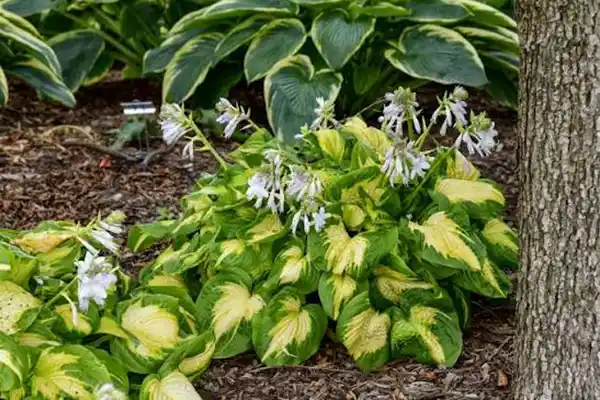 | Shadowland ‘Etched Glass’ hostas is a hybrid plant. It has wide leaves with dark green margins contrasted with bright yellow. This plant thrives best in partial shade and light. |
Shadowland ‘Seducer’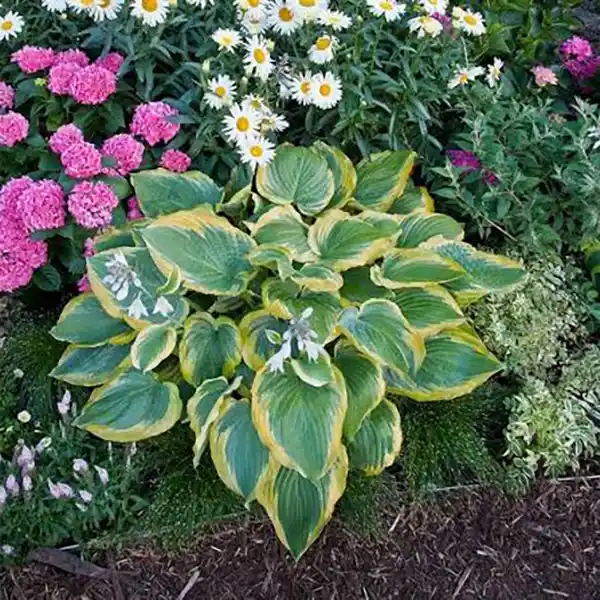 | Shadowland ‘Seducer’ hostas is a premium large herbaceous perennial. It is known for its highly textured and ruffled leaves. The plant grows around 30 ft. tall and 36 ft. wide. |
How to Grow a Hosta Plant?
The hosta plant is an easy-growing plant. Here are a few simple steps you need to follow:
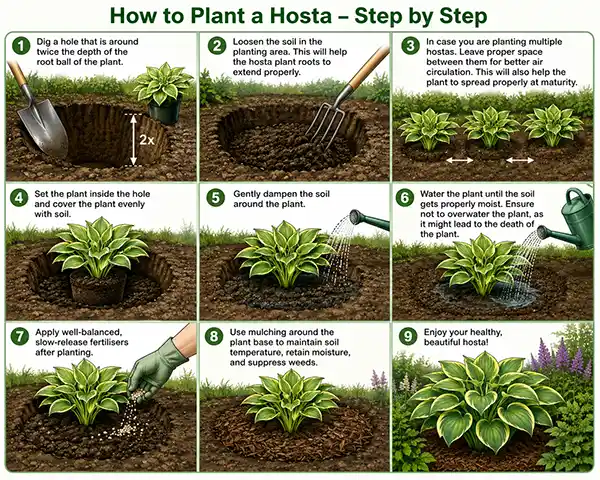
- Dig a hole that is around twice the depth of the root ball of the plant.
- Loosen the soil in the planting area. This will help the hosta plant roots to extend properly.
- In case you are planting multiple hostas. Leave proper space between them for better air circulation. This will also help the plant to spread properly at maturity.
- Set the plant inside the hole and cover the plant evenly with soil.
- Gently dampen the soil around the plant.
- Water the plant until the soil gets properly moist. Ensure not to overwater the plant, as it might lead to the death of the plant.
- Apply well-balanced, slow-release fertilisers after planting.
- Use mulching around the plant base to maintain soil temperature, retain moisture, and suppress weeds.
Ideal Caring Tips for a Hosta Plant
Hostas live long under the right conditions and with proper care. Here is the list of some important care tips for the hosta plant:
- Use well-balanced, slow-release fertiliser after planting and every spring to keep the plant growing.
- Keep the soil moist but not soggy.
- Water the hosta twice a week or whenever the soil starts drying. Do not let the soil completely dry, and also do not overwater the plant, as it can cause root rot or fungal disease.
- In case the soil dries out quickly, use organic mulch like dry leaves on the plant base to retain soil moisture. Mulching is also helpful in maintaining soil temperature.
- Remove flower stalks after bloom to ensure new growth.
Common Pests and Problems Associated With the Hosta Plant?
The common pests that can attack your hostas plants are slugs and snails. If you notice any irregular holes on the plant leaves, it may be because slugs have already attacked the plant. Look for shiny slime trails on the leaves or on the ground around the plant. To avoid this, spray neem oil on the plant.
The common problem associated with the hosta plant is that deer and rabbits might come and chew the plant leaves. Ensure the fence is around the plant so that deer and rabbits do not attack the plant.
Takeaways
Hosta plants are known for their beautiful foliage and are a low-maintenance plant. The plant blooms during the spring season in various hues of white, pink, and lavender. It can easily be grown indoors and on verandas with indirect sunlight.
The hostas come in various varieties that grow up to 4 ft. tall and 6 ft. wide. The plant has different textures and shapes, varying from smooth and narrow to rigid and heart-shaped.
If you have not planted the hosta plant yet, this is your sign to get the plant today.
What is a hosta plant?
Hosta plants are a popular herbaceous perennial known for their lush, colourful foliage.
Are hostas perennials?
Yes, the hosta plant is known as a herbaceous perennial.
How big do hostas get?
Generally, Hosta plants grow around 4 ft. tall and 6 ft. wide. They are generally classified into 5 distinct size categories: miniature (less than 6 inches), small (6 to 10 inches), medium (10 to 18 inches), large (18 to 28 inches), and giant (above 28 inches or 4 ft.).
Do hostas come back every year?
Yes, the hosta plant is known as a herbaceous perennial meaning it will come back every year. Every autumn, the plant sheds its leaves, but the roots underground remain alive. The plant re-blooms in the spring.
Where to grow hostas?
The best location to grow hostas is in a shady, sheltered area with rich and moist soil.
- Hosta | Description, Plant, & Facts: Britannica
- Hostas: iNaturalist