



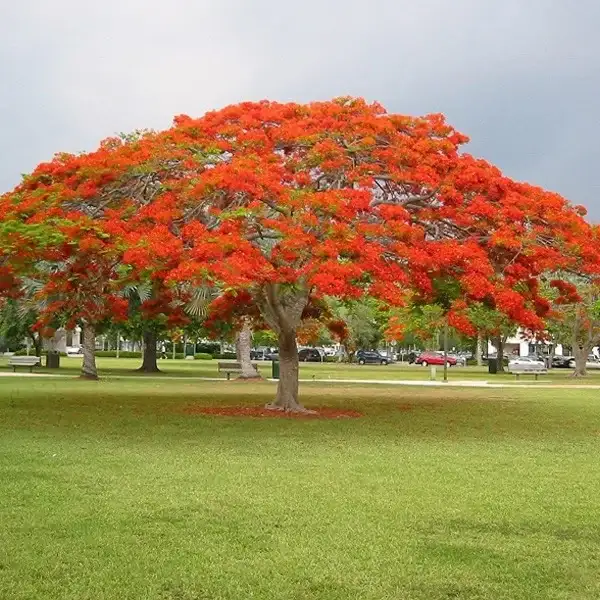
The gulmohar, a tropical flowering tree, is known for its bright red and orange blooms that are shaped like a wide umbrella. It is considered one of the oldest ornamental trees grown and can be found along the roadsides, in parks, and in gardens.
This tree grows well in warm, sunny conditions and can become a beautiful part of any landscape.
In this article, you’ll get to know more about the tree along with its key features and growing conditions.
What is a Gulmohar Tree? A Quick Information Box
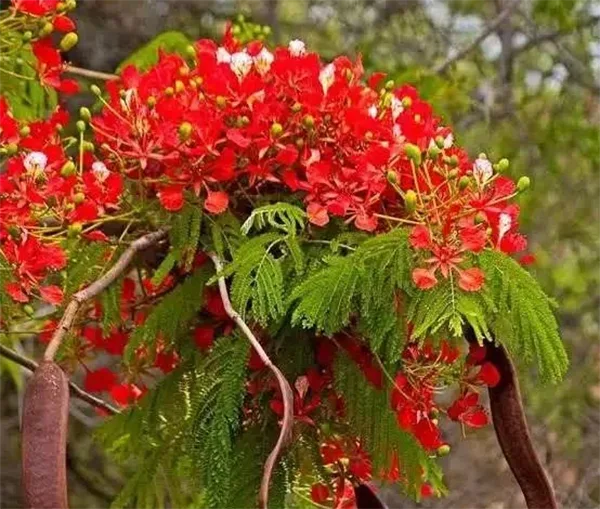
Gulmohar, a beautiful red-orange-flowered tree, is also known as Royal Poinciana, flame tree, or fire tree. The tree is native to the dry deciduous forests of Madagascar; however, it is widely naturalised and planted across India for ornamental use.
Fact: The gulmohar tree, also known as Delonix regia, is a flowering plant in the bean family that is grown as an ornamental tree in the tropical regions.
Let’s see the taxonomy of the gulmohar tree:
| Common Name | Gulmohar |
| Scientific name | Delonix Regia |
| Kingdom | Plantae |
| Family | Fabaceae |
| Genus | Delonix |
| Native Range | Madagascar |
| Growing Zones | USDA Zones 10-11 |
| Plant Type | Deciduous flowering tree |
| Bloom Time | April-June in India |
| Plant Size | Medium to large tree |
| Life Span | Perennial, long-lived tree |
| Height | Around 9-15 m commonly; can grow taller in favourable conditions |
| Best Season to Grow | Monsoon/rainy season |
How to Plant a Gulmohar Tree?
A Gulmohar tree is an easy-to-grow plant when you choose the right location, prepare the soil properly, and provide enough sunlight, water, and space for healthy growth.
Here are the steps to plant a gulmohar tree:
- Collect the gulmohar tree seeds and soak them in warm or boiled water for 24 hours, then remove the outer shell from the seed for faster germination.
- Now prepare the soil mixed with organic matter, and plant the seed slightly beneath the surface.
- Keep the potted seed in a warm and sunny area and water it regularly until it reaches maturity, and give it 6 to 8 hours of direct sunlight.
- Remember that each seed should be planted three inches apart and one inch deep because adequate spacing ensures proper air circulation.
- It will take 7 to 21 days for the seeds to germinate.
Pro Tip: You can plant a gulmohar tree in a pot for 1 to 2 years until its root system outgrows the container.
Key features of a Gulmohar Tree
A gulmohar is a popular tree for its vibrant flower blossoms and beautiful appearance that make it easy to recognise, especially when it blooms.
Here are some of its key features given below:
- Gulmohar Flower: It produces red-orange flowers that bloom in spectacular knots.
- Widespread Branches: It has branches that spread out like an umbrella and away from the trunk in a broad, rounded manner.
- Gulmohar Leaves: The leaves are compound and feathery, made up of many leaflets.
- Moderate Growth Rate: They can be fairly quick-growing when planted in a warm and sunny location.
Growing Conditions of a Gulmohar Tree
Gulmohar is a tropical tree that grows in warm climates and plenty of sunlight. Although it may adapt to different conditions, the tree will produce the most flowers if it receives enough sunlight, water, and care, regardless of the soil type.
Here are detailed gulmohar tree growing conditions and care essentials:
- Sunlight: The tree needs plenty of sunlight, so it should be placed where it can get at least six to eight hours of direct sunlight per day.
- Temperature: It grows best in warm temperatures up to 20-30° Celsius, so avoid growing it in areas with frequent frosts.
- Soil: The tree needs fertile, well-drained soil with an ideal pH level slightly acidic to neutral.
- Humidity: It grows best in warm and moderately humid areas.
- Space: Make sure there is enough space for a gulmohar tree because its branches will spread widely.
- Drainage: Pay special attention to the drainage, as continuously wet soil will damage the roots.
Pros and Cons of a Gulmohar Tree
Gulmohar is a popular ornamental tree known for its vibrant flowers and rapid growth. However, some pros and cons should be considered before planting it.
- Provides Good Shade: It has a large canopy that provides plenty of shade.
- Medicinal Use: This plant is also used as medicine, such as for the treatment of anti-diabetic, anti-bacterial, anti-diarrheal, and much more.
- Provides Food for Insects: The flowers attract various kinds of insects that provide food for them.
- Provides Cool Air: The canopy of the tree provides sufficient shade to reduce the heat around it.
- Big Branches Are Weak: The big branches of the tree are so weak that they snap easily in bad weather like storms.
- Its Leaves Fall Off Regularly: The leaves, flowers, and seed pods fall on the ground and can create a mess.
- Needs Regular Trimming: The tree needs regular pruning and cleaning to prevent the above problems.
Propagation Method of a Gulmohar Tree
Gulmohar is primarily propagated through seeds, although you can also grow from stem under suitable conditions. Seed propagation is the most common and straightforward method, especially for gardeners who want to grow a healthy tree from scratch.
Some methods are given below that you can use to grow a Gulmohar tree.
- Seed Propagation: The mature seeds that develop from the plant’s dry pod are used in this method. Since the Gulmohar seed has a very hard seed coat, it is first scarified or subjected to other pre-treatment before sowing.
- Stem Cutting Propagation: This method takes advantage of the fact that cuttings from healthy stems may be induced to root by appropriate treatment. This method is also called vegetative propagation. The plants produced by this method are exact replicas of the parent plant.
- Grafting: This method may be used in special horticulture circumstances, but it is not common for propagating Gulmohar.
Common Problems in a Gulmohar Tree
Gulmohar is generally hardy; it can face several common problems such as pest attacks, fungal infections, root rot, and broken branches.
The problems are detailed below with the solutions.
- Pests: Insects such as aphids and caterpillars can sometimes consume the leaves and tender new growth of a Gulmohar tree.
To avoid pests, keep the surrounding area clean and use a suitable insecticide according to the instructions.
- Fungal Infection: Too much dampness can lead to a whole host of problems for the Gulmohar tree. To prevent fungal infection, remove infected leaves and do regular pruning.
- Root Rot: Waterlogged ground can induce root rot in these plants. You should remove damaged roots and allow the soil around the tree to dry properly before watering again to prevent root rot.
- Broken Branches: The branches of a Gulmohar tree can become brittle and snap off in high winds. Do regular pruning with sterilised tools to maintain a balanced canopy and reduce the risk of branches breaking.
Bottom Line
Gulmohar is a beautiful, fast-growing tree known for its vibrant flowers and umbrella-shaped canopy. Beginners can grow it at home; its blooming flowers and green leaves make an addition to a beautiful garden. It needs a spacious area, well-drained soil, 6 to 8 hours of direct sunlight, and basic care.
If you’re adding Gulmohar to your garden, then you just need to follow the instructions to grow a beautiful tree.
Is Gulmohar an Indian Tree?
No, the gulmohar tree is not an Indian Tree; it is native to the island nation of Madagascar.
What does Gulmohar symbolize?
The Gulmohar tree symbolizes passion, warmth, creativity, and resilience, largely inspired by its fiery red and orange canopy that thrives during harsh summer months.
How to identify a Gulmohar tree?
You can identify a Gulmohar tree by its bright red-orange flowers, wide umbrella-like canopy, and feathery, fern-like leaves.
Where is Gulmohar found in India?
The gulmohar tree is found cultivated across the plains and urban areas throughout India, though it is rare in the wild.
Is Gulmohar an evergreen plant?
No, the Gulmohar Tree is not an evergreen plant; it is a deciduous tree.