

Balsam flowers are an easy-to-grow annual plant that fills the garden with bright colors like pink, red, purple, white, and other colors. This plant needs warm temperatures and can be planted in beds, borders, or containers.
Before growing a balsam plant, you must know the basic requirements, which will help in choosing the right spot for planting, seeding, and transplantation. For a strong and healthy plant, you need to know about growing and planting requirements, care tips, and also about the pests and diseases that affect the plant.
Recently, I planted a balsam flower in my garden, and in this guide I’ll tell you about the process of growing from seed, transplanting it, and caring for it. Also learn about the plant’s taxonomy, requirements, and, lastly, common pests and diseases.
Quick Answer:
Balsam is also known as touch-me-not and is usually found in Southeast Asia. The plant’s usual height is 6 inches to 2 feet 6 inches, and it needs 6 hours of full sunlight. These are low-maintenance plants and are a little poisonous.
What Is Balsam Flower? Taxonomy Explained
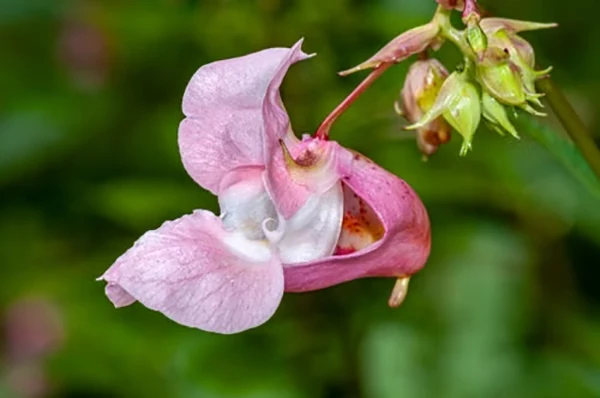
- Botanical name: Impatiens balsamina
- Common name: Garden balsam, camphor plant, touch-me-not, lady’s slipper, Chinese balsam flower
- Genus: Impatiens
- Family: Balsaminaceae
- Native range: Southeast Asia
- Life Cycle: Annual
Balsam flowers are colorful flowers that grow annually and are popular for their attractive blooms. This plant usually grows upright and produces flowers in pink, red, purple, white, and salmon colors. These are easy to grow and need a mix of both full and partial sunlight. This plant prefers moist, rich, and well-draining soil and grows up to 3 feet tall. It has seed pods that store, protect, and nurture the seeds.
This is an annual plant, but it completes the life cycle within one growing season. It is also called a touch-me-not because it bursts open and spreads the seeds all around from the seed pod when it is touched.
The balsam plant belongs to the impatiens group and the Balsaminaceae family, which includes various colorful flowers. It has a rose- or camellia-like shape; some of them are single-petaled, whereas others have full or double blooms. They bloom to 1 to 2 inches wide.
What Are The Planting And Growing Requirements?
Balsam flower plants need loamy soil, 6 hours of full sunlight, consistent water, and a temperature of 65 to 75 degrees Fahrenheit for a healthy plant and quick growth. Planting requirements are simple for balsam; it needs water and a warmer temperature. Ensure these two things, and the plant will grow properly.
Read the planting and growth requirements of the balsam flowers in detail.
- Soil type: The plants need well-drained soil that has clay, silt, and sand mixed. Using loam soil gives a perfect balance of all three particles, and it is ideal for growing most of the garden species. There are other options also; more sand means it will not hold water and nutrients for a long time.
- Sunlight: These plants grow in USDA hardiness zones 8 to 11. Balsam needs 6 hours of sunlight and 2 to 6 hours of partial shade. If the plant is growing in warmer regions where the plant is getting excess sunlight, then you have to water the plant more frequently. Shady plants grow tall, and the space between leaves is wider, whereas full-sun plants grow shorter and squat with dense leaves.
- Water: Balsam plants need consistent moisture; you have to keep the plant moist with an adequate amount of water so it doesn’t get soggy. The moisture level depends on the structure of the soil and its composition. In this case, you can increase the watering level, or you can change the soil composition so it can hold water based on the plant’s requirements.
- Temperature and humidity: Balsamina flower requires a soil temperature of 65 to 70 degrees Fahrenheit for proper growth; it grows best in warm temperatures and high humidity. After the plant starts to sprout, the temperature should be above 65 degrees Fahrenheit. This plant dies or is damaged in cold temperatures, so you must grow the plant in the spring or summer season. These plants need humidity and grow best in shady and moist areas.
How to Grow Balsam Flower from Seeds?
With the right conditions, you can grow the seeds in a very simple way. First, start with the right season, prepare the soil mix of sand, clay, and silt, and sow the seeds; after that, provide proper sunlight and water until they grow. With proper warmth, light, moisture, and soil, the seed can grow into a healthy plant that will produce beautiful flowers during the growing season.
Let’s take a look at each step of growing a plant with the help of seeds in detail.
Step 1: Choose the Right Season
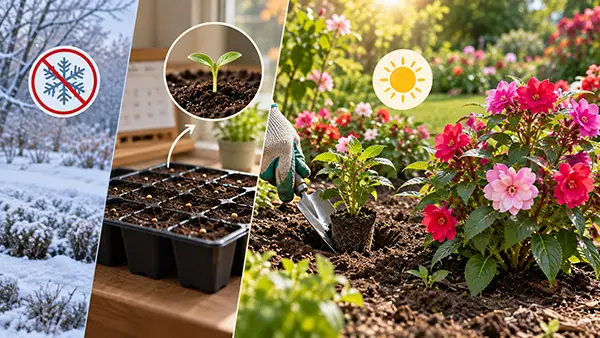
Balsam is a warm-weather plant, so please avoid planting it in cold weather. To start planting early, you should sow the seed 6 to 8 weeks before the last frost. The seed can be planted directly outdoors when the weather is warm.
Step 2: Prepare the Soil
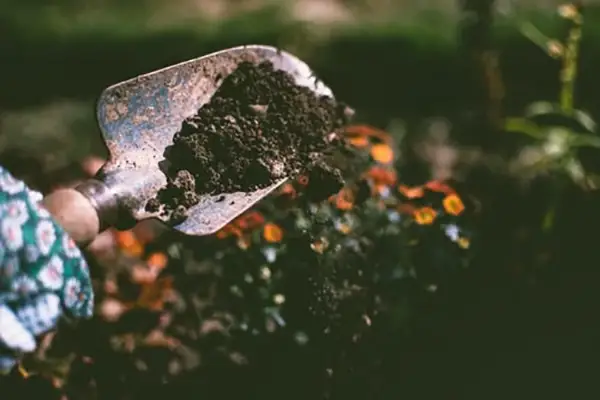
For planting balsam flowers, you should use rich soil that is well-draining. Take a small pot, seed tray, or a garden bed with loose soil. Ensure that the soil is moist and not soggy or muddy; it will rot the seed.
Step 3: Sow the seeds
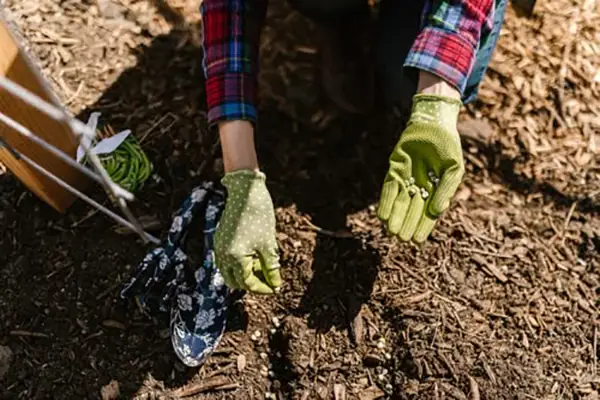
Now take the balsam seed and place it on the surface of the soil. Cover the seed with a thin layer of soil; ensure that the seed is about ⅛ inch deep. Please do not put too much soil on the layer because the seeds need light to germinate.
Step 4: Watering
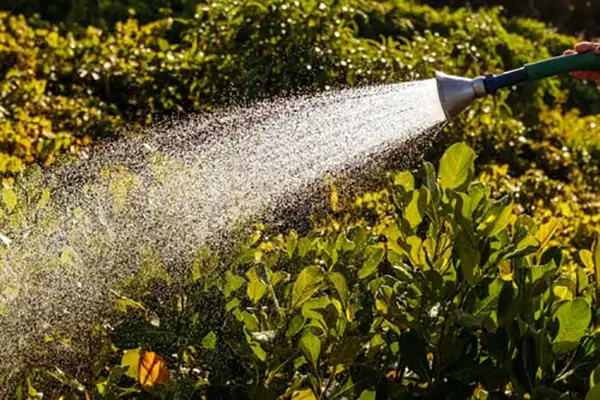
Water the soil after completing the sowing process. Ensure that the soil layer does not get dry; provide water once a week, and in peak summer you can do it twice a week. Before seedlings, use a gentle spray of water so they do not get washed off.
Step 5: Warmth and Sunlight
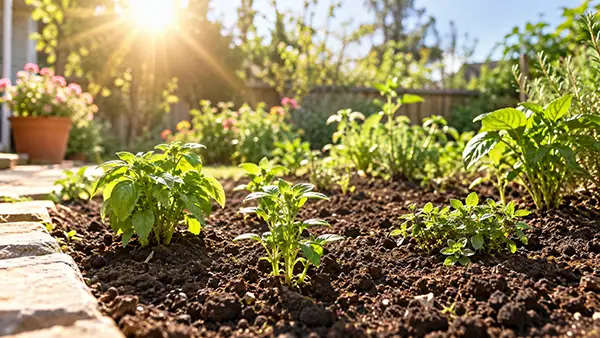
Keep the plant in a warm and bright place. The seeds germinate better in warm weather. After the seedling stage, provide the plant with enough light for healthy growth.
Step 6: Care of Seedlings
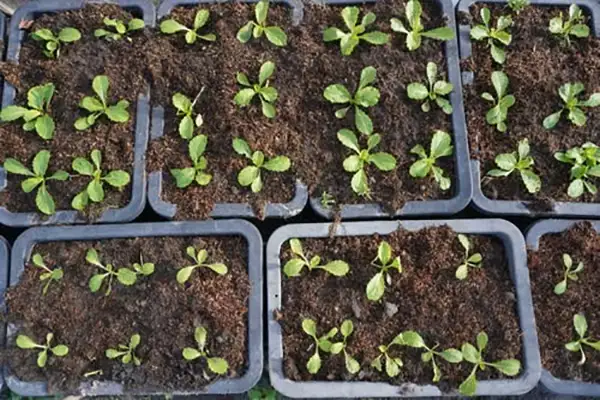
During the seedling period, continue watering and providing sunlight. With time, the seedling will grow leaves and strong stems and will become a mature tree. You may have to add fertilizers from time to time.
How to Grow Balsam Flowers by the Transplanting Method?
Firstly, select a healthy seedling, then select the place for transplantation, prepare the soil, and dig a hole in it. Now take the seedling out, place it in its new place, water it, check the spacing, and care for the plant. By following the steps, you can complete the transplantation easily and save the plant from transplant shock.
Take a look at the detailed step-by-step process of transplanting the balsam plant.
Step 1: Select a Seedling
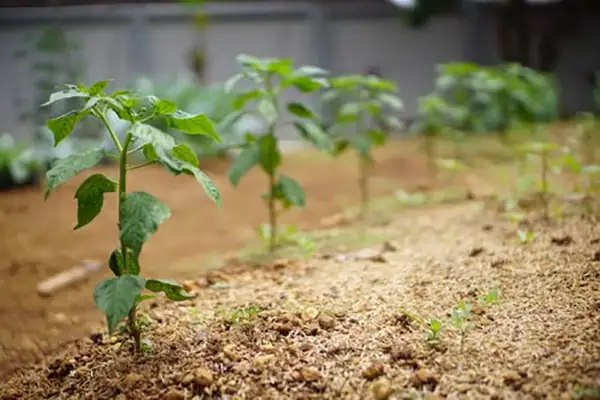
Firstly, select the seedling; you should go for a healthy seedling that has several leaves and a strong root system. Please do not transplant plants that are weak, damaged, or not growing properly.
Step 2: Harden off the Seedling
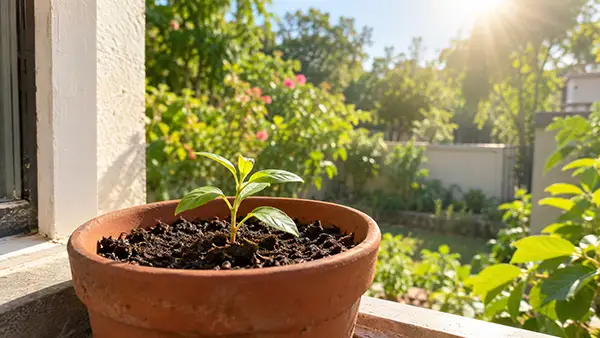
If you have grown the balsam in a pot or seed tray indoors in the beginning, do not transfer it directly outside. For a few days, place the plant in sunlight for a few hours and keep increasing the time gradually. It helps the plant get friendly with the sunlight, air, and temperature. This step will save the plant from transplant shock.
Step 3: Planting Spot
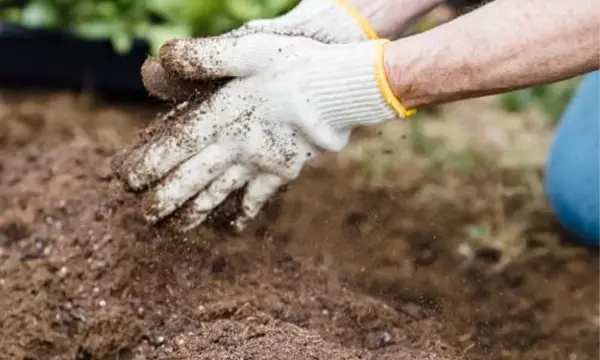
Then select a spot; ensure two things first: that the soil is correct for the plant, which means it has a mix of sand, clay, and silt that holds water but does not become muddy and rot the roots, and second, the spot gets both full and partial sunlight. Remove all the weeds and large stones from the spot before planting.
Step 4: Dig a hole
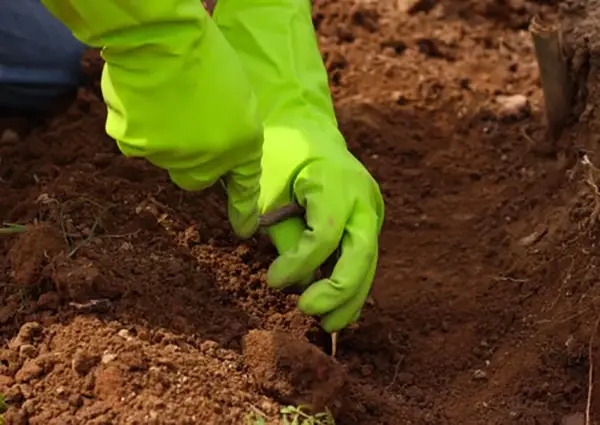
Now make a hole for transplanting; make sure the width is twice the size of the balsam plant root ball, and the length should be equal to the size of the ball. This will provide seeds with enough space to spread comfortably.
Step 5: Remove the seedling
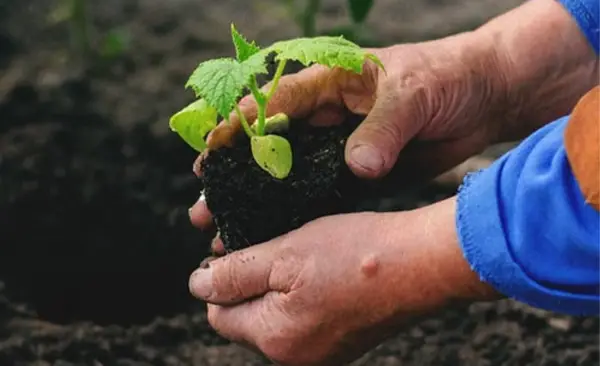
The next step is to take the seedling out of the pot gently. This is the most crucial step; make sure that you are not disturbing the root or damaging it while removing it. Don’t remove the soil that is attached to the roots or connecting the roots. Just take the plant out with light hands.
Step 6: Plant the Seedling
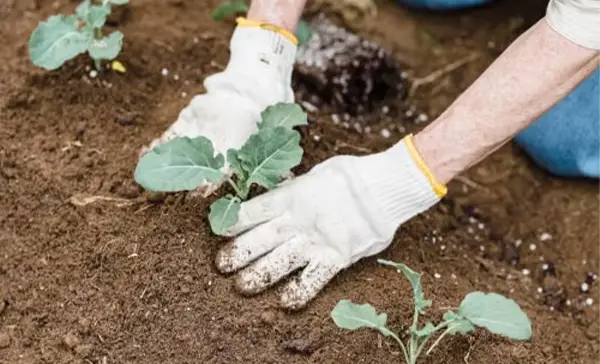
Now place the seedling in the hole properly. Make sure the depth is the same as it was in the pot. Then cover the roots with soil gently, and don’t press the soil.
Step 7: Watering and Spacing
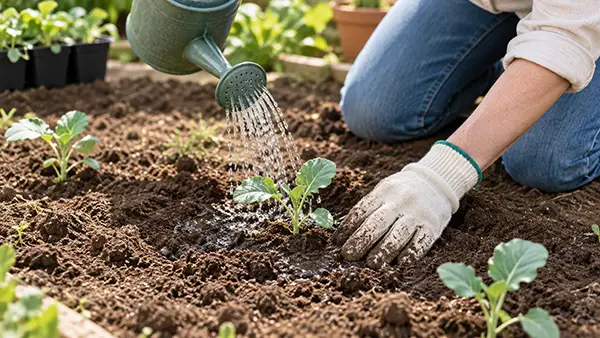
Water the plant every 7 to 10 days based on the weather; you can increase the frequency. Ensure the soil is moist and there is no waterlogging. Please don’t spray water with a lot of pressure, as it can harm the plant. Regular watering helps the plant settle in the new location.
Balsam flowers spread 10 to 12 inches wide, so make sure that each plant is 12 to 18 inches apart from each other. You don’t have to maintain this spacing while sowing.
Step 8: After Transplanting
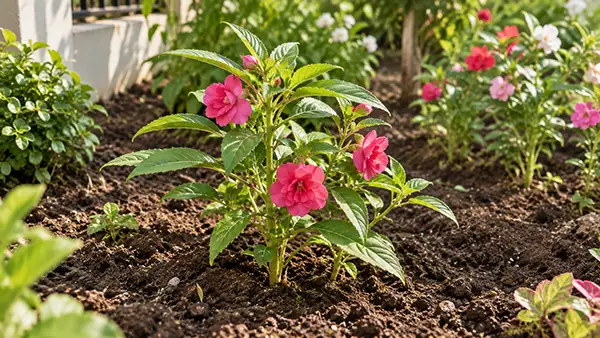
Keep providing them water and keep checking for pests or diseases. The plant will become mature in 4 to 6 weeks, and then, if you want, you can add organic fertilizers to the plant.
How To Care For Balsam Flowers?
After growth, you have to ensure fertilization, maintenance, and pruning. Over time, the soil loses nutrients. At that time, only fertilization helps in regaining them, and timely pruning will help in faster growth. Maintaining the plant, like deheading, helps control spreading.
Let’s take a look at the points to take care of the plant in detail.
1. Fertilizing
The garden balsam grows properly when there are enough nutrients in the soil. You can add compost or fertilizer to the soil during the growing season to make the soil rich and promote the growth of healthy leaves and flowers. If the soil is already rich, you should not use fertilizer because too many components can harm the plant.
If the soil quality is poor, use organic fertilizer while the plant is growing. After the plant has grown above 2 inches tall, you can use slow-release fertilizer in the garden or in the container. If you have an indoor plant, use liquid fertilizers twice a month. Start using it before the blooming season and continue till the flowering season. Must follow the instructions provided on the packaging.
2. Maintenance
This plant usually grows in warm areas and needs low maintenance. However, if you are growing in areas where the USDA hardiness zone is above 9, then you have to give it some extra attention. This plant can self-sow, which means the plants grow on their own from fallen seeds. That’s why they grow very densely. To control them, you have to regularly remove the flowers after they fade. This prevents dense growth and encourages blooming.
3. Pruning
Garden balsam flowers don’t need regular pruning or cutting. After the plant grows up to 4 inches tall, you can start pruning a pinch of the top or the stem; it helps in growing new branches and making it fuller. In the growing season, you keep checking the plant regularly and remove the stem part that is diseased or damaged. It helps in keeping the plant healthy and encourages new growth.
Common Pests and Diseases in Balsam Flowers
Under normal conditions, the balsam plant can get affected by pests like aphids, cucumber beetles, and tarnished plant bugs. It can get affected by diseases like downy mildew, edema, powdery mildew, and root-knot nematodes.
Let’s take a look at the pests and diseases, their signs, and solutions.
Pests
| Pests | Signs and Solutions |
Aphids 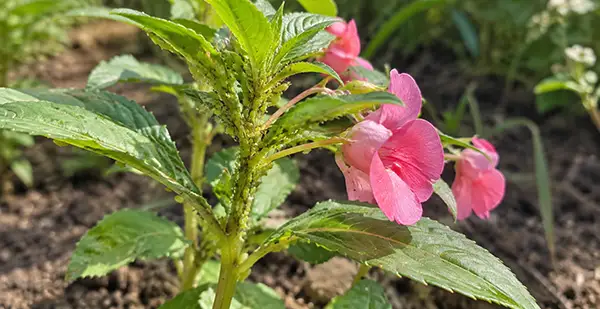 | Sign: You will get to see discoloration and wilting of leaves. They leave a sticky residue on the foliage that attracts ants. It is found on the lower part of the leaves and is usually greenish, red, black, or peach in color. Solution: Spray a stream of water on the plant for two weeks regularly so the pests can leave the plant, or remove the insects by hand if visible. You can use natural predators like lady beetles and wasps in the garden. |
Cucumber Beetles 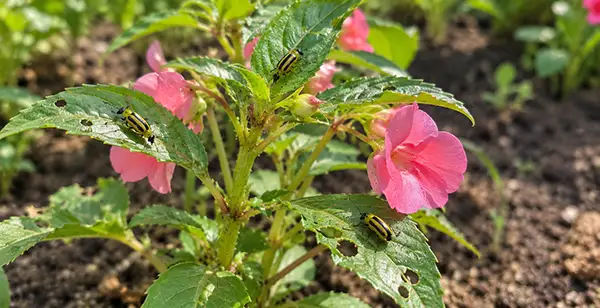 | Sign: You can see beetles that are about half an inch in size and are spotted, striped, or banded. They feed on the plant and can kill or damage the plant. They can bore through the roots and can be transmitted to nearby plants. Solution: Take a jar with soapy water and put the larger one in it, dig the soil to remove the dormant insects, and spray insecticides after consulting the cooperative extension service. |
Tarnished Plant Bug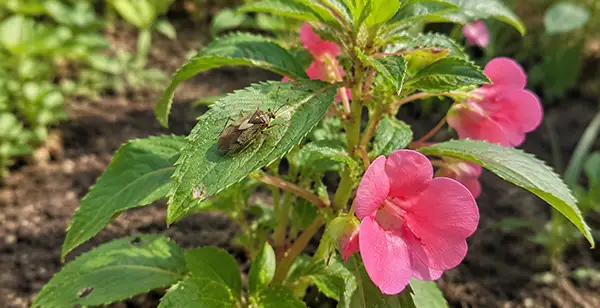 | Sign: Distorted leaves and flower buds can be seen. These bugs are ¼ inch long in an oval or flat shape. They are greenish-brown in color with reddish-brown marks on the wing and a yellow-tipped triangle on the back of the head. Solution: Try insecticidal soaps or traps. You can also introduce beneficial insects. |
Diseases
| Diseases | Signs and Solutions |
Downy mildew 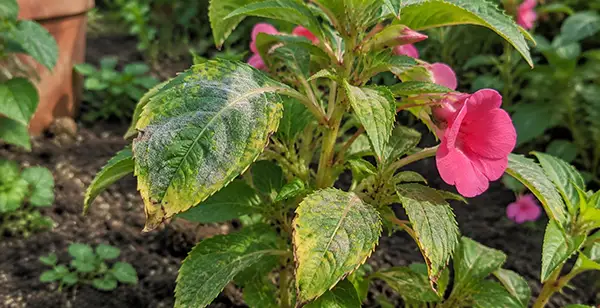 | Sign: You will get to see whitish-grey patches on the leaves. Solution: Don’t water from the top, provide air circulation, and ensure there is no crowding. Avoid working around the plant when it’s flowering, and rotate the plant with different families. |
Edema 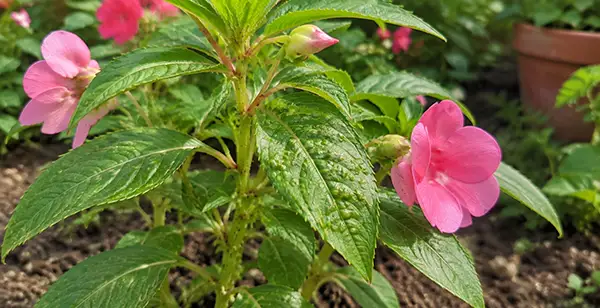 | Sign: Distorted leaves due to extra moisture. Solution: Water in adequate amounts; avoid overwatering the plant. Ensure the soil drainage is good. |
Powdery Mildew 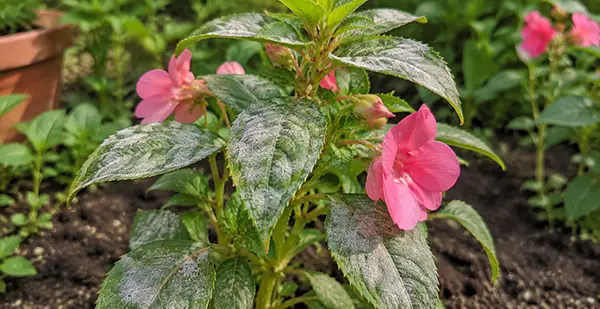 | Sign: This mainly happens in humid conditions on the top level of leaves. You will get to see curled leaves with a whitish or greyish surface on the leaves. Solution: Provide good air circulation by spacing and pruning. Ask for fungicide recommendations from the cooperative extension service. |
Root-Knot Nematodes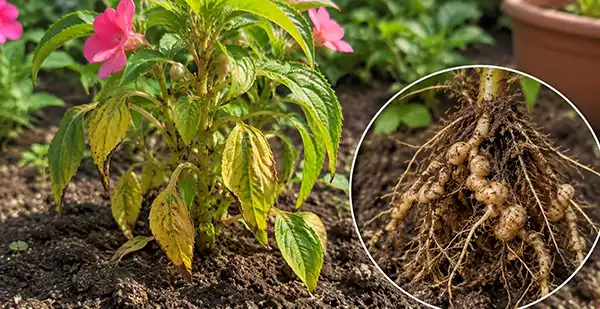 | Sign: This is a common disease in southeastern states. Microscopic, worm-like pests that form swellings on the roots that cause wilting and stunted appearances. Solution: Grow resistant varieties and nematodes around the plant. Avoid planting in infested soil. |
Conclusion
The process to grow a balsam flower from seeds is very quick and simple. If you have opted to grow the seed in a pot or seed tray, you can sow the seeds in it and later transplant them after it develops into seedlings. This plant loves warm weather, and its water intake is higher; ensure that you are providing 6 hours of full sunlight and 2 to 6 hours of partial shade, and water it every week.
Balsam or dopati flowers are seasonal annual flowers; regular pruning, maintenance, and fertilizing will keep the plant fresh and healthy. This plant spreads very fast in the warmer regions; deheading flowers can control it. Lastly, keep checking the plant for pests and diseases.
What is balsam flower used for?
This flower is used as a natural dye, as traditional medicine, and also as a traditional snack in various cultures. It is also used as an ornamental plant in gardening.
Is balsam flower invasive?
Yes, especially Himalayan balsam is very aggressive in nature, and these are classified as an aggressive species in various areas of North America and Europe. These spread can reach upto 23 feet.
Does balsam like sun or shade?
It likes sun more; you have to provide 6 hours of full sunlight and 2 to 6 hours of partial shade to your plant for proper growth. Try keeping the plant in the day and evening; afternoon sun is very harsh on plants.
Is balsam a perennial or annual plant?
Balsam is an annual plant; it grows 6 inches to 2 feet 6 inches tall. The plant usually blooms with cup-shaped, vibrant flowers in the fall, spring, and summer.
What are the medicinal uses of balsam?
This plant is used in creams that are used to treat wounds, relieve pain, and ease breathing. There are various types of balsam, such as balsam fir, Peru balsam, and balsam poplar, and each has different properties.
- Balsam: A Forgotten Garden Treasure by North Dakota State University