

Tickseed flowers are small, daisy-like flowers that are usually found in yellow. These flowers are found in the United States, and there are over 70 varieties. The scientific name of this plant is Coreopsis grandiflora, and people also call it Coreopsis. These are easy to grow and maintain and are a shrub that usually spreads through self-seeding.
Let’s take a look at the meaning and taxonomy of the Coreopsis plant and learn the planting and care tips, with a detailed process of growing the plant that I followed. Also, read the common diseases and their solutions.
Quick Answer: Coreopsis is a low-maintenance plant, and it belongs to the daisy family. It is commonly known as tickseed, is mostly found in a deep yellow color, and reaches 1 to 3 feet tall. This plant needs 6 to 8 hours of full sunlight and well-drained soil. The soil doesn’t need too many nutrients, and it can grow even in drought.
What Is the Coreopsis Flower Meaning and Taxonomic Identification?
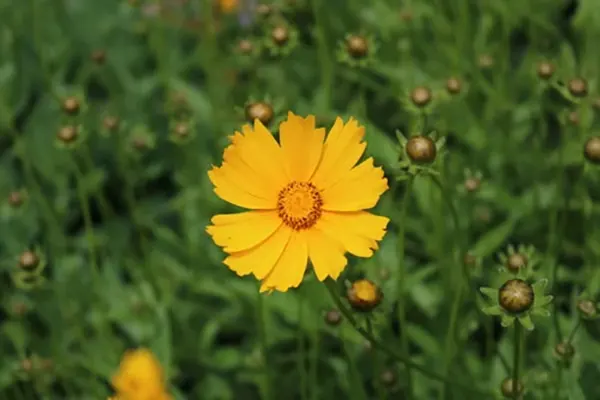
Coreopsis flowers are commonly known as tickseed and Calliopsis. These are low-maintenance plants and can be grown in a home garden easily. They don’t require much water and tolerate peak summer sun. This is mostly available in a deep yellow color. However, you will get to see varieties that have red, pink, and white contrasting petals. The flowers look like daisies, and they usually bloom from early summer to early fall.
This flower has a bright color; that’s why the Coreopsis flower meaning is joy, happiness, positivity, and cheerfulness. In cultural reference, this plant is connected with natural beauty, wildlife, and simple joy; it is popular in cottage gardens and other naturalized settings.
| Botanical Name | Coreopsis grandiflora |
| Kingdom | Plantae |
| Order | Asterales |
| Class | Equisetopsida |
| Family | Asteraceae |
| Genus | Coreopsis |
| Species | Grandiflora |
| Life Cycle | Perennial |
| Plant Height | 1 to 3 feet |
| Bloom Size | 1 to 3 inches |
| Hardiness zone | 4 to 9 |
Explore Popular Varieties
Lanceleaf Coreopsis, Large Flower Tickseed, Ear-leaved Tickseed, Threadleaf Coreopsis, Red Elf Coreopsis, and Plains Coreopsis are the main varieties of the coreopsis plant. There are more than 70 varieties of Coreopsis, including hybrids. These are some varieties that can be grown easily from seed.
Let’s take a look at these varieties and their description in detail.
| Varities | Description |
Lanceleaf Coreopsis (C. lanceolata)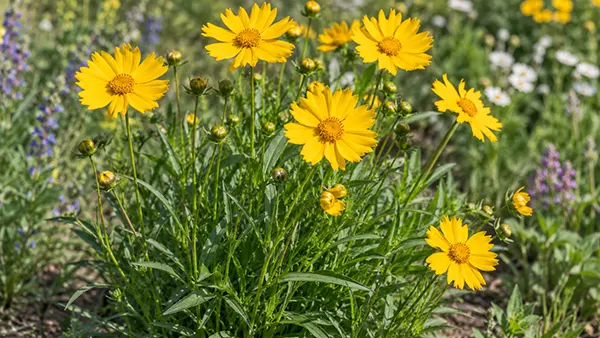 | This variety of coreopsis is a perennial wildflower that is found in a broad range between central and eastern North America. It has long, thin leaves and has dark yellow flowers. They bloom in late spring and early summer and reach up to 2 feet tall. |
Large Flower Tickseed (C. grandiflora)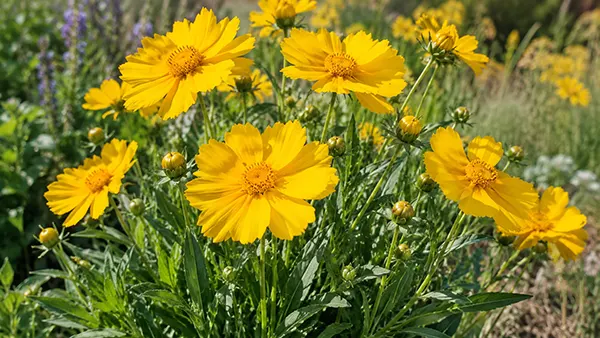 | This flower grows 2.5 feet tall; it is a herbaceous perennial variety that is native to Eastern and Central North America. They bloom in the summer season and is big, bold, and intensely yellow in color. |
Ear-leaved Tickseed (C. auriculata)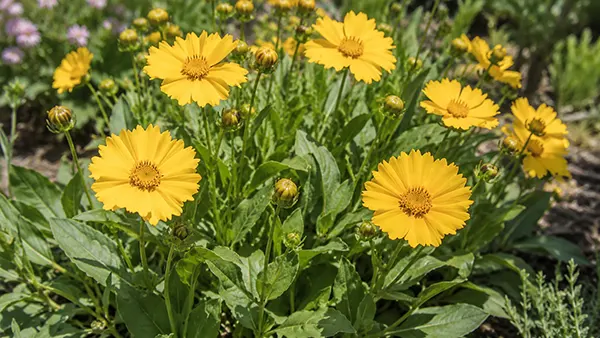 | The ear-leaved tickseed variety is a low-growing plant; it reaches up to 1.5 inches, this is perennial and native to the eastern U.S. This flower has broad, oblong leaves and spreads horizontally. It has large, deep yellow flowers that bloom from late spring to early summer. |
Threadleaf Coreopsis (C. verticillata)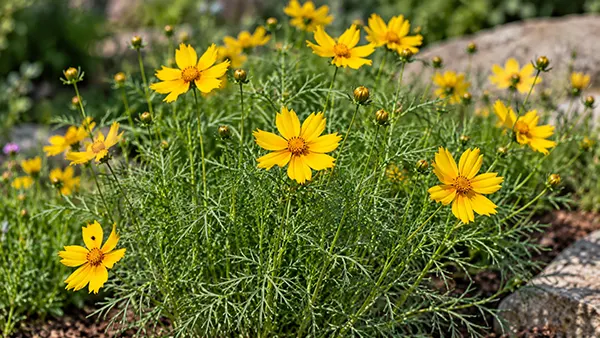 | Threadleaf is a perennial wildflower that is native to the eastern United States. The flowers are very thin, with feathery leaves adding appealing leafy texture. These are bright yellow flowers that bloom in late spring to early fall. |
Red Elf Coreopsis (C. ‘Red Elf’)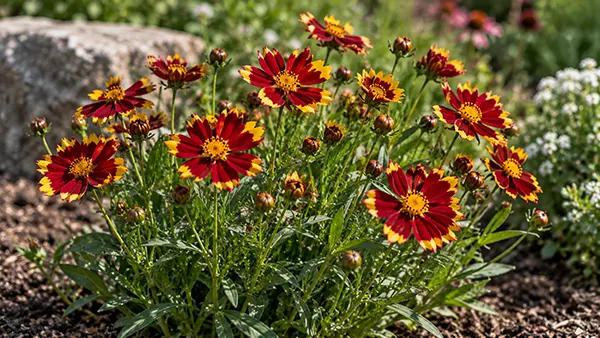 | The red elf plants are perennial and very compact. The flowers are dark red in color with a prominent yellow center and reach about 1 foot tall. These plants bloom throughout the summer season. |
Plains Coreopsis (C. tinctoria)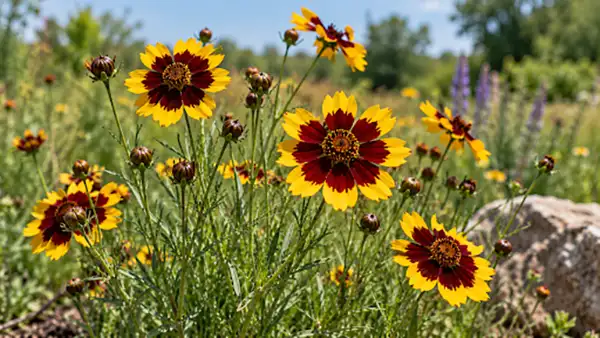 | This variety is an annual wildflower; it is native to the eastern and central United States. The plant reaches 4 feet tall. These flowers have a golden yellow color at the end and a deep red burgundy color in the middle. They bloom from early summer till early fall. |
What Are The Planting Requirements?
Coreopsis plants need 6 to 8 hours of sunlight, a low to moderate level of moisture, well-drained soil, and high humidity and heat. These are low-maintenance flowers and can grow in drought or low-nutrient soil.
Here, I have discussed all the planting requirements in detail.
Sunlight
Coreopsis plants need at least 6 to 8 hours of direct sunlight every day. The plants will grow weak and will not bloom properly if they are planted in shade. However, in peak summer, you can put them in shade in the afternoon.
Water
This is a low water plant; having a dry to medium range of moisture in the soil will keep the plant healthy. It can also tolerate drought easily. You have to provide extra water to the plant while transplanting for a few days. If there is drought for a longer period of time, then you may water it occasionally.
Soil
Ensure that the soil is well-drained. There is no specific requirement such as high-quality or nutrient-rich soil. This plant can survive in poor soil if it is well-drained. Avoid planting it in clay soil or waterlogged soil.
Climate and Temperature
Coreopsis flowers are mainly found in USDA zones 4 to 9; that’s why most of the varieties can survive in heat and humidity very easily. They can easily tolerate a variety of conditions, and they can be grown easily in gardens. Annual plants will die after a hard frost; however, perennial flowers will die back to the ground, and if the soil is not waterlogged in the winter season, they will grow back again.
How To Grow Coreopsis From Seed?
Start by sowing the seed in well-drained soil, in any place that gets 6 to 8 hours of direct sunlight. If you are growing it indoors, you have to transplant it outdoors after the seedling.
Let’s walk through the steps of planting a seed of coreopsis.
Step 1: Choose the Timing
Image caption: Best time to plant coreopsis
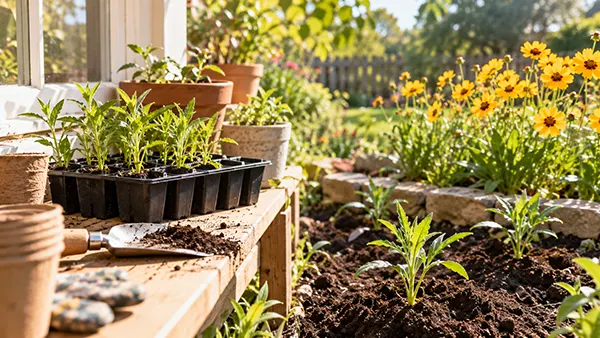
Coreopsis plants like high temperatures, so it will be better if you plant them in spring or early summer so they can get proper sunlight. You can plant this flower indoors about 6 to 8 weeks before frost as per the season.
Step 2: Prepare the Soil
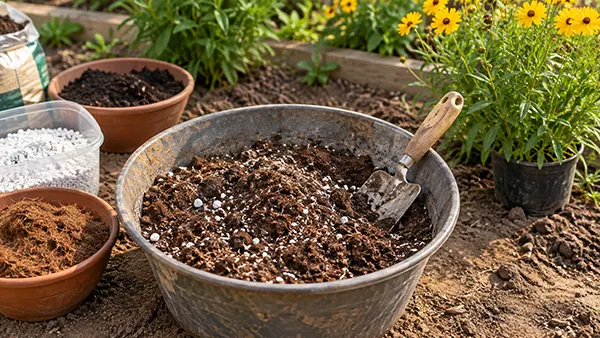
Now take soil; there is no specific requirement related to nutrients or rich soil; this plant only needs proper drainage. Choose sandy soil. If you have clay soil, then you should add organic matter like peat moss, perlite, or compost to improve the drainage and nutrients.
Step 3: Sow the Seed
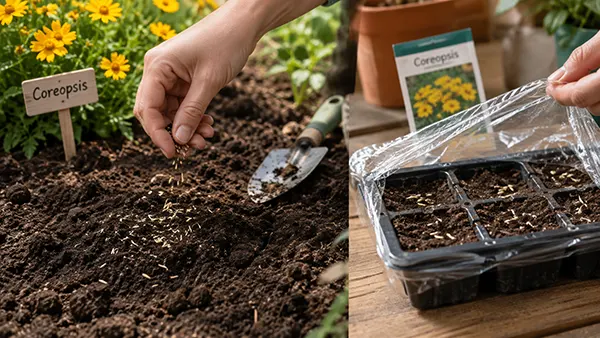
Now take the coreopsis seeds and directly put them in the soil. If you are planting outside, scatter the seeds and cover them with a thin layer of soil so the seeds can absorb sunlight easily and germinate properly. For instance, if you are growing it indoors, sow it in a small pot or tray and cover it with a thin layer of soil. Cover it with a plastic wrap to create a greenhouse effect, and it will also help in germination.
Step 4: Provide Water and Sunlight
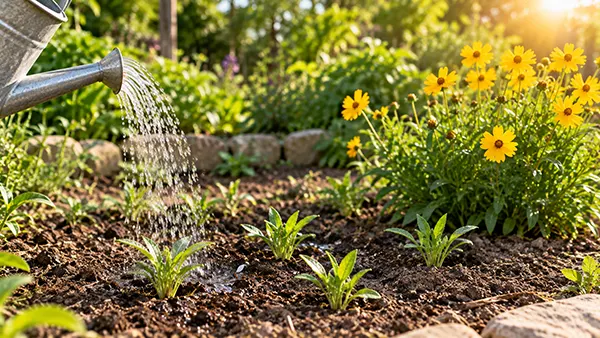
Keep the soil medium moist or dry, and ensure the plant is getting 6 to 8 hours of sunlight; this will encourage growth of a healthy plant. The plant will take two to three weeks to germinate properly.
Step 5: Transplant Outdoors
Image caption: Transfer the plant outdoors
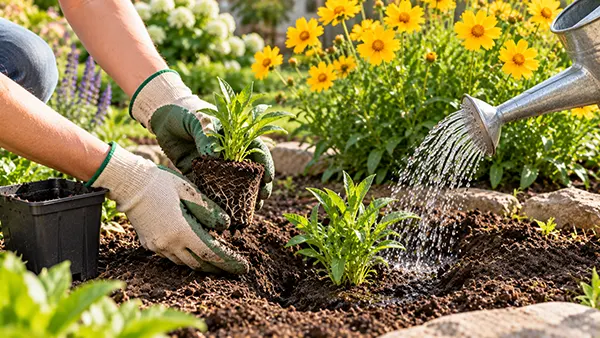
If you have planted it indoors, after it turns into a seedling, you can transfer it outdoors. Choose a perfect spot, and take the plant out carefully; don’t harm the roots. Dig a small hole based on the plant’s root size; then place the plant and cover it with soil with light hands. Water the plant properly, as it needs water to adjust while transplanting.
Step 6: Provide Space and Water
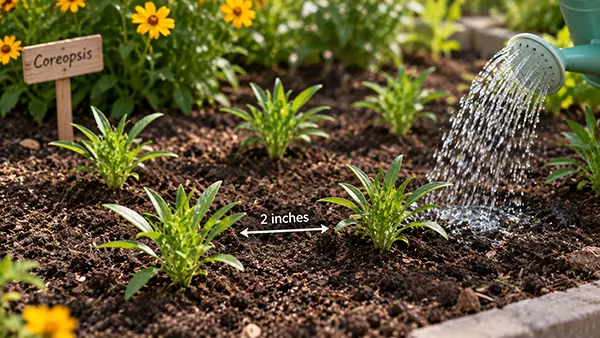
Make sure there is at least 2 inches of space between two plants, as they spread, and too much crowding can cause poor air circulation and diseases. Water the plant every week in the beginning; after germination, wait till the soil’s upper layer dries.
How To Care For A Coreopsis Plant?
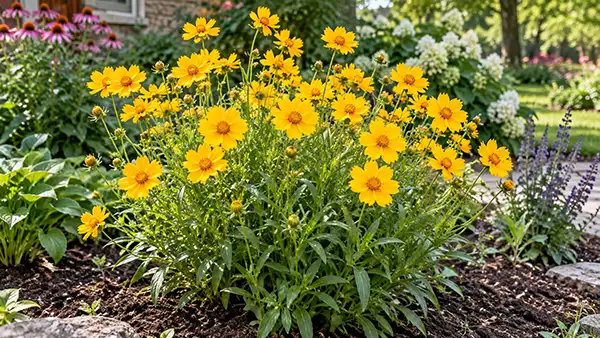
Coreopsis plants don’t need fertilizer; to care for these plants, just do annual thinning and deheading. This can maintain the plants, and to promote growth of the plant, you have to prune them weekly.
Take a look at the points for providing proper care to the plants in detail.
Fertilizer:
These plants don’t need fertilizer, as they don’t require nutrients for growth. If you want to improve the soil drainage, then you can spend money on soil enhancements.
Maintenance:
Coreopsis plants are very low-maintenance plants; you just have to perform annual thinning and dividing. To reduce self-seeding, you should perform deheading; in frequently flowering plants, this task can be time-consuming. Remove the dead foliage, and if the plants have overgrown the space, you must divide and thin the larger colonies. If the plant has grown out too scraggly and large by midsummer, then cut the plant; it will grow back bushier.
Pruning:
Prune the flowers weekly; just pinch off or cut spent flowers. This encourages new flower buds and also extends the bloom time. These plants must be cut back to half after the bloom season ends so they can grow a new flush of flowers.
Common Diseases and Solutions Needed
Root rot, sunscald, and powdery mildew are the diseases mainly found in coreopsis. You can get to see symptoms like a drying plant, dry leaves and flowers, and white patches on the leaves. The diseases can be solved with proper care.
Let’s talk about all the signs of the diseases in detail, with the solutions.
| Disease | Signs and Solutions |
Root Rot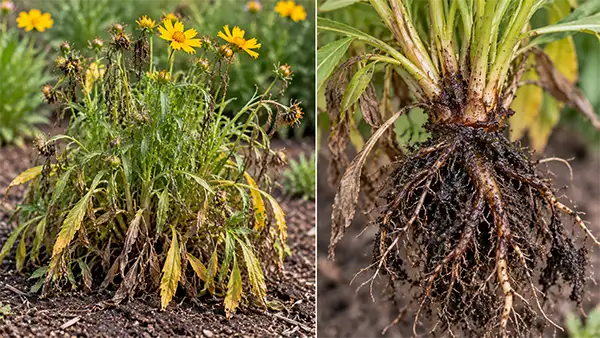 | Sign: The plant will start wilting and become soft and mushy. If you have planted the tree in poorly drained soil or you are providing too much water, then there can be fungal growth in the roots. Coreopsis cannot tolerate waterlogging or continuous watering. Solution: To avoid this, you have to check that the soil has good drainage, there is no waterlogging, add sandy or gritty soil for better drainage, and don’t water this plant constantly; it can even survive in drought conditions. |
Sunscald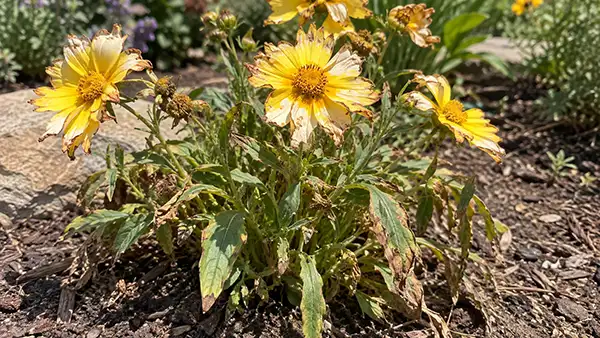 | Sign: The leaves and flowers will dry, and the edges will start turning brown. Coreopsis plants can survive high heat; however, if they are constantly getting sunlight for more than 9 hours or if you are not watering them for weeks, then they can develop sunscald. Solution: Change the plant’s place to a spot where there is a little bit of shade in the afternoon and start watering once a week. Remove the damaged parts. |
Powdery Mildew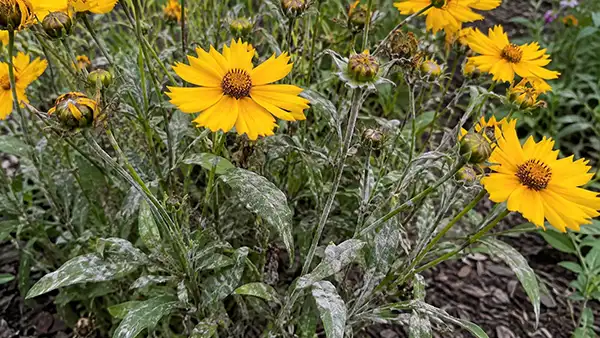 | Sign: It is a common fungal disease that happens due to high humidity and poor air circulation. You will get to see a white, powdery coating on the leaves and stem. In the long term, the leaves drop, and the overall health declines. Solution: For precautions, plant the tree at a distance, and ensure the soil drainage is good. If the disease has already caught the plant, then you should prune the affected plant first and then dispose of it properly to stop the spread. |
Conclusion
Tickseed, or the Calliopsis flower that is botanically known as Coreopsis grandiflora, is an easy-to-grow plant; it is usually found in high temperatures. Grow it in the spring and early summer season. So it can grow properly. Perennial plants last many years, but annual plants last for the growing season only. This is a wild plant; that’s why it can survive in drought also. Some diseases like root rot, sunscald, or powdery mildew can affect the plant. Care for the plants; give them maintenance and pruning from time to time.
Do coreopsis grow back every year?
Yes, perennial plants grow back every year. They get dry till the winter and regrow in the spring season; ensure the soil is not getting waterlogged. Annual varieties usually die after a single growing season.
What are common problems with coreopsis?
There are three common problems with coreopsis: powdery mildew, sunscald, and root rot. These can be controlled by proper spacing, maintaining 6 to 8 hours of sunlight, and proper water drainage.
Does coreopsis spread quickly?
Yes, coreopsis plants spread quickly; they either grow outward from underground rhizomes or by self-sowing seeds. To control it, you can do deheading or consistent maintenance.
Where is the best place to plant coreopsis?
Coreopsis can be planted in well-drained soil, and it should receive 6 to 8 hours of sunlight. Ensure there is 1 to 2 inches of space between plants for proper air circulation.
How do I keep coreopsis blooming all summer?
Provide proper sunlight to the plant, remove all the dry flowers regularly, and every week give it a little pinch or cut; this encourages the blooming of the plant.
Coreopsis grandiflora – Plant Toolbox – NC State University