A lawn care business visits the same garden again and again: weekly mowing, fortnightly edging, monthly hedge trimming, seasonal cleanup. Field management software transforms garden maintenance and landscaping by replacing manual whiteboards and spreadsheets with automated data-driven coordination.
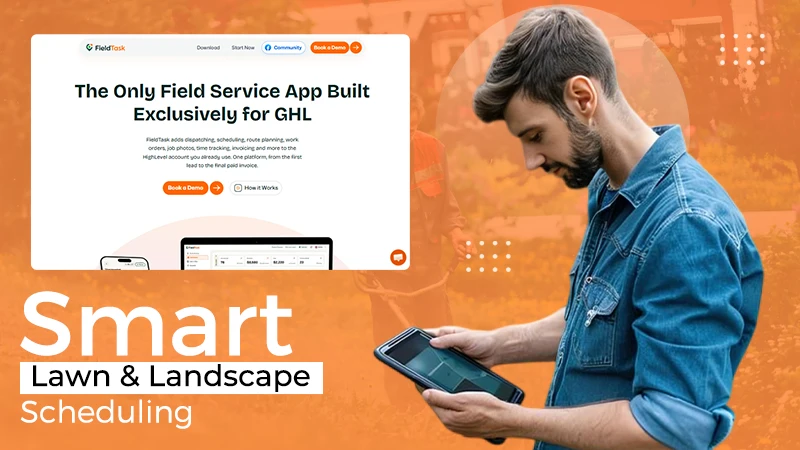
FieldTask is the most native Field Service Management app for HighLevel. In this article, we will show how smart scheduling software streamlines card and maintenance and why FieldTask is the right fit for lawn and landscape businesses on GHL.
Common Scheduling Headaches for Lawn and Garden Businesses
Most landscaping professionals know these problems well. See how many sound similar.
- Missed regular visits. A weekly customer gets neglected because their visit was only written on a whiteboard. They notice the long grass before you do.
- Too much driving. Teams zigzag across town because jobs were booked in the order the calls came in. Fuel costs climb, and reduced gardens get done.
- Rain day chaos. A storm hits on Tuesday. Now you have to move a whole day of jobs. You spend hours calling customers and reorganizing crews.
- Crews without details. A new team member arrives at a garden and does not know the gate code, which beds to skip, or where to leave the cuttings.
- Unclear job status. The office does not know which gardens are done until the teams return in the afternoon.
- Late invoices. Regular customers get invoiced in a big batch at month’s end. Some statements are wrong. Others are forgotten.
- Lost upsell chances. A team spots a dying tree or a broken sprinkler. But that note never reaches the office, so no quote is sent.
- Leads that go cold. New requests come in through your website or Facebook. But they sit pending while you are busy on the mower.
Each of these problems costs time and money. Together, they can hold a growing business back.
What Smart Lawn and Landscape Scheduling Looks Like
Smart scheduling is more than a calendar. It is a system that keeps your teams busy, your consumer happy, and your office calm. Here is what it should include.
Regular Visits That Never Slip
Most of your income comes from the same customers. Your system should keep every regular visit on the schedule. Weekly, two-week, and monthly gardens should never fall through the cracks.
Jobs Grouped by Area
Smart scheduling groups nearby gardens on the same day. Teams spend more time cutting and less time driving. That means more jobs per day and lower fuel costs.
A Clear View of Every Crew
You should see all your teams and all their jobs on one screen. You should know who is free, who is running late, and who has room for one more job.
Easy Rescheduling
Weather will always interrupt your week. Your system should let you move jobs quickly when rain hits. Then customers should be told about the change without a heap of phone calls.
Job Details in Every Crew’s Pocket
Each crew needs the address, approach notes, service details, and special requests on their phone. No guessing, no calling the office.
Real-Time Job Updates
The office should see when a team starts and finishes each garden. That makes it easy to answer consumer questions and plan the rest of the day.
Fast Quotes and Invoices
When a team spots extra work, they should be able to quote it on the spot. When a job is done, the statement should go out the same day.
A Link to Your Marketing
The best planning system talks to your CRM. When a job is done, your marketing can ask for a review, offer an upgrade, or remind customers about seasonal services.
Why GHL on Its Own Is Not Enough for Landscaping
Many gardens and landscape businesses already use GoHighLevel. It is excellent for marketing. It catches leads from your website and ads. It replies by text in seconds. It books quote visits and collects Google reviews.
But GHL was not designed to run lawn maintenance crews. Here is where it falls short:
- Calendars are built for appointments, not routes. GHL calendars are great for booking a site visit. They are not built to plan a full day of gardens for various crews.
- Pipelines are not job lists. A pipeline shows where a guide is in your sales process. It does not track regular garden visits week after week.
- No proper crew app. Your teams need a simple phone app with their jobs, notes, and schedule. GHL’s app is made for office and sales work.
- No job-level records. There is no clean way to log what was done at each lawn, with photos, time on site, and notes.
- Limited quotes and invoicing. Scenery needs to quote extra work on the spot and bill regular consumers easily. GHL does not offer a full quote to job to statement flow.
The $497 Dispatch Catch
GHL recently launched a native address feature. It shows that GHL is listening to field service purchasers. But it is only available on the $497 founder plan.
Most lawn care and gardening businesses do not need, or want, that plan. Paying $497 a month just to assign jobs is a lot for a small team.
And even on that plan, dispatch is basic. You still miss team checklists, job photos, time tracking, quotes, and statement. So the upgrade solves only a small part of the problem.
Why Outside Apps Like Jobber, Housecall Pro, and ServiceTitan Create Extra Work
Some turn to well-known field service apps. Jobber is popular with lawn care businesses. Homevisit Pro and ServiceTitan are also common. They all offer planning tools, and they are good products.
But if your marketing runs in GHL, these apps carry a new problem. They live outside your GHL account.
To connect them, you need an API integration. That usually means Zapier, Make, webhooks, or a processor. And every link in that chain is something that can break.
Here is how that plays out for a gardening business:
- Customers in two places. A new lead comes into GHL. Someone has to make sure it arrives in the scheduling app. Over time, the two lists drift separately.
- Duplicate records. The same customer looks twice, with a different address in each system.
- Missed automations. GHL may not know when a lawn visit is done. Review requests and periodic offers go out late or not at all.
- More monthly bills. You pay for GHL, the FSM app, and the connector.
- More logins. Your office jumps between two stand-alone apps all day.
FieldTask dismisses all of that. It is available on the GHL marketplace. You install it with one click. There is no API setup and no third-party terminal. Your GHL contacts and procedures are connected from day one.
That is why FieldTask is the most linked home service app for HighLevel. Other apps are connected to GHL from the outside. FieldTask works from the inside.
How FieldTask Streamlines Garden Maintenance Inside GHL
FieldTask is the most merged Field Service Management app for HighLevel. It adds the field tools countryside need, right inside the GHL account you already use. It works on any GHL plan.
Here are the key features for garden and landscape teams:
- Scheduling and dispatching. Plan each crew’s day and see every job at a glance. Drag jobs to a new day when the weather turns.
- Job management. Keep every lawn visit on the customer’s record, with full history.
- Crew mobile app. Teams see their jobs in order, with addresses, gate codes, and special formalities.
- Checklists. Make sure every mow, edge, and blow-down is done to the same benchmark.
- Photos and notes. Capture the finished lawn and flag issues like dead plants or broken sprayer.
- Quotes on the spot. Turn a crew’s inspection into a quote for extra work.
- Invoices and payments. Bill as soon as a job is done, so cash comes in faster.
- Time tracking. See how long each lawn really takes and price your services better.
- Team management. Organise crews, roles, and informal staff in one place.
A Week in the Life With FieldTask and GHL
- Monday morning. The office opens the FieldTask transmit view. Each crew has a clear list of gardens, grouped by outskirts. Crews check their phones and head out.
- Monday afternoon. A new guide fills out a form on the website. GHL texts them back in seconds and books a repeat visit.
- Tuesday. Heavy rain arrives. The office moves Tuesday’s jobs to thereafter week. GHL sends customers a friendly text about the new day.
- Wednesday. A crew spots a broken watering line. They take a photo and send a quote from the app. The customer authorizes it the same day.
- Thursday. Gardens are finished one by one. Each completed job initiates a GHL workflow. Customers get a thank-you text and a review request.
- Friday. Statements are already out. The owner checks time on site for each garden and spots a few that need a price increase.
The whole week runs from one system. GHL controls the marketing. FieldTask handles the field.
The Most Reviewed and Most Loved
FieldTask is the most examined and most loved field service app on GoHighLevel agora. Users often say it is easy to set up and easy for crews to learn. They also say defend is quick, and the GHL sync simply works.
Tips for Smarter Lawn and Landscape Scheduling
Software helps most when you brace it with good habits. Here are a few simple tips.
- Group gardens by area. Schedule nearby consumers on the same day to cut driving time.
- Plan for rain. Leave a little space eventually in the week so you can catch up after wet days.
- Adjust for the seasons. Visit more often in the growing season and less in the cooler months.
- Keep notes on every garden. Gate codes, pets, and specific requests save time on every visit.
- Track time on site. Use real job times to price your services more profitably.
- Send invoices on the day. Faster bills mean faster payments.
- Ask for reviews after great work. Let GHL send review requests naturally when a job is done.
- Use crew insights for upsells. Inspire crews to flag extra work and send quotes from the field.
Conclusion:
Lawn and landscape businesses live and die by their timetable. Regular visits, efficient routes, weather changes, and growing teams all need a smart system.
GoHighLevel is great for winning new consumers. But on its own, it was not built to run garden servicing crews. Its new dispatch feature sits behind the $497 founder plan and covers only the basics. Outside apps like Jobber, Housecall Pro, and ServiceTitan can schedule teams, but they live outside GHL and need API junctions to link up.
FieldTask brings it all together. It is the most combined Field Service Management app for HighLevel and the most linked home service app for HighLevel. It works on any GHL plan, is set up with one click from the GHL marketplace, and is the most examined and most loved app of its kind.
How does root optimization save money for landscaping businesses?
It cuts down unnecessary fuel consumption, reduces vehicle wear and tear, and allows crews to complete more jobs per day by grouping nearby properties logically.
Can film management software handle recurring weekly or monthly garden maintenance?
Yes, some similar tools automate recurring mow routes, schedule cleanups, and contract-based service reminders
Do field app work when queues are working in remote gardens without cell service?
Many modern mobile apps feature offline capabilities, syncing locked hours, checklists, and photo backups to the main office database as soon as a connection is restored.