Indoor plants are undoubtedly a major part of interior design. Their greenery adds vibrancy to the home and has a mood-boosting effect. As not all houseplants are demanding divas, you can even care for them in your busy schedule.
If you wish to choose the best indoor plant for a Pinterest-perfect vibe in your home, read this article to learn about the 10 best indoor plants, their care, benefits, and common mistakes that you should avoid while growing them.
Quick Answer
The best indoor plants to uplift the look of different spaces are lucky bamboo, snake plant, peace lily, ZZ plant, rubber plant, pothos, spider plant, aloe vera, jade plant and philodendron. Indoor plants are beneficial for health as they filter out the toxins from air and boost the mood.
Top 10 Indoor Plants for Your Home
Houseplants are popular globally for improving home decor and reducing stress levels. Some of the most popular indoor plants are lucky bamboo, snake plant, peace lily, ZZ plant, pothos, spider plant, and aloe vera.
Let’s see some of the indoor plants names along with their pictures and growing conditions:
1. Lucky Bamboo
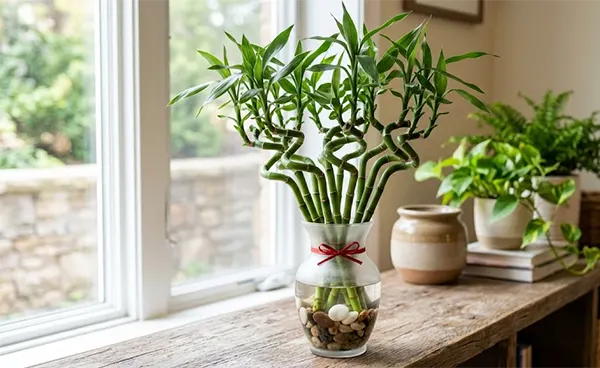
Lucky bamboo is an easy-to-care-for plant that is also a symbol of good fortune in many cultures. It is a type of water lily called Dracaena sanderiana. The plant itself represents the element wood, and the red ribbon tied around it represents fire. It is associated with a sense of balance and safety in life.
| Botanical name | Dracaena sanderiana |
| Watering needs | Grow it in water with 1-2 inches of the lower stem submerged in water. Change the water every 7-10 days. |
| Soil Preference | Can also be grown in a loose, well-draining indoor potting mix. |
| Sunlight Requirement | Bright, indirect light. Avoid direct sunlight that can scorch the leaves. |
2. Snake Plant
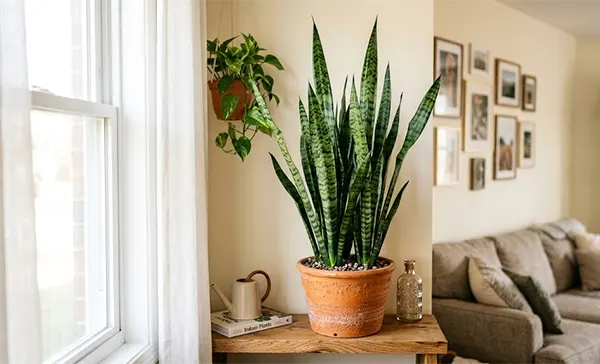
Snake plant is one of the air-purifying indoor plants that is also known as “mother-in-law’s tongue”. The plant has tall, vertical growing leaves. Some of its varieties have a long, curvy appearance and yellow accents. This plant can thrive on neglect and is found to be nearly impossible to kill. It looks wonderful on a windowsill, but keep it out of the reach of pets, as it is considered toxic.
| Botanical name | Dracaena trifasciata |
| Watering needs | Water once every 2-3 weeks in spring and summer, and reduce the frequency to once a month in winter. |
| Soil Preference | Fast-draining succulent or cactus potting mix. |
| Sunlight Requirement | Bright, indirect light. Avoid direct sunlight that can scorch the leaves. |
3. Peace Lily
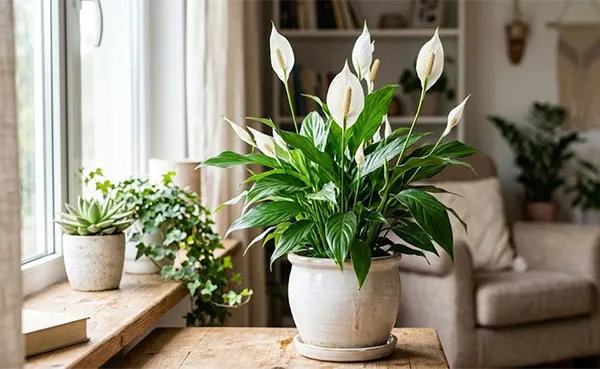
Peace Lily is one of the indoor plants low maintenance that evokes a sense of calm in the surroundings. The plant features white flowers amidst its dark green leaves. Peace lily care involves indirect light and well-drained soil. The plant is considered sensitive to drought and heat. It is great for shady spaces as it tolerates low light and droops when in need of water.
| Botanical name | Spathiphyllum wallisii |
| Watering needs | Water when the top 1-2 inches of the soil feels dry or when leaves droop. |
| Soil Preference | Rich, loose, and airy potting mix. |
| Sunlight Requirement | Bright, indirect light. They can survive in low-light corners but will grow more slowly. |
4. ZZ Plant
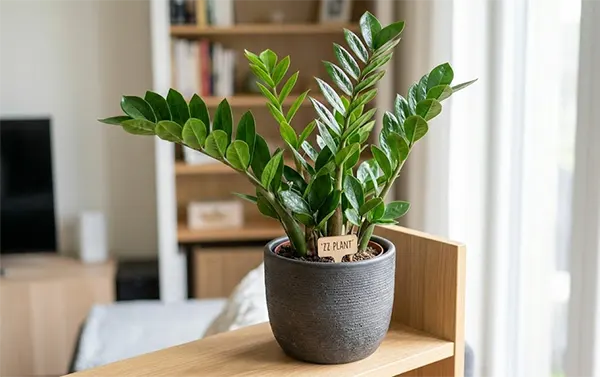
ZZ plant, also known as the Eternity plant, is one of the best plants for beginners in indoor gardening. It is a clump-forming houseplant with upright stems and glossy leaves. The plant’s waxy dark green leaves are highly aesthetically pleasing. It also has a black-foliage cultivar that is known as the “Black Raven” ZZ plant.
| Botanical name | Zamioculcas zamiifolia |
| Watering needs | Let the soil dry out completely between waterings. |
| Soil Preference | Well-draining potting mix. |
| Sunlight Requirement | Bright, indirect light is best; tolerates low light. |
5. Rubber Plant
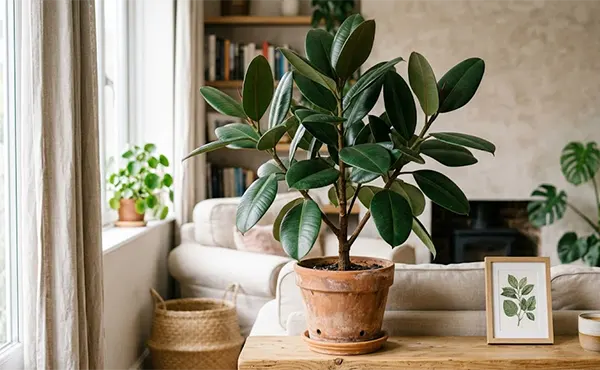
The rubber plant is one of the most famous indoor plants for the home, with broad and shiny leaves. This plant can grow quite tall and adapts to various light conditions. Growing up to 6-10 feet in height, the plant is great for large spaces like meeting rooms and living rooms. Bring it indoors for an architectural statement.
| Botanical name | Ficus elastica |
| Watering needs | Water when the top 2-3 inches of the soil dries out completely. |
| Soil Preference | Rich, loose, and well-draining soil. |
| Sunlight Requirement | Bright, indirect light. Avoid direct sunlight that can scorch the leaves. |
6. Pothos
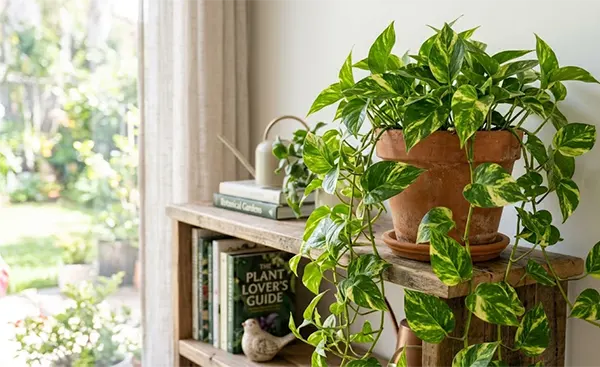
Pothos has been one of the best indoor plants for decades and thrives on minimal care. The plant produces beautiful heart-shaped leaves in colours such as green, marble green, and yellow. These are commonly used on hanging shelves, walls, and bookshelves due to their cascading vines. Thanks to the lush green look, these plants are great for bringing nature indoors.
| Botanical name | Epipremnum aureum |
| Watering needs | Water when the top 1-2 inches of the soil feels dry. |
| Soil Preference | Loose, well-draining potting soil. |
| Sunlight Requirement | Bright, indirect light is best; tolerates low light. |
7. Spider Plant
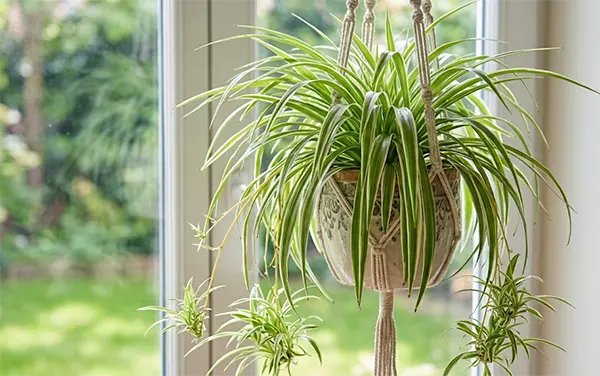
Spider plants are one of the most popular plants for homes that thrive well in various conditions and are tolerant of low light. They get the name “spider” from the small plantlets produced on long trailing stems that look like spiders. Pet owners can also include these plants in their homes as they are non-toxic to both cats and dogs.
| Botanical name | Chlorophytum comosum |
| Watering needs | Water when the top 1-2 inches of the soil feels dry. |
| Soil Preference | Loose, loamy, well-draining potting mix. |
| Sunlight Requirement | Bright, indirect light. Avoid direct sunlight that can scorch the leaves. |
8. Aloe Vera
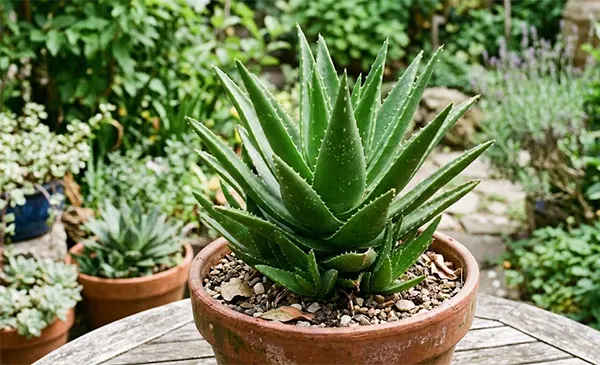
Aloe vera is one of the indoor plants for the living room that receives bright indirect light. It is a healing plant that is often used to treat burns and skin irritation. The plant features lance-shaped leaves and jagged edges. It is a medicinal plant, like a natural pharmacy in your home.
| Botanical name | Aloe vera (L.) Burm.f. |
| Watering needs | Water deeply when the soil is dry. Avoid overwatering, which can cause root rot. |
| Soil Preference | Cactus or succulent potting mix. |
| Sunlight Requirement | Bright, indirect light. Avoid direct sunlight that can scorch the leaves. |
9. Jade Plant
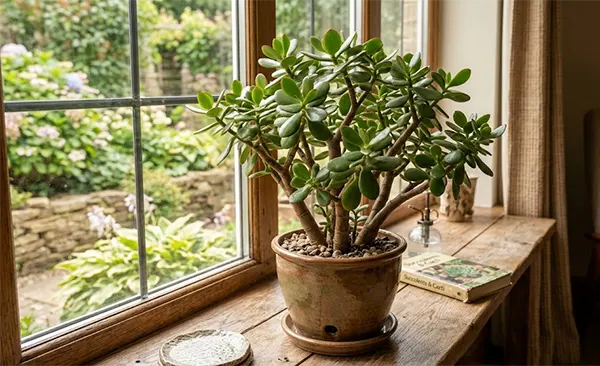
Jade plant is a popular succulent that has a shrub-like appearance with thick, oval-shaped leaves and woody stems. It also features small star-shaped flower clusters at the end of its branches. Mature plants can reach about 3 to 6 feet tall, adding 2 inches annually. If you buy the larger established plants, they will be more expensive due to their longevity.
| Botanical name | Crassula ovata |
| Watering needs | Allow the soil to dry out completely between waterings. |
| Soil Preference | Well-draining cactus or succulent mix. |
| Sunlight Requirement | Bright, indirect light. Avoid strong direct sunlight that can scorch the leaves. |
10. Philodendron
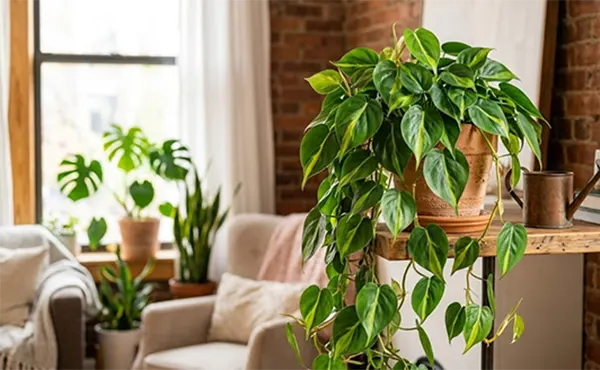
Philodendrons are easy maintenance indoor plants that have very large, glossy green leaves. The plant is globally popular due to its decorative appeal in homes. These plants prefer indirect light and even tolerate low light conditions. There are plenty of plants to choose from, including imperial green philodendron, birkin philodendron, and heartleaf philodendron.
| Botanical name | Philodendron spp. |
| Watering needs | Water when the top 1-2 inches of the soil feels dry. |
| Soil Preference | Loose, well-draining, airy potting mix. |
| Sunlight Requirement | Bright, indirect light. Avoid strong direct sunlight that can scorch the leaves. |
Benefits of Indoor Plants
Indoor plants are easy to maintain, making greenery accessible to everyone. They are highly beneficial as they relieve stress, boost mood, enhance sleep, and improve focus. Further, the University of California mentions that studies have shown that even a single plant can improve air quality by 25%.
Here are the detailed benefits of indoor plants for our well-being:
- Relieves stress: Caring for houseplants feels calm and optimistic. It naturally relieves stress, decreases blood pressure, and calms the nervous system.
- Boosts mood: Adding greenery to the home provides emotional relief, comfort, and positivity.
- Improves focus: Indoorplant helps combat mental fatigue and support attention restoration. This can increase productivity and creativity in professional spaces.
- Increases humidity: These plants release moisture vapours into the air and improve humidity levels, reducing dust. Due to this, they help with the common cold, dry coughs, and other respiratory issues.
- Enhances sleep: The fragrant plants like jasmine and lavender release a soothing scent. With this, they promote a more restful sleep.
- Improves air quality: Indoor plants can absorb indoor volatile organic compounds (VOCs) and pollutants like benzene and formaldehyde.
Study Insights
According to a study by the National Center for Biotechnology Information, indoor plants are important elements for the daily functions and health of people. They are easily applicable and accessible.
Care Tips for Indoor Plants
In your indoor plant care, use high-quality potting mix and keep the plants in a spot that receives bright indirect light. Water the plants infrequently but deeply and feed them occasionally.
Let’s see some essential care tips for indoor plants:
- Start your indoor plant with good soil. A high-quality potting mix promotes healthy roots and overall well-being of the plant. For most houseplants, standard indoor potting mix works. However, in the case of succulents, a faster-draining mix is required to mimic their native environment.
- Properly water the plants when the soil feels dry. You can check the soil moisture by poking your finger into it like a meter. Always remember to water your plants less often but deeply rather than lightly and frequently.
- Most of the best plants for home prefer moderate to bright light. Place the plants on a north-facing window, east-facing window, or west-facing window depending upon the variety. If you are keeping them in a low-light space, invest in an LED grow light or choose a houseplant that is tolerant to low light.
- Feed the plants in their active growing season of spring and summer. Hold off feeding during late fall and winter when most of the plants are semi-dormant.
- Repot the plant when it outgrows its original container to a new pot that is about 2 inches larger than the previous one. The best season to carry out repotting is spring and summer.
- Prune or pinch the plants occasionally to improve their shape, keep them compact or remove the spent blooms.
- Inspect the plants regularly for pest infestations. If you find any infected plants, isolate them and treat them with insecticides or neem oil.
Bottom Line
Indoor plants are perfect to add a natural vibe and colour to the home. With these structured green companions you can decorate kitchens, home offices, bookshelves, side tables and vanity countertops. They also benefit health by infusing positivity and improving air quality. Some of the best indoor plants that improve home decor include jade plant, spider plant, pothos, rubber plant and aloe vera. Most of them are low-maintenance that thrive with indirect bright light and infrequent watering.
What are some indoor low maintenance plants?
Some of the indoor low maintenance plants are snake plant, ZZ plant, pothos, peace lily and aloe vera.
What are some small plants for home?
The best small plants for home include spider plant, jade plant, pothos, peace lily and lucky bamboo.
What are the best indoor plants for the bedroom?
You can grow plants like snake plant, aloe vera, peace lily and spider plant indoors.
How often do low-maintenance indoor plants need watering?
The watering requirement of indoor plants depends on the plant variety and season. Generally, most plants need watering every 1-3 weeks.
Do indoor plants need fertiliser?
Yes! Indoor plants need fertilizer but not as much as the garden plants. You may feed them with diluted fertilizer once or twice during the growing season.
- 25 of the best house plants to grow – BBC Gardeners’ World Magazine
- 15 Common Houseplants Perfect for Your Home – Pennsylvania Horticultural Society
- Indoor Plants: A Review on Phytoremediation – Asian Journal of Research in Botany
- Can house plants make you happier? – University of New Hampshire
- 10 Best Indoor Plants for Your Health, According to Research – American Association of Naturopathic Physicians