
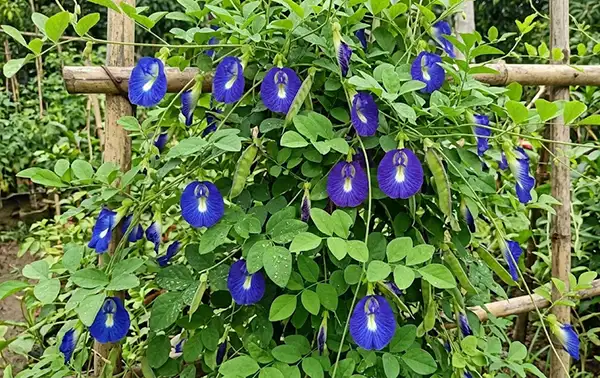
Aparajita, or butterfly pea, is one of the best flowering plants for home gardens, with its conch-shaped blue-and-white blooms. It is a timeless treasure of nature, combining elegance, spirituality, and wellness in its vines. This is a versatile plant that is readily available in temples in India and used in Ayurvedic medicine.
Whether you wish to decorate the entrance or add colour to your balcony with this plant, this guide will walk you through all the important information about butterfly pea, including its planting, care, and common problems.
What is Aparajita? A Quick Overview
Aparajita flower in english known as butterfly pea or blue pea, belongs to the Fabaceae family. Native to the tropical and equatorial regions of Asia, this is a flowering perennial that has great medicinal and cultural value in India.
| Scientific name | Clitoria ternatea |
| Common names | Asian Pigeonwings, Blue Pea, Bluebell Vine Darwin Pea, Cordofan Pea, Butterfly Pea |
| Family | Fabaceae |
| Order | Fabales |
| Genus | Clitoria |
| Species | Clitoria ternatea |
| Plant type | Outdoor flowering perennial |
| Native range | Tropical and equatorial Asia |
| Hardiness zones | USDA zones 9-11 |
| Flowering season | Summer |
Aparajita Plant Benefits
Butterfly Pea has many benefits, as it contributes to mind, space, and overall health. It acts as a natural air purifier and is used in Ayurvedic medicine. This also improves the garden ecosystem by attracting pollinators. Aparajita flower benefits include its use to make a stress-relieving tea.
- Natural Air Purifier: It is a green plant that helps reduce air toxins and increase oxygen levels. Plant it near a window or balcony to improve the air quality of your home.
- Medicinal and Ayurvedic Value: In Ayurvedic medicine, the plant is believed to be medhya rasayana. This means it is effective in rejuvenating the brain and promoting mental clarity. Aprajita flowers and roots are used in many traditional remedies to boost digestion, support detoxification, and improve skin health.
- Enhances Garden Ecosystem: It is a great plant to build a pollinator friendly garden. This attracts butterflies, bees, and beneficial insects to the landscape and promotes ecological balance.
- Symbol of Peace and Prosperity: In Indian homes, blue pea is planted alongside the tulsi plant. This is traditionally believed to bring peace and prosperity to the home. Due to its gentle aura, the plant calms the atmosphere and symbolises purity. Many people use it for puja in the home, as it invites divine blessings.
- Used in Health Drink: The dried petals of the aparajita flower are used in the famous butterfly pea tea. For its preparation, steep the petals in hot water for a vibrant blue colour. Squeeze a lemon into it to transform the colour to purple. This tea is globally popular for its stress-relieving and antioxidant-rich properties.
Planting Steps for Aparajita Plant
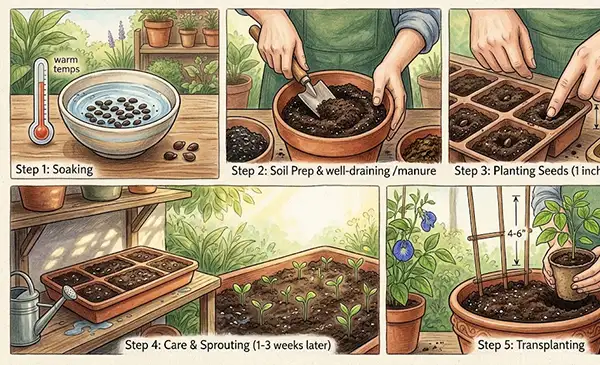
Aparjita is easy to grow from seeds. For this, soak the seeds in water and bury them in rich, well-draining soil. Place the pot in a location that receives morning sunlight and water consistently. Within a few weeks, the seeds will sprout, and you can transplant them to their permanent location.
Let’s see the detailed steps of how to grow aparajita plant:
- Soak the aparajita seeds in warm water for 12-24 hours to soften the hard outer coat.
- Use a well-draining soil mix that is rich in organic matter. Mix in some compost or manure to give it a nutrient boost.
- Push the seeds 1 inch deep in the soil, spacing them a few inches apart. Lightly cover them with soil.
- Keep the soil well moist and place the pot in partial shade until the seeds sprout within 1-3 weeks.
- When the seedlings grow to about 4-6 inches tall, transplant them to a larger permanent pot or directly to the ground.
Expert Tip
Gather the completely developed seed pods when they appear brown and dry.
Aparajita Plant Care Measures
Butterfly pea is easy to grow, as it is a low-maintenance plant. Keep the pot in a spot that receives 6-8 hours of daily direct sunlight, use well-draining soil, and water when the top inch of the soil feels dry. Also prune the plant and use vermicompost or cow dung for feeding.
Take a look below to understand the plant’s care measures:
Sunlight and Temperature
Nilkantha ful needs at least 6-8 hours of direct daily sunlight to grow abundantly. It is well suited for the warm Indian climate. You can keep it in a shaded area temporarily, but it is not recommended for a long time, as it will lead to reduced flower production.
The ideal temperature to grow this is from 20 to 35°C. In the Indian summers, it is suggested to provide it with afternoon shade to prevent leaf burning.
Watering Requirement
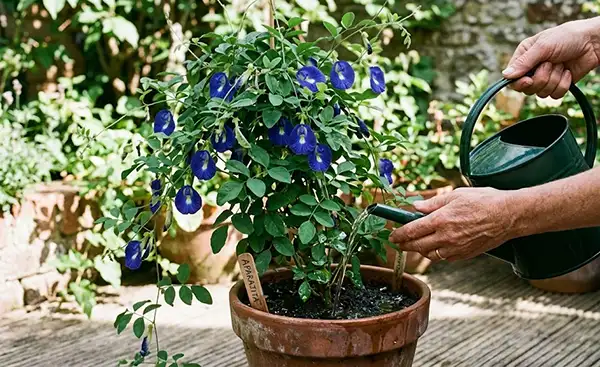
The perennial prefers regular watering but does not tolerate soggy conditions. It’s best to water it well once or twice a week. During summer, increase the watering frequency, keeping the soil well moist but not waterlogged.
Expert Tip
Water the plant early in the morning for better absorption.
Soil Preference
Aprajita can thrive in a variety of soil types if it is well-drained and nutrient-rich. The best soil mixture for this plant is a mixture of garden soil, compost, and cocopeat in equal amounts. Ensure the soil pH is mildly acidic to neutral.
Feeding
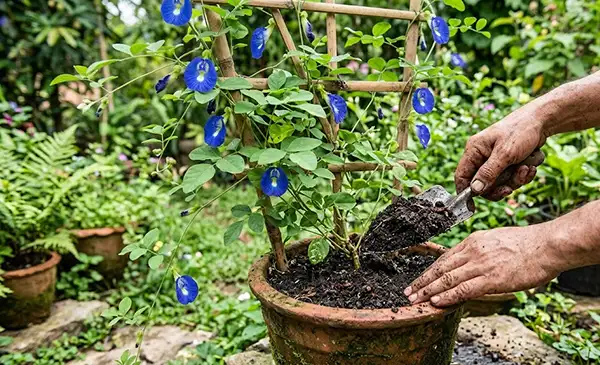
Feed the plant with a balanced all-purpose fertilizer during the aparajita flower season of spring and summer. Fertilize monthly to encourage greenery and flowering. If you want to grow plants without chemicals, organic options like vermicompost and cow dung work well too.
Pruning and Support
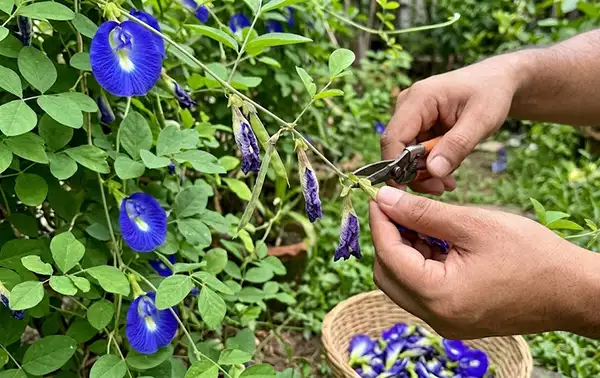
Pruning is essential in this plant to encourage its growth and maintain its structure. After every growing season, trim back the dead and overgrown stems. At the end of the winter, cut the vines to about one-third of their growth.
Deadhead the faded flowers to enhance the appearance and encourage more flowering. Also install a trellis, lattice, or wire netting to support the vines.
How to Propagate Aparajita
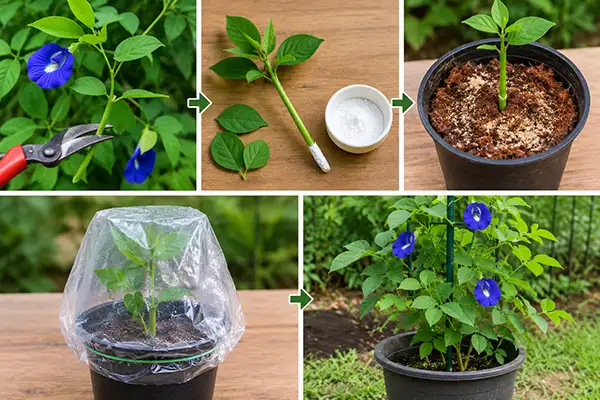
You can propagate the butterfly pea by stem cuttings. For this, take a healthy cutting and root it in a mix of sand and cocopeat. Transfer it to the larger pot when the roots form.
- Take a 6-8 inches long cutting from a semi-hardwood plant.
- Remove the leaves from the bottom of the plant and dip it in the rooting hormone.
- Place the cut end into the mix of cocopeat and sand.
- Keep the soil moist and covered for 2-3 weeks until it develops a root system.
- As the roots get established, transfer it to a larger pot or garden.
Varieties of Aprajita Plants
There are various aparajita phool types available in India, ranging from blue, white, and lavender to red and yellow. The varieties differ primarily based on the flower structure and colour.
Let’s see some of the famous types below:
| Variety | Description |
Blue aparajita (single petal)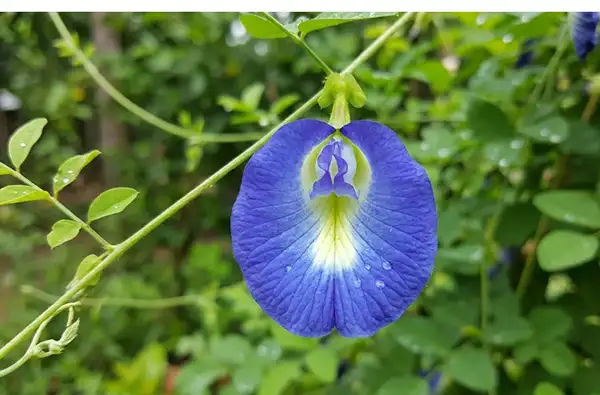 | It is one of the most common varieties, featuring blue blooms with a yellowish-white throat. |
Blue aparajita (double petal)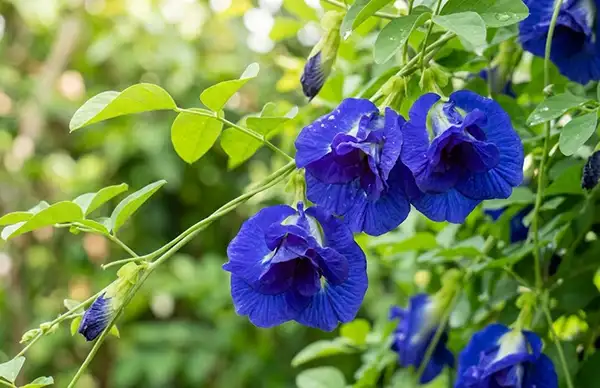 | This is a more decorative variant with an additional layer of petals. It requires more pruning to maintain the dense structure of the blooms. |
White aparajita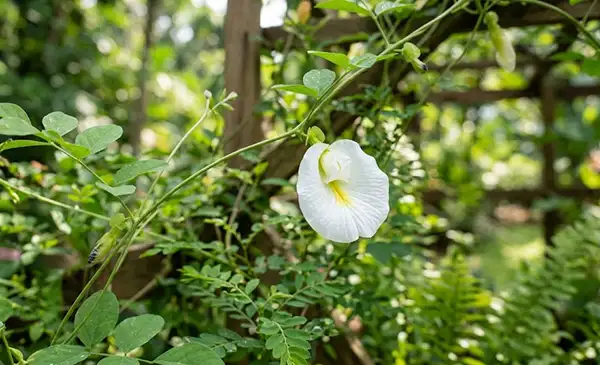 | It features a pure white aparajita flower that symbolises simplicity and elegance. This is commonly used in religious ceremonies in India. |
Lavender aparajita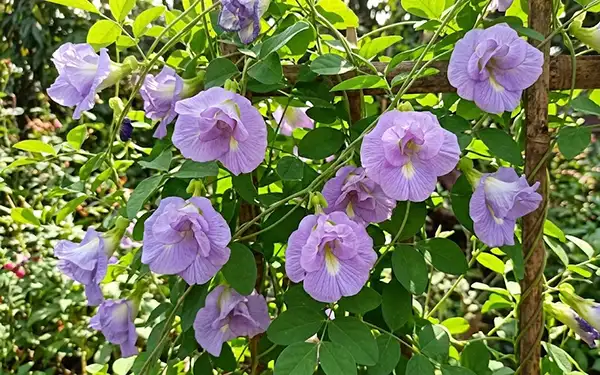 | It has soft lavender coloured blooms with a white or yellow throat. The variety is often used in potted displays and garden borders. |
Red aparajita 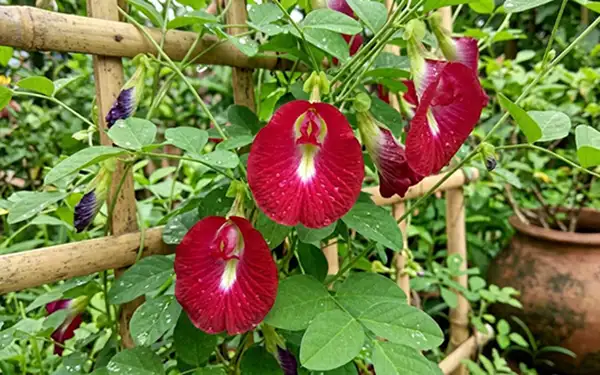 | It is a rare variety that has fiery red-hued flowers. It’s ideal as a focal point in the garden or a pollinator-friendly atmosphere. |
Yellow aparajita 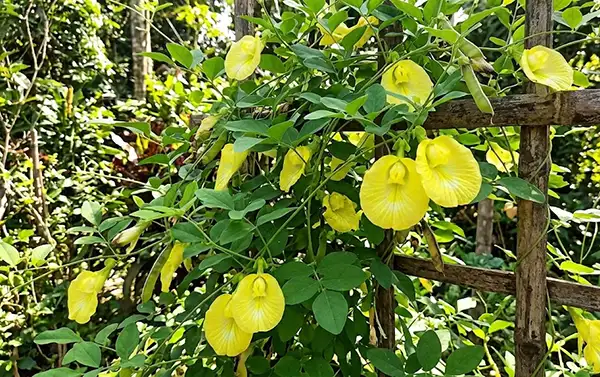 | This is a cheerful variety that has yellow blooms complementing well with the green aparajita leaves. Yellow aparajita flower is excellent for borders and garden beds. |
Common Issues in Aparajita
While the blue pea plant is typically pest resistant, it can still be affected by aphids, mealybugs, and spider mites. The other common problems in this plant include lack of flowering, yellow leaves, and powdery mildew.
Let’s find out the common issues and their solutions:
| Issue | Causes and Solutions |
| Yellowing leaves and leaf drop |
|
| Lack of flowers |
|
| Powdery mildew and white patches |
|
| Pests (aphids, mealybugs, spider mites, and whiteflies) |
|
Frequent User Queries in Aparajita
Many users have presented their queries about aparajita leaf and flowering issues on the Reddit platform. Most of them are about no flower production, leaf spots, and drooping leaves.
Here are some of the queries and solutions:
- u/anmolmolly asked Need Help so i bought The Aparajita plant, also known as the Blue Pea or Clitoria ternatea , but it still looks like its not growing ?
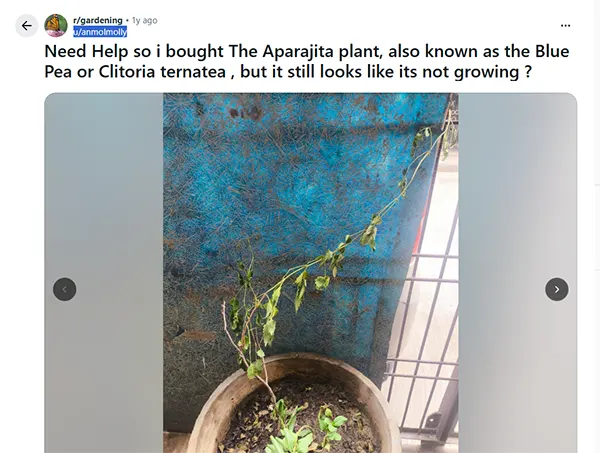
Solution: The plant has drooping and yellowing leaves that indicate possible stress or poor growth. Keep it in 5-6 hours of sunlight and water when the topsoil is dry. Remove damaged growth and ensure good drainage and a nutrient-rich potting mix.
- u/Dharmarakshati is curious to know Is my Aparajita plant alright?
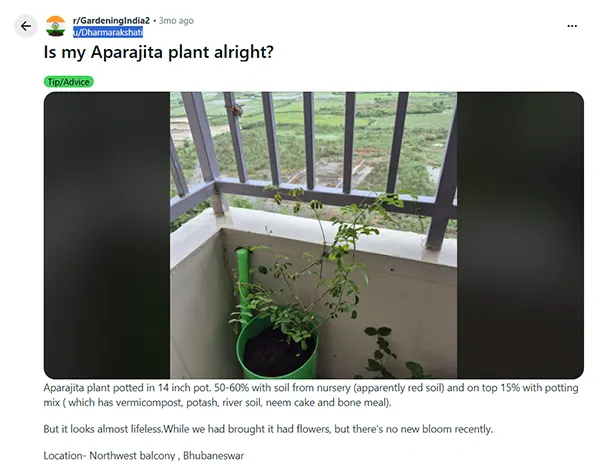
Solution: The plant looks weak, possibly due to insufficient sunlight and stress from the compact soil mix. Move it to a brighter spot, improve drainage, and water only when the topsoil begins to dry.
- u/Intrepid_Strength_80 asked Why these black spots are all over my aparajita plant?
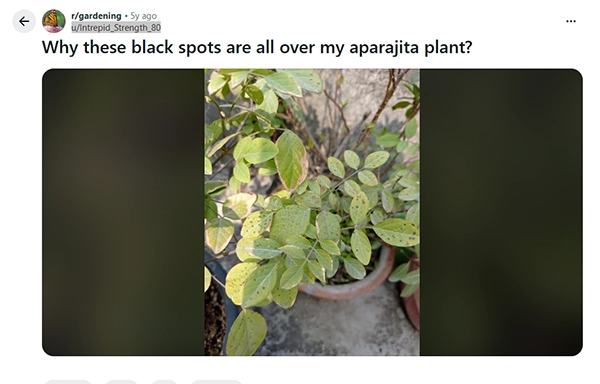
Solution: This appears to be a fungal leaf spot infection. Remove the affected leaves, improve air circulation, and avoid overhead watering. If the disease continues to spread, treat with fungicide.
Bottom Line
Aparajita is a staple in gardens and containers with its aesthetic value, medicinal use, and ecological advantages. It has vibrant blooms in colours blue, red, yellow, and white. By keeping it in partial shade, following a consistent watering schedule, and ensuring well-draining soil, you can enjoy the unique blooms year after year during its flowering season. Don’t forget to try the globally famous butterfly pea tea with its flower petals.
What are the white aparajita flower benefits?
White aparajita is the symbol of peace and prosperity, and it has spiritual, Vastu, and Ayurvedic uses. The flower is used in temple rituals, prayers, and specific puja offerings.
What do you call aprajita in English?
It is known as butterfly pea or blue pea in English.
Is there a black aparajita flower?
No! The true naturally black variant does not exist. Many sellers market the dark purple variant as a black one, which can create confusion.
Is aparajita a multi-year plant?
Yes! It is a perennial plant that blooms year to year.
Does aparajita need a big pot?
Yes! It’s better to choose a larger pot of at least twelve to fourteen inches. Also provide a trellis to support its growth.
- Aparajita: Nature’s Blue Healer – ResearchGate