

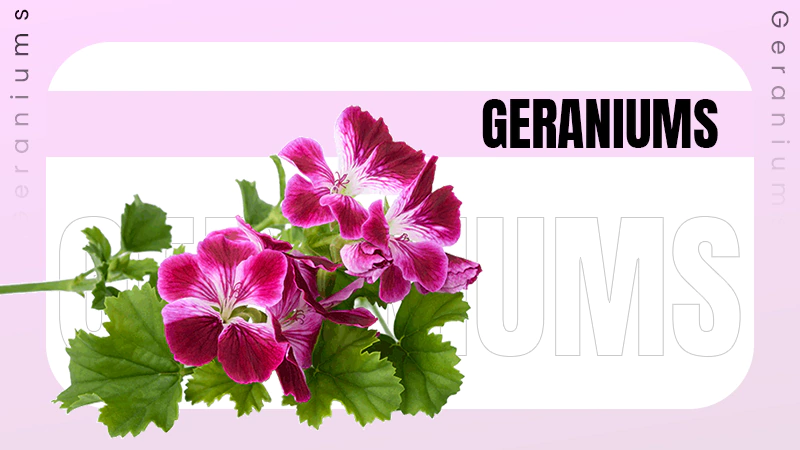
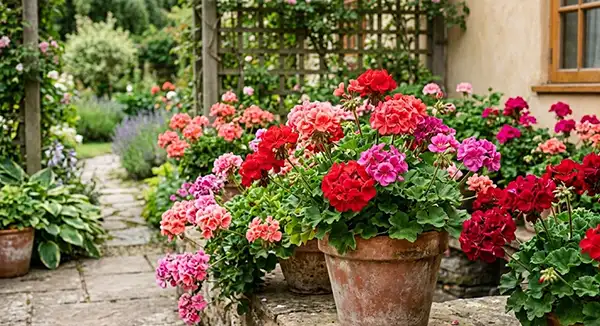
Geraniums are abundant bloomers that keep flowering from spring until fall. These are the perfect flowering plants for home gardens that are grown as annuals in most zones but are considered evezonergreen perennials in zones 10 and 11. Interestingly, this is officially known as pelargonium and is often confused with the perennial hardy geranium.
If you want to learn more about these fragrant charmers to become a garden pro, keep reading this article, which encapsulates its care essentials, planting steps, and propagation methods.
What is Geranium?: Quick Information Box
Geranium (truly called Pelargonium) is a genus of flowering plants. They have showy flowers and fragrant foliage, making them perfect for pots, beds, and hanging baskets.
Let’s see the basic information about plant geraniums, including their family, toxicity, hardiness zones, and native range:
| Common Name | Geranium |
| Scientific Name | Pelargonium spp. |
| Kingdom | Plantae |
| Order | Geraniales |
| Family | Geraniaceae |
| Plant Type | Herbaceous perennial |
| Mature Size | 1-3 feet tall and wide |
| Bloom Time | From spring to autumn |
| Flowers | Five-petalled flowers gathered in round clusters in red, purple, pink, orange, white, and bi-colors |
| Leaves | Rounded, lobed, and divided leaves that release a pleasant aroma when crushed |
| Hardiness Zones | 9 to 12 |
| Native Range | Primarily in South Africa |
| Toxicity | According to the ASPCA, these are toxic to dogs and cats |
How to Plant Geraniums From Seeds
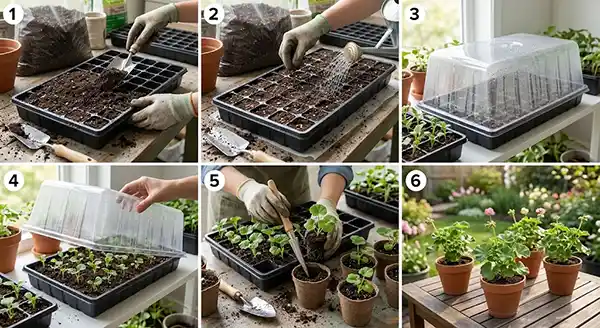
For planting geraniums from seeds, sow the seeds indoors 10 weeks before the last frost. Transplant the seedlings outdoors after all danger of frost has passed.
Here are the steps to plant geraniums:
- Step 1: Fill the seed starting tray with well-moistened soilless potting mix to ½ inch from the top.
- Step 2: Sow the seeds in it about 2-3 inches apart and cover them with ⅛ inch of mix. Water well, allowing the excess to drain.
- Step 3: Cover the tray with a plastic dome and place it in a spot that receives bright indirect light.
- Step 4: Once you see the seedlings emerging, remove the plastic dome.
- Step 5: When there are leaves, you can transplant the seedlings into individual containers.
- Step 6: Continue to grow geraniums in pots until all the danger of frost has passed away. Ensure to harden them off before transplanting into the garden.
Expert Tip
If you are growing the seedlings in pots, then plant them in 4-inch pots and increase the container size as they grow. For in-ground plants, plant them 6-24 inches apart, depending on their growth habit.
Care Essentials for Growing Geraniums
Geraniums can be grown both outdoors and indoors with little effort. Keep them in plenty of sun, provide regular watering, and use well-drained, fertile soil. Also, deadhead the spent flowers and fertilize in the growing season to boost their blooming period.
Here are the detailed geranium care essentials, including the secrets of water, soil, and sun:
Sunlight Requirements
Geraniums love sunlight, and they should be planted in a spot that receives at least 6-8 hours of direct sunlight every day. However, in hot climates, these plants may need some afternoon shade. Keep the indoor plants near the bright window to encourage their growth.
Soil Needs
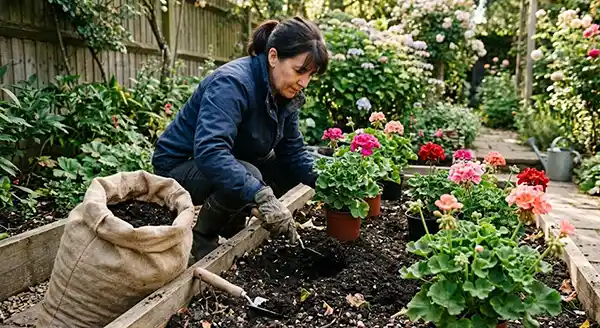
Well-draining soil that is slightly alkaline to neutral in nature is best for growing geraniums. In container-grown plants, you can use high-quality potting mix or amend the garden soil with organic matter to improve its drainage.
Expert Tip
It’s suggested to test the pH level of the soil before planting. Levels below 6.0 lead to excessive uptake of iron and manganese, which can cause damage to foliage.
Water Requirements
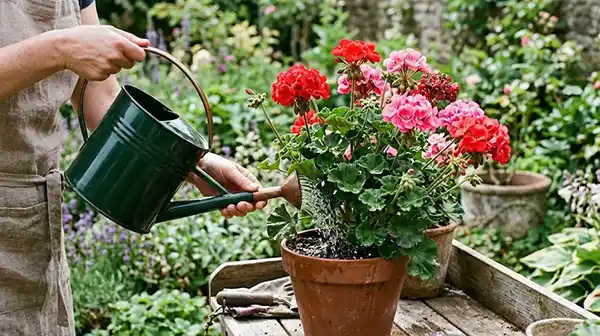
Although these plants are considered drought-tolerant, regular watering is essential in geranium planting and care. Allow the soil to dry out slightly between waterings, then water it well. Avoid overwatering, which may lead to root rot. Letting the soil dry out between waterings supports abundant blooming.
Expert Tip
In potted plants and young bedding plants, water them two to three times weekly. For established garden geraniums, watering once a week is sufficient.
Temperature and Humidity
Geranium temp tolerance ideally ranges from 70°F to 75°F during the day and 60°F to 65°F at night. Further, it prefers moderate humidity levels of 40 to 60%.
If the temperatures go higher than 85°F along with high humidity, it can cause wilting and yellowing of the leaves. Geraniums cold tolerance is as low as 45°F, but they are at risk of dieback with heavy frost if not provided with proper winter protection.
Fertilizer
This perennial is not a heavy feeder, but they benefit from occasional fertilizer in the growing season. Focus on feeding geranium plant with a balanced water-soluble fertilizer every 4-6 weeks.
Don’t overfertilize, which redirects the plant’s energy to foliage growth instead of flowering and results in poor blooming. You may also use homemade organic plant food to grow plants without chemicals.
Expert Tip
Withhold the fertilizers in these plants if the potting medium already contains it in the mix.
Pruning
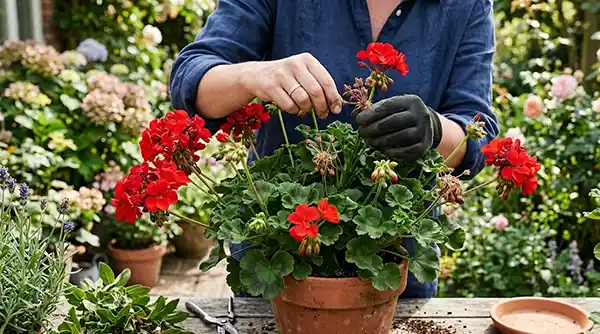
Pruning is essential in these perennials, which includes pinching back the new growth to support structure and fuller growth. Deadheading the spent geranium flowers that is the key to continuous blooming. Also, check and prune back the leggy and overgrown plants in early spring or late winter.
Winter Care
The common varieties can be overwintered to rebloom in the second year. In hardiness zones 9 to 12, these plants can be grown as short-lived perennials. If you live in the colder regions, bring the potted plants indoors to a protected area, like a garage or greenhouse, before the first frost. However, these plants are mostly grown as annuals.
Expert Tip
During winter care, water these plants sparingly but don’t let the roots dry out completely. It is their dormancy period, during which they don’t grow much.
Study Insights
Pelargonium sidoides is considered a species that is considered important traditional medicine in South Africa. According to the 2024 study by Journal of Medicinal Plants for Economic Development, this plant has been overexploited locally due to high domestic and global demand.
Top Geranium Varieties
Geranium varieties are grouped together based on their growth habit, scent, and flower structures. Some of the famous types include Zonal Geranium, Ivy-leafed Geranium, and Regal Geranium.
| Variety | Description |
Zonal Geranium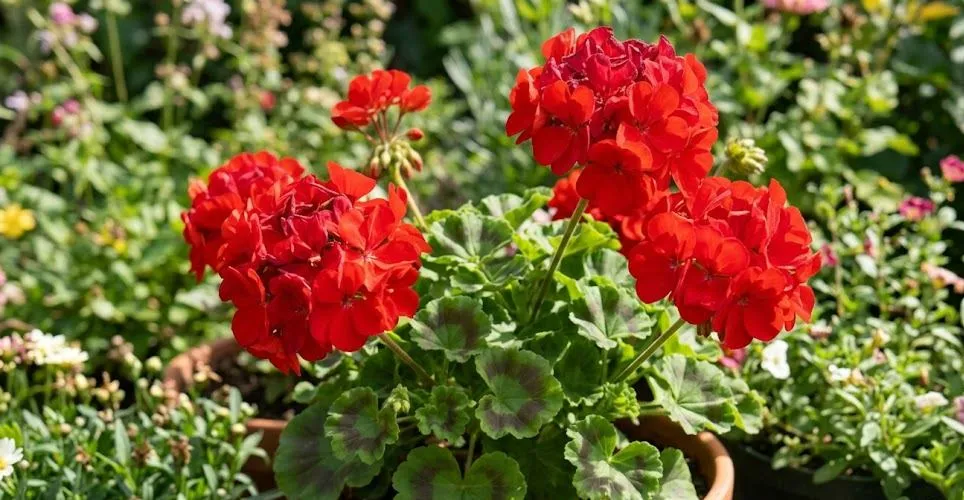 |
|
Ivy-leafed Geranium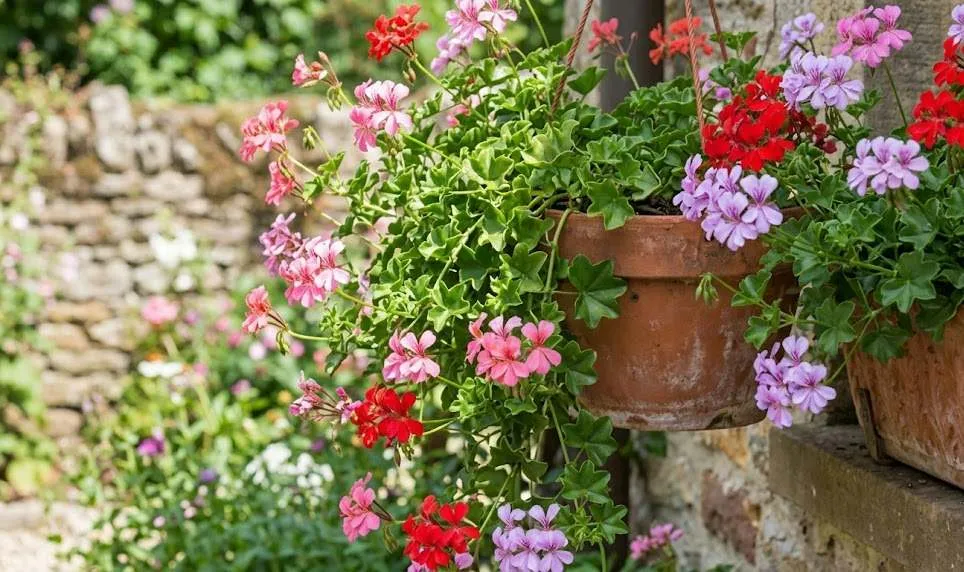 |
|
Regal Geranium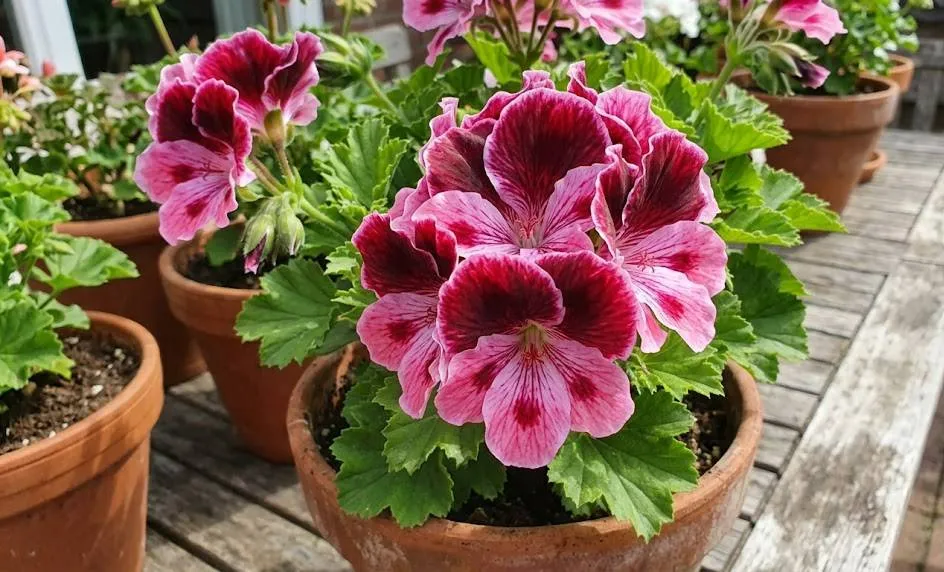 |
|
Scented-Leafed Geranium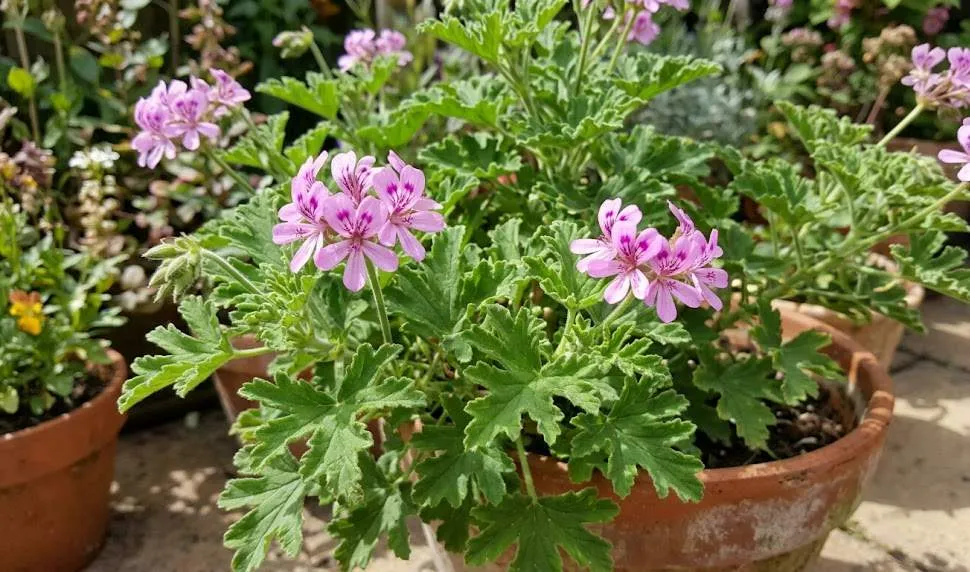 |
|
Angel Geranium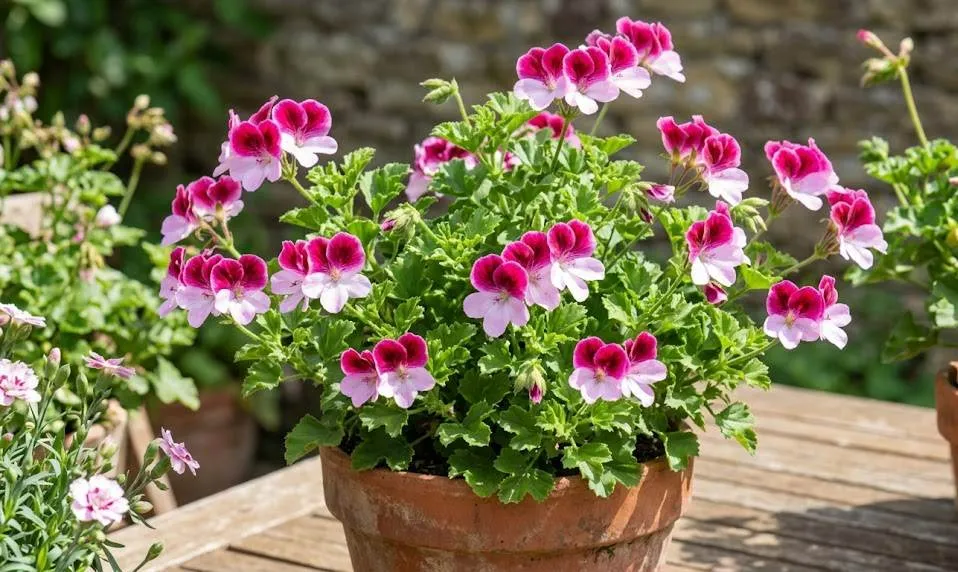 |
|
Study Insights
A 2024 study by the Journal of Medicinal and Aromatic Plant Sciences concludes that the rose-scented geranium (Pelargonium graveolens L.) can be grown as a perennial, multi-harvest crop under semi-protected conditions in northern India.
Propagation Method for Geranium Plants
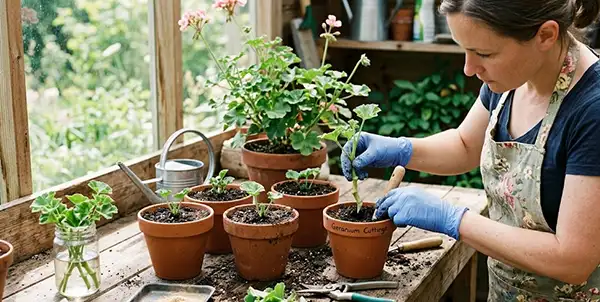
Geraniums are easily propagated with the stem cuttings method. They are easy to root both in water and soil, though the success rate in soil is relatively higher. For this, take cuttings anytime from mature plants and propagate them in the summer months for the best results.
Let’s see the process of propagation for better understanding:
- Step 1: Cut a healthy branch on the mature geranium plant about 4- 6 inches long using a snipper just above the leaf node.
- Step 2: Fill the pot with soil. You can plant several cuttings in the large pots or use a small pot to plant a single cutting.
- Step 3: Dip the cut end in the rooting hormone. Use a pencil or finger to make a hole in the soil and insert the cutting into it.
- Step 4: Water thoroughly to settle the soil and keep the cutting upright.
- Step 5: Keep the pot in a spot with bright indirect light and keep the soil well moist but not waterlogged.
- Step 6: The roots will develop in a few weeks. To check, pull the cuttings gently; if you feel resistance, the roots have formed.
Alternatively, you can propagate the cuttings in water. Follow step 1 and then place the cuttings in a transparent glass of water. Change the water frequently. Rooting is typically slower in water, but it is beneficial as you can monitor the root development regularly.
Common Pests and Diseases in Geraniums
These plants are often affected by sap-sucking pests like aphids and whiteflies. They are also vulnerable to diseases like root rot, bacterial blight, and fungal blight. Treatments include the application of neem oil or insecticidal soap and some environmental changes.
Pests that Affect Geranium Plants
| Pests | Signs and Treatment |
Aphids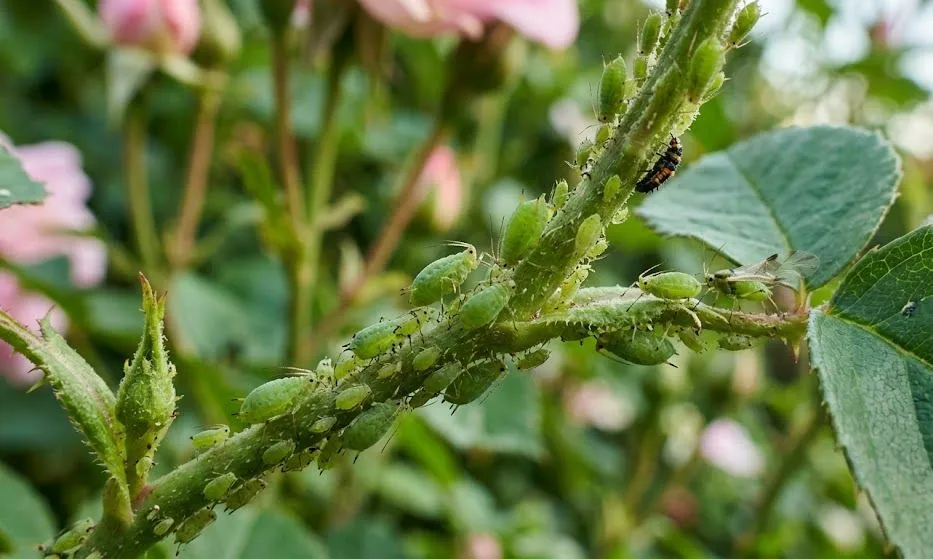 |
|
Whiteflies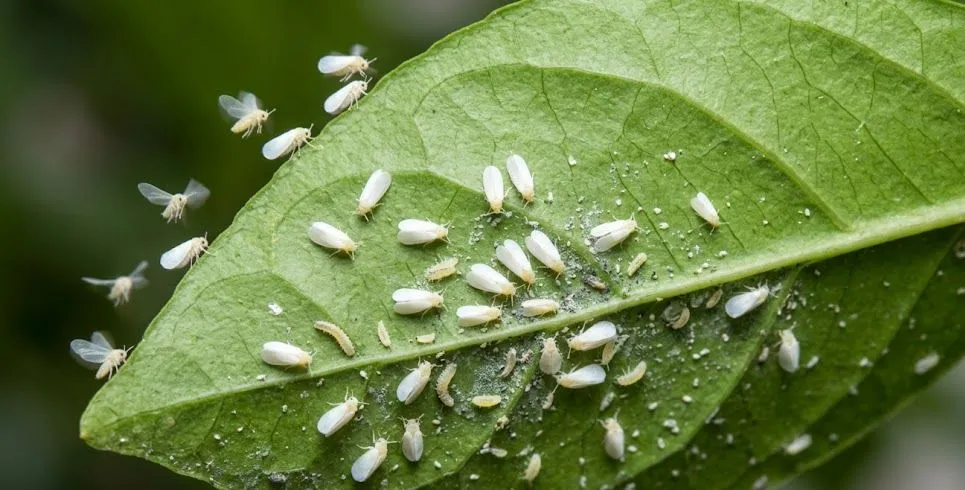 |
|
Spider Mites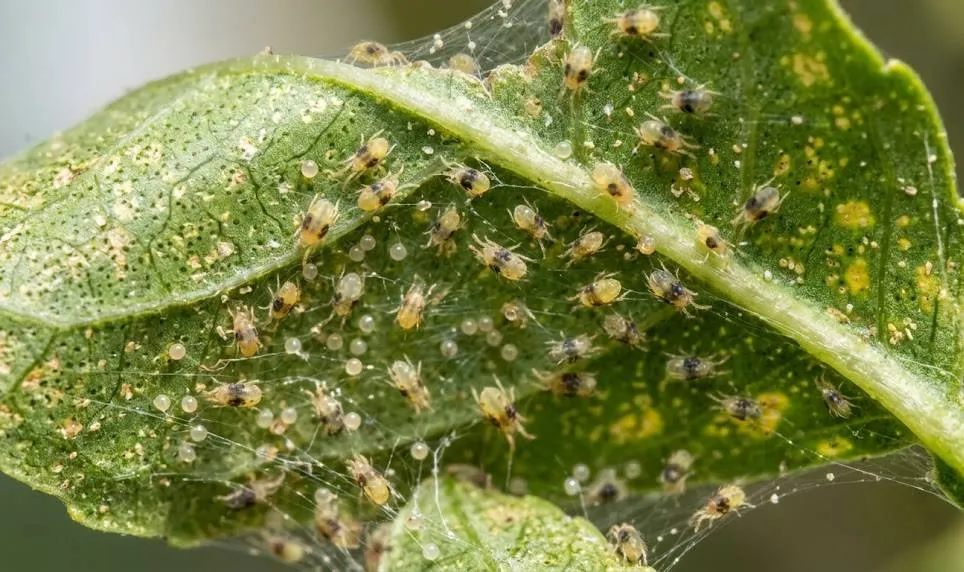 |
|
Did you know?
Geraniums can be grown as companion plants to tomatoes, roses, corn, cabbage, and pepper due to their ability to naturally repel Japanese beetles and worms.
Diseases in Geranium Plants
| Diseases | Signs and Treatment |
| Botrytis Blight |
|
| Bacterial Blight |
|
| Root Rot |
|
What is the Difference Between Geranium and Pelargonium?
Though geranium and pelargonium have the common name geranium, they are two distinct genera belonging to the same Geraniaceae family.
Pelargoniums are native to South Africa. They are tender perennials that are often grown as annuals. This variety features showy flowers and rounded leaves.
On the other hand, Geraniums are native to temperate regions. These are hardy perennials that return year after year. They have relatively smaller blooms and lobed leaves.
Frequent Geranium Problems and Their Solutions
A planter’s journey needs patience and daily learning. On Reddit, I got many questions about how to grow geraniums, including overwintering and poor blooming.
Here are some of the problems and their solutions:
Logical-MazHole asks will these geranium survive? He mentions that the plant got damaged in the frost when the temperatures were about 40-50°F. He wants to know if the winter care will help now.
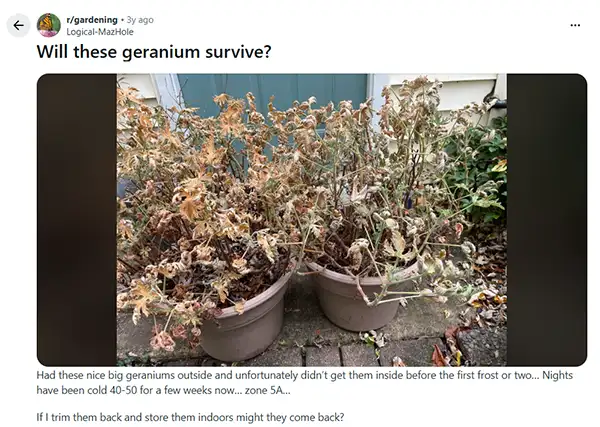
Solution: Yes! They may recover if the plant’s roots and lower branches are alive. Trim the dead or damaged growth and move the plant indoors to a bright, cool location. Water sparingly and wait for new growth before feeding it.
Rukia_k13 shows her concern: Need help with geranium. She shares a picture in which the plant on the left side does not bloom, and there are a lot of spiders in her region. The plant is provided with ample sunlight and weekly watering.
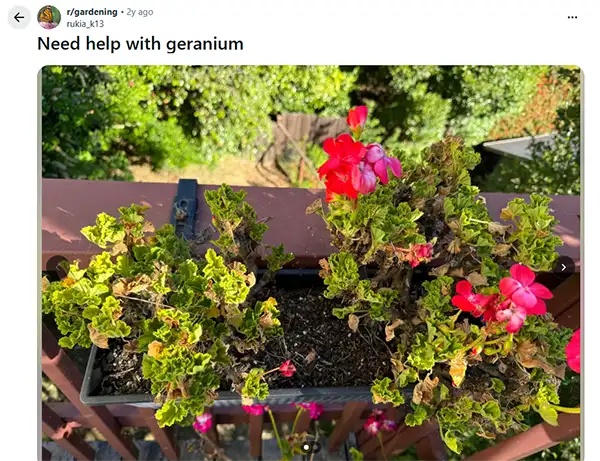
Solution: Clean the plant by removing dead leaves, spent flowers, and damaged stems. Repot to a larger container if the soil is poorly drained. Otherwise, refresh the topsoil and add balanced fertiliser in the growing season. Continue the care for geranium plants by keeping them in bright light and watering when the soil dries out slightly.
Bottomline
Geraniums are one of the most loved plants among gardeners, bringing bright display and sweet scents. These plants are well tolerant of sun and dry soil. You may pair these perennials with plants like verbena, gerbera daisy, marigold, and sedum to enhance the garden’s look and health. These can also be grown as houseplants to liven up the room. Whenever you choose the spot, keep them away from pets to ensure safety.
When to plant geraniums?
Plant them outdoors in spring when all the danger of frost damage has passed away. If you are starting from seeds, sow the seeds indoors 10 weeks before the last frost.
How to grow a geranium?
To grow geranium, use well-draining, loose soil and place the plant in a spot that receives at least 6 hours of sunlight every day. Water well when the soil gets slightly dry. Ensure you feed and prune occasionally to support its health.
Do geraniums come back every year?
Common geraniums are tender perennials that can flower for 2 years if provided with proper winter care.
Does Geranium do better in pots or in the ground?
These perennials do excellently in both containers and garden beds. But growing them in pots makes it easier to control their water, sun, and soil requirements.
Can geraniums grow indoors?
Yes! They can be grown indoors if provided with 6-8 hours of ample sunlight.
- Geranium – RHS
- Geranium (pelargonium) types explained – BBC Gardeners’ World Magazine
- Regal pelargonium – BBC
- Pelargonium sidoides – Cambridge University Botanic Garden
- Pelargonium species (Geraniaceae) – University of Oxford