

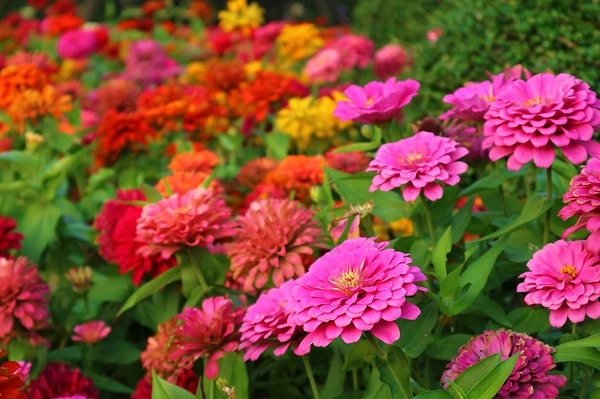
Zinnia flowers add aesthetic value to your garden with zero fuss; therefore, the plant is loved by both beginners and pro-gardeners. The zinnia flower shows up when most of the flowers struggle to bloom.
This plant is known for its tolerant nature and can still survive for a few days if you forget to water it regularly. Zinnias are fast-growing annual flowers that thrive best in bright, direct sunlight.
Let us dive further into the details of how to grow zinnias, growing zinnias from seed, caring for zinnias, taxonomic overview, ideal growing conditions, and much more.
Taxonomy and Ideal Growing Conditions for Zinnia Flower
Zinnias are known to be incredibly versatile. The plant can be grown both indoors and outdoors, but it thrives best in full sun, requires moderate watering, and the best part is that zinnia attracts pollinators, which makes it perfect for your pollinator-friendly garden.
For more general information, here is the taxonomic overview and ideal growing conditions of the plant-
| Botanical name | Zinnia elegans |
| Kingdom | Plantae |
| Order | Asterales |
| Class | Magnoliopsida (Dicotyledons) |
| Family | Asteraceae (Daisy/Aster family) |
| Genus | Zinnia |
| Hardiness | 3-11 USDA zone |
| Light Requirements | Bright, direct sunlight |
| Growth Habit | Annual plant |
| Bloom Season | Summer to fall |
| Flower colours | Multicolour, orange, pink, red, white, purple, and yellow |
| Soil | Well-drained, moist, fertile, chalky, clay, loamy, and sandy soil with acidic, alkaline, and neutral pH levels. |
| Water Requirements | Moderate watering. Note-
|
| Mature size | 1 to 3 ft. tall and wide |
| Fertilizers | The zinnia plants are not heavy feeders. You can fertilise the plant once every 7 to 8 weeks with a balanced, slow-release fertiliser if its growth slows. |
| Special feature | Attract pollinators, low-maintenance, and cut flowers |
| Resilience | Drought and heat-tolerant |
Explore the Popular Zinnia Varieties
Zinnias bloom in different sizes and colours. When it comes to choosing the plant, there is a huge section of varieties and different species. Here are some of my favourite varieties of zinnias, suitable for every location.
| Variety | Description |
Lilliput 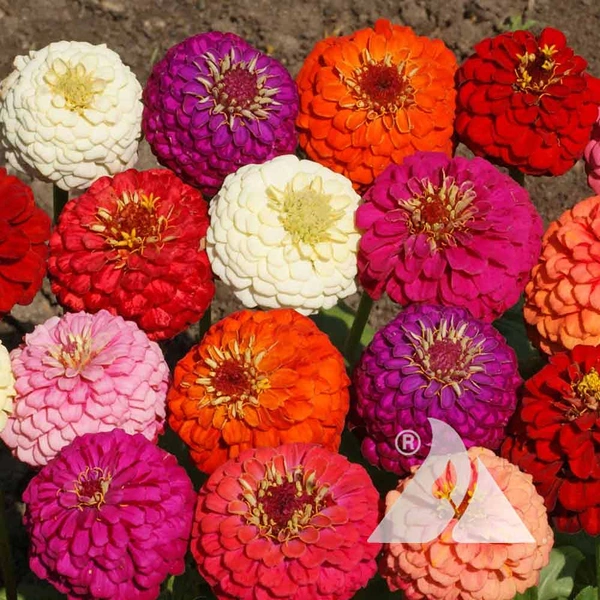 | They are low-growing zinnia plants of height around 50 to 60 cm. This variety of zinnia blooms from July to October. |
Peter pan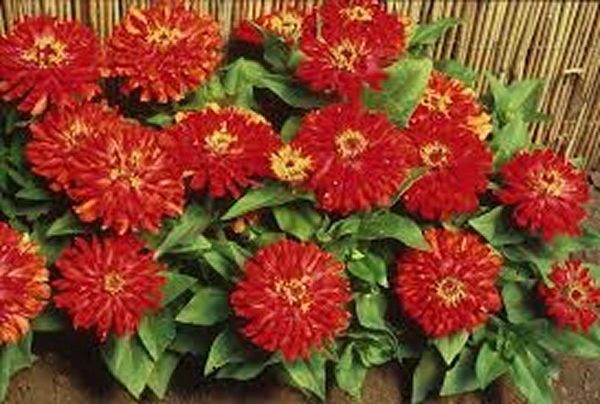 | These are the draft plants with a height of around 30 cm. They bloom beautifully in orange and blood-red colours. |
Giant cactus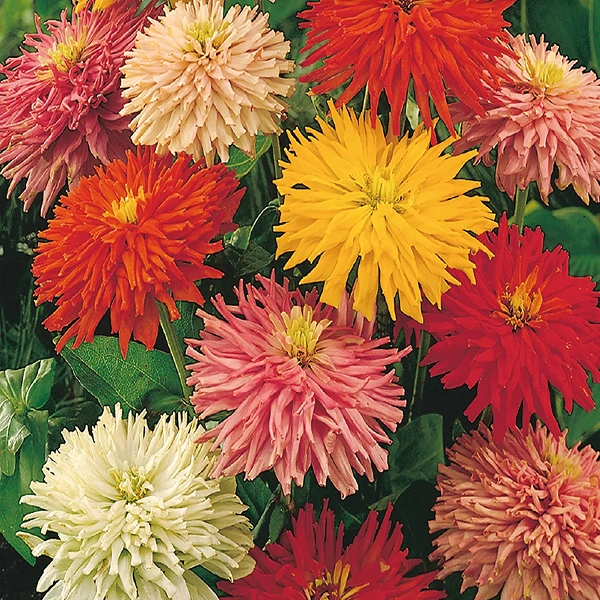 | As the name suggests, giant cactus are among the tall varieties of zinnia, with large blooms. |
Zinnia angustifolia 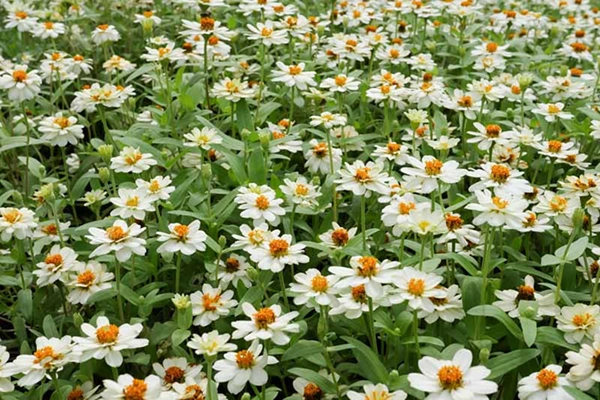 | It is a narrow-leaved zinnia with lavender-like leaves and small flowers in hues of pink, red, white, and orange. |
Whirlygig 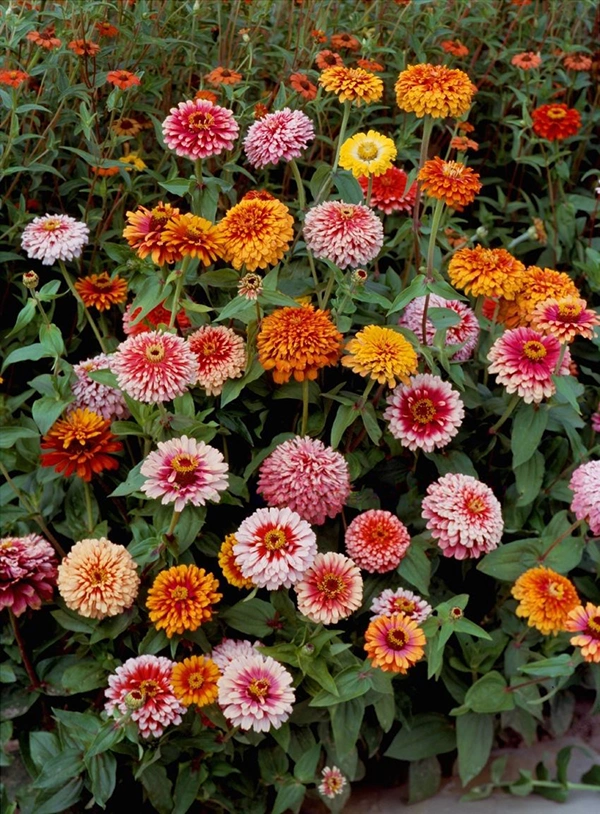 | They are the colourful mix of two-tone zinnias that have various combinations of pink, red, orange, and white. The plant grows around 70 to 80 cm tall. |
How to Grow Zinnia Plants?
Zinnias are one of the easiest annuals to grow. The plant blooms in vibrant hues such as pink, white, red, purple, and more. The flowers last from late spring till the fall.
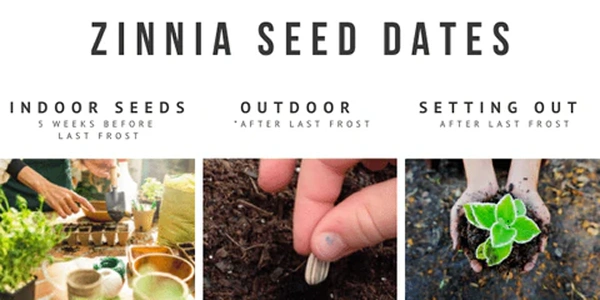
Zinnia flower grow best from seed and can be sown directly in the garden after fall. To grow zinnia seedlings, here are a few simple steps that you need to follow:
- Zinnias are best grown from seed. They germinate quickly, so directly sow them outdoors into garden soil. Avoid using nursery plants.
- Sow seeds about ¼ inch deep into the soil with a spacing of around 10-12 inches for better branching and airflow.
- Water the seeds regularly after sowing and keep the soil moist until the seeds sprout, but avoid overwatering the plant to prevent fungal disease or root rot.
- The seeds will start germinating in around 5 to 8 days in warm conditions.
- Zinnias are not heavy feeders on fertilisers; all they require is healthy soil. Still, after 6 to 8 weeks of planting, you can use slow-release balanced fertilisers in case the plant’s growth slows down.
How to Harvest Zinnias?
Zinnias are ready to cut when the flower petals are fully bloomed, and the stem below the bloom feels firm. If the stem below the flower bends easily, the bloom is yet to mature and isn’t harvest-ready.
Here are two simple steps to harvest zinnias:
- Use sharp pruners and make a deep cut on the stem, leaving 3-4 sets of leaves on the plant.
- Cut the stem deeper than normal; this encourages branching and continued flowering.
For storing cut flowers, place them immediately in a jar / pot of clean water. Make sure to remove any foliage below the waterline. By doing so, the flowers typically last up to 7 to 12 days.
How to Propagate Zinnias?
Propagating zinnia by cutting involves three simple steps. These are:
- Take cuttings correctly before the flowers start blooming. Simply cut above a lower set of leaves when plants are at least eight inches tall.
- Remove lower leaves from your cutting. This step is something that people often ignore or forget. Leaving foliage on the stem will cause leaf rot, and your plant might not grow.
- Place your zinnia cutting in water. This will help you to easily observe the roots growing out of the cut. Once the roots are visible, place the stem in a pot. Make sure to keep the soil moist, as it will help your plant to bloom properly.
Make sure that if you are placing the stem cut in water, there is no foliage below the waterline.
Ideal Care Tips for Zinnias
Zinnias are easy-to-grow and low-maintenance plants. They thrive best in warm weather conditions. Here are a few caring tips for zinnia:
- Choose a location which receives direct sunlight and partial shade.
- Rich, well-drained soil is essential for zinnia to grow properly.
- The plant does not require much fertilizer. Therefore, it is advised not to force fertilisers on it.
- Zinnias require moderate watering. They are a fairly drought-tolerant plant. Overwatering can cause trouble to the plant; therefore, it is advised to water only when the top layer of the soil slightly dries.
- Removing flowers regularly promotes continuous blooming and prevents the plant from going to seed too quickly.
- Apply a layer of organic mulch around the plant base to help retain moisture, maintain temperature, and suppress weeds.
Bonus Tip:
Zinnia plants can not tolerate heavy rain, as it can damage the flowers and tall-growing varieties. Therefore, a sheltered location is preferable.
Pests and Problems that Might Occur in Zinnia Flower
Zinnias are one of the pollinator-friendly plants. They attract pollinators like bees, butterflies, hummingbirds, etc. Therefore, it becomes essential to care for the plant and save it from pests.
This can be done by better soil preparation, irrigation, mulching, optimum plant spacing, and adequate sunlight, rather than using pesticides, as it can cause damage to pollinators or reduce the quantity of visitors.
The common pests that attack zinnia are spider mites, slugs, and aphids. Slugs love zinnia and usually attack the young plants, quickly killing them. So, it becomes important to protect the plant, especially in the first few weeks after planting.
Aphids and spider mites also infest zinnias; however, outdoor insects like ladybugs can prevent these pests from getting out of hand. If you still find these pests on the plant, hand-pick them and spray neem oil once every two weeks for better results.
Did you know?
Zinnias are generally deer-resistant.
Common Problems and Solutions that Works
Although zinnias are a beginner-friendly plant which requires minimal care and attention, there are times when people face problems like slow growth, powdery white coating, etc. Most of the problems arise from planting timing, spacing, watering habits, or overfeeding fertilisers and pests.
Here is the list of common problems associated with zinnias and their solutions:
| Problem | Solution |
| Stunted growth or slow start | It is very important to plant zinnia at the proper time. If the plant is planted early in cool soil, it may grow slowly or stall. The preferred time to plant zinnias is during spring when the temperature becomes consistently warm. |
| Powdery white coating on leaves | Powdery white coating usually appears in humid weather. But this does not affect flowering. Proper sunlight, good spacing, and watering at the base level can reduce this. |
| Not blooming well | The plant prefers full direct sunlight. If the plant is not located in direct sunlight, move it to a better location. |
| More leaves, fewer flowers | The main reason behind this can be overfertilisation. Zinnia are not heavy feeders and therefore require fertiliser only once in a while. The plant prefers compost-rich soil. |
| Browning or spotted leaves and damaged blooms | Watering the plant overhead can leave foliage damp and cause disease to the plant. The correct way of watering the plant is to pour the water on the soil. |
| Wilted flowers in the vase | It is suggested to harvest the flower when the petals are fully open. Tip- harvest the flower early in the morning when plants are well hydrated. It helps them to last longer in a vase. |
| Fewer blooms over time | Zinnias require regular cutting. It helps the plant to bloom more frequently. If the blooms are left on the plant to mature fully, it leads to seed production and slow new flowering. |
Takeaways
Zinnias are a low-maintenance plant, which is also beginner-friendly. The plant thrives best in warm weather conditions and requires average watering. It blooms in different hues of pink, orange, red, and white. Zinnias are also pollinator-friendly and help to attract pollinators like bees, hummingbirds, and butterflies.
If you are planning to plant your first-ever zinnia, make sure to locate it in direct sunlight, do not overwater the plant, and protect your plant from pests. Happy growing!
When to plant zinnia seeds?
The best time to grow zinnias is around spring or when there is warmth in nature, as zinnias best thrive in warm weather.
Which pests attract zinnias frequently?
Slugs, spider mites, and aphids frequently attack zinnias.
How can I increase blooming in a zinnia plant?
To increase the bloom of zinnia plants, make sure that the plant is placed in direct sunlight, do not overwater the plant, and make sure that you plant zinnia in warm weather.
Can I grow a zinnia plant in winter?
It is advisable not to grow the zinnia plant in winter as the plant is not winter-friendly. The cold soil can slow the plant’s growth and might also affect blooming.
Are zinnias poisonous?
Zinnias are not poisonous, but the sap contains alkaloids that cause irritation when they come into contact with skin. We advise you to wear gloves while handling the sap.
Which is the most suitable soil for zinnia?
The most suitable soil for zinnia is well-drained, moist, fertile, chalky, clay, loamy, and sandy soil with acidic, alkaline, and neutral pH levels.
What is the most suitable way of planting zinnias?
The best way of planting zinnias is through seeds. People also use the cutting method for propagating the plant.
Are zinnias pollinator-friendly?
Yes, zinnias are a pollinator-friendly plant. The colourful blooms help in attracting the pollinators like hummingbirds, bees, and butterflies.
How to Grow Bright, Beautiful Zinnias: Yahoo
Zinnia | Annual, Flowering, Colorful: Britannica