


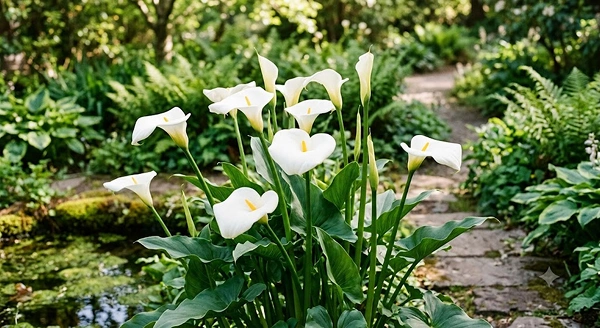
Calla lily is a stunning summer-blooming plant popular for the funnel shaped flowers and beautiful lance-shaped leaves. Though I love its pure white traditional flowers the most, modern hybrids are available in a wide array of colours, including pink, red, purple, yellow, and black.
Native to Africa, these tropicals are easy to grow and highly versatile to beautify the diverse spaces from borders to containers. If you are curious to know more about these perennials, explore this guide to understand the secrets of calla lily care, its features and different varieties.
Growing Conditions of Calla Lilies
Before discussing how do i care for calla lilies, I want to talk about this perennial’s growing conditions. Calla lillies prefer a location with full sun or partial shade. Furthermore, these plants need well-draining, rich soil to bloom abundantly.
| Growing Zones | USDA zones 8-10 |
| Sunlight Requirements | Thrives in full sun to partial shade. Full sun is best in areas with moderate summer, and partial shade is preferred in hotter climates. |
| Soil Preference | Use rich and well-draining soil. If growing it in containers, use a high-quality, well-draining potting mix. |
| Water Needs | Keep the soil consistently moist but not soggy to prevent root rot. Avoid making it dry out completely. |
How to Care for Calla Lilies?
Calla Lilies are easy-to-care-for plant that needs occasional fertilising and pruning. In addition to that, these frost-tender plants need overwintering to produce more abundant blooms in the following season. Keep them in temperatures ranging from 15 to 26°C and provide proper humidity to support their growth.
Fertilizing
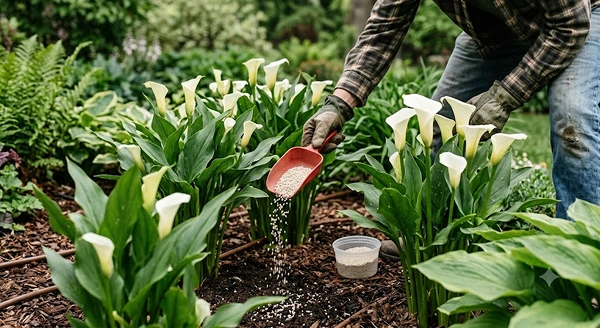
Feed the plants with the slow-release fertiliser during their active growing season in spring. In your calla lily plant care, avoid using fertiliser with high nitrogen content. It will lead to too much foliage growth at the expense of the blooms. Regular feeding is especially important for container plants, as nutrients tend to leach out even more quickly in them.
Pruning
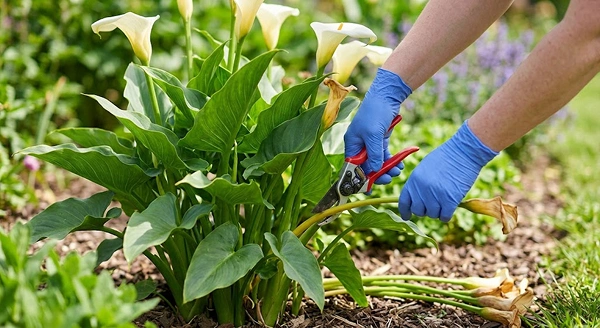
Cut the spent calla lily blossoms using a sharp, clean pair of shears to encourage growth and new flowers during its growing season. Also, remove the dead and yellow foliage to improve the plant’s look.
Winter Care
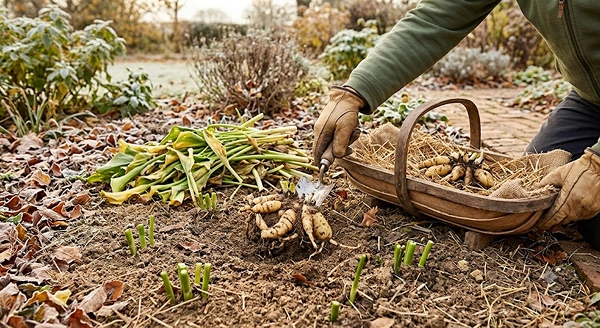
Now take a look at how to look after calla lily in winter. In zones 8-10, the plant can be left outside in a container and ground to bloom again in the spring. Cut the all the foliage to the ground level, leaving just the bulbs.
In zones that are colder than USDA zones 8, you can grow calla lilies as an annual or dig up their rhizomes and overwinter indoors to replant it in the next spring.
- In-Ground Plants: Cut back all the foliage to the ground level and carefully lift the rhizomes before the hard frost. Let them dry for a few days and then store them in a box with peat moss or sawdust. Mist the rhizomes occasionally and don’t let them dry out completely.
- Potted Plants: If your calla lilies are in containers, you can simply move the entire container to a cool, dry and dark area like a basement or garage after cutting the foliage. In the spring, move the pot outdoors and resume the general calla lily care.
Repotting
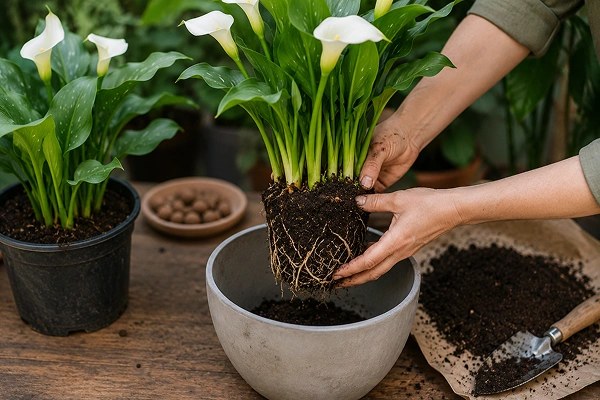
Repot calla lilies in the early spring when the new shoots just begin to emerge. It will help in encouraging its growth and prevent it from becoming root-bound.
To repot it, gently remove the plant from the container and remove the excess soil. Choose a well-draining pot that is about 2 inches larger than the current one. Place a layer of the potting mix at the base of the pot, set the plant in it and top it with soil. Water it thoroughly and place the container in bright indirect light.
Temperature and Humidity
In calla lilies care, it is important to keep them in the right temperature and humidity conditions. These plants prefer the temperature of 15-26°C to grow optimally. Additionally, it requires humid conditions and protection from the harsh afternoon sun. The plant goes dormant if the temperature drops below 10°C.
As mentioned on the California Invasive Plant Council website, Calla lily is considered an invasive plant in Western Australia and New Zealand. If this is a concern in your area, grow these plants in pots or indoors.
Taxonomy and Features of Calla Lilies
Calla Lilies are part of the Araceae family, grown as either annuals or outdoor year-round, according to the climate conditions. Growing from the rhizomes, these tropical flowering plants are also used as houseplants. They feature funnel-shaped flowers that are actually the modified leaf-bracts.
Let’s understand their taxonomical hierarchy and features:
Taxonomical Hierarchy of Calla Lilies
| Kingdom | Plantae |
| Order | Alismatales |
| Family | Araceae (Arum family / Aroids) |
| Genus | Zantedeschia |
| Species | Some popular species are Zantedeschia aethiopica and Zantedeschia odorata |
Did you know?
- Despite the name, Calla lilies are not the true lilies as they belong to the Araceae family. The true lilies belong to the genus Lilium within the Liliaceae family.
- People confuse Zantedeschia with the true Calla genus. Calla palustris is a different species of wild aquatic plant native to subarctic and cool temperate zones.
Features of Calla Lilies
- Growth Size: The plant has an upright growing habit, and it can reach up to the height of 12-36 inches and a width of 9-24 inches.
- Bloom Colour and Time: Calla lily flowers are trumpet-shaped in colours like deep purple, white, pink, red and yellow. The perennial blooms for about 6-12 weeks from spring to late summer.
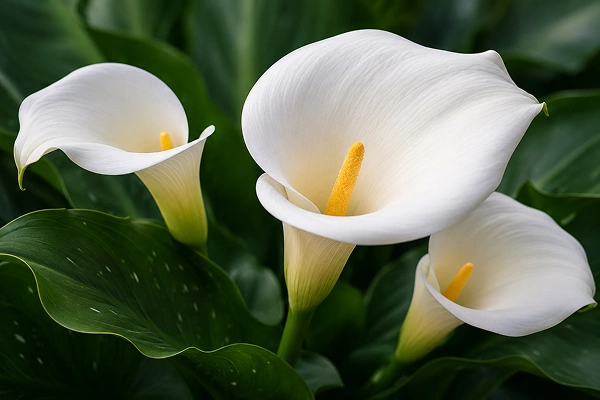
- Flower Structure: Their petals are actually the modified leaf-like bract called a spathe that curls gracefully, giving a funnel-shaped appearance. The actual flowers are tiny and packed onto the central finger-like structure known as the spadix.
- Toxicity: According to ASPCA, calilies are toxic to cats and dogs. If ingested, it can lead to vomiting, difficulty swallowing and excessive drooling.
Different Calla Lily Varieties
There are many calla flower varieties that you can add to your indoor or outdoor landscapes. Popular varieties include Zantedeschia aethiopica and Zantedeschia rehmannii, which are excellent to be planted in many distinct spots.
| Variety | Description |
Zantedeschia aethiopica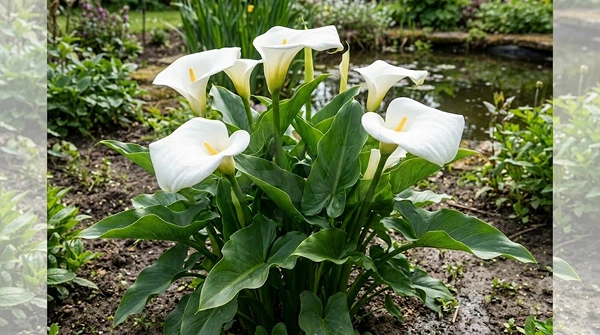 | These are the common calla lily, also known as the white calla lily. This type features large white flowers with a yellow spadix. It is a great choice for borders and beds, and as cut flowers. |
Zantedeschia rehmannii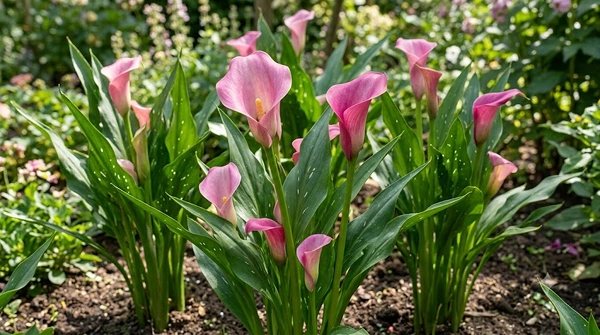 | Also known as Pink Calla, these are the stunning plants that produce delicate pink to deep rose red flowers. Its blooms are smaller than the common calla lily with narrow foliage. |
Zantedeschia elliotiana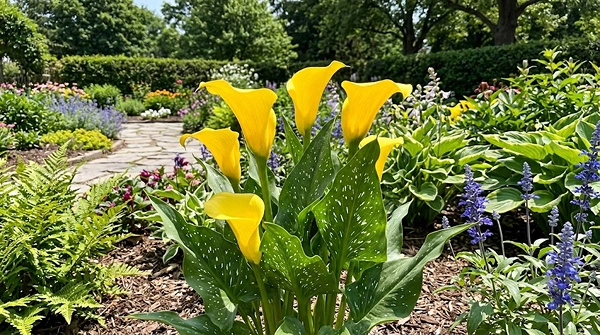 | This variety is called the Yellow Calla and is perfect to add a splash of colour to your garden. It features the yellow-hued flowers with the classic calla variety shape and heart-shaped leaves. |
Zantedeschia albomaculata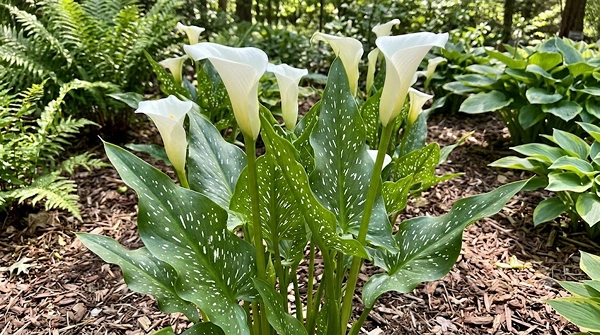 | It is the spotted calla lily species producing blooms with white or cream coloured spathes with maroon or purple spots. This plant’s foliage is often spotted, adding a distinct charm to the gardens. |
Did you know?
Calla lily (Zantedeschia aethiopica) is the national flower of Ethiopia, symbolising peace and magnificence.
How to Plant Calla Lily?
Plant the colour lily when the danger of frost is past in your area. Growing from rhizomes, these plants can be easily planted directly in the ground or a container. When you are growing calla lilies, choose a site with ample sunlight and provide them with afternoon shade in hot climate regions. Here are the steps that you can follow to plant calla lilies:
- Loosen the soil in the planting area and mix well rotted organic matter, such as garden compost.
- Plant the rhizomes with the growing tip facing upward about 4 inches deep and 12 inches apart.
- Cover it with soil and water sparingly.
- In about 2 weeks, you will see the first shoots appearing. After 13-16 weeks, the plants start blooming, depending upon the chosen variety.
Quick tip
The size of the rhizome matters as it is correlated to the plant’s size and blooms. Choose the rhizome that is large, plump and firm in appearance.
Pests and Diseases in Calla Lily
While caring for a calla lily, it is important to protect it from pests like aphids, spider mites and snails. Furthermore, the plant is also susceptible to some diseases, including root rot and bacterial soft rot. Here is the information regarding its pests and diseases, and some prevention tips:
Pest Infestations in Calla Lily
| Pests | Description |
Aphids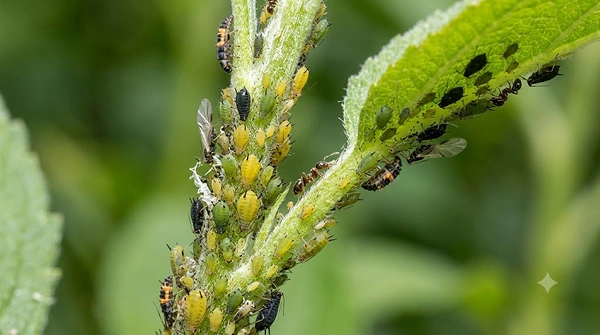 | These are small insects that attack the leaves, leading to sticky honeydew and distortion. They cause fine webbing under the leaves. |
Spider mites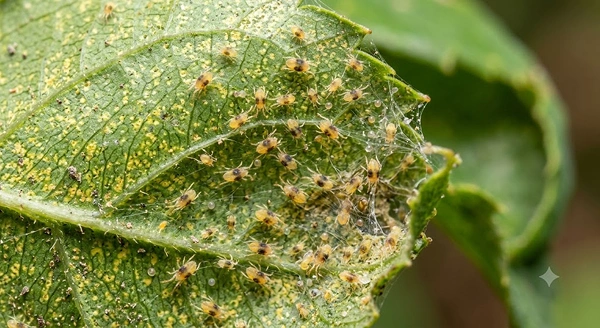 | Spider mites are hard to see with the eye, but they can cause significant damage to the plant. They create small holes and stippling on the leaves. |
Slugs and snails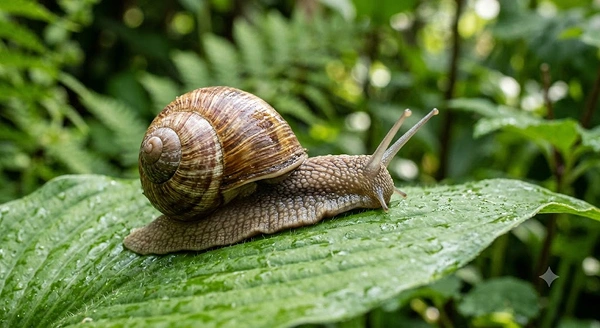 | These pests are attracted towards the lush foliage. They can cause large holes in the leaves and chewed stems. |
Diseases That Affect Calla Lily
| Disease | Description |
| Root Rot | It is a fungal infection in the roots, often caused by overwatering. |
| Bacterial Soft Rot | A common issue which causes the stems and rhizomes to turn slimy and brown. |
| Grey Mould or Botrytis | It is a fungal disease that leads to grey mould on roots, flowers and stems. |
Preventive Measures
- Soil and Drainage: Provide the plant with proper growing conditions, including the preferred soil and watering. Plant in well-drained soil and avoid waterlogging that leads to soft rot and root rot.
- Regular Inspection: Regularly check the plant for pests and diseases. Early management is significant to prevent excessive damage to the plant.
- Cleaning: Clear away the dead foliage, spent blooms and debris from time to time. It reduces the risk of diseases.
- Overwintering: In cooler climates, provide the perennial with proper winter care to support its growth in the following season.
Common User Questions About Calla Lily Care
- Query: horseyhelm is asking for advice in Help with Calla Lilly please. The plant is struggling to flower.
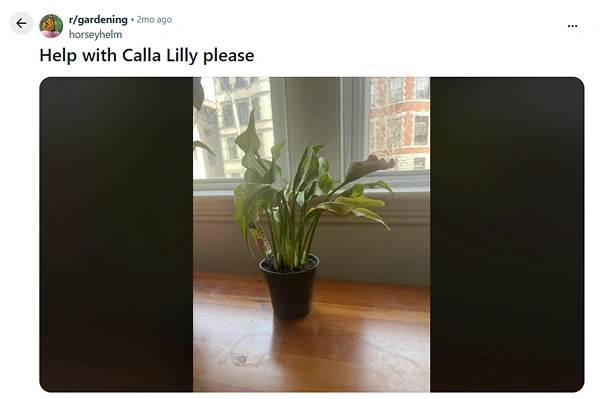
Solution: The plant likely needs brighter indirect light and better drainage. Avoid overwatering, which can lead to drooping and yellowing. Yes, it may be entering dormancy after the flowering. Trim the dying leaves and reduce watering for some time.
- shihtzulove asked Calla lily looks a little sad. Not sure if it’s from the amount of light or the fact that I didn’t water when I was out of town. Thoughts?
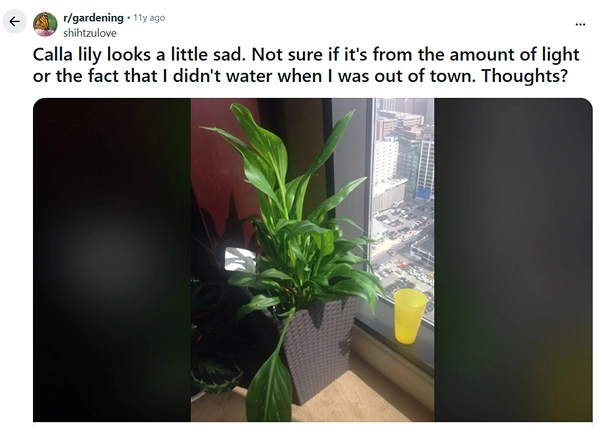
Solution: The calla lily in the image looks slightly droopy. The most likely cause could be underwatering. Water it well and let the excess water drain out. Also, avoid keeping it in harsh afternoon sun and remove the limp leaves.
- In the Calla lily flower drooping, avril350 asked about the drooping appearance of the flowers.
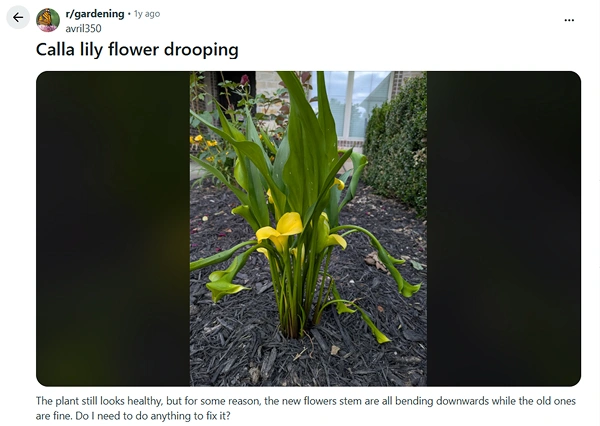
Solution: The overall plant is looking healthy; the drooping flowers are likely due to heavy blooms or watering imbalance. Keep the soil well moist and avoid letting it dry out. You can prune the old flowers to help the plant focus energy on new growth.
Bottomline
As you now know, the calla lily care and different varieties, I hope that you can now plant them without any worries. With proper sunlight, soil and water requirements, you can see these flowers thriving, whether you want to add them to borders or containers.
Focus on regular inspection and sanitation to protect the plant from pests and diseases. If you are planning to add something unique yet beautiful to indoor gardening, Calla calls your attention with its vibrant and fragrant blooms.
How to take care of calla lilies?
Place the plant in bright indirect sunlight and evenly moist, well-draining soil. Water it well when it feels dry and feed it in the active growing season to support its blooming.
How to do calla lily care indoors?
Caring for the plant indoors needs balancing its natural outdoor growth cycle with your indoor conditions. Keep the plant in bright indirect light. Provide proper moisture to the soil, avoiding waterlogging conditions.
Do calla lilies grow well in pots?
Yes! These plants are well-suited to be grown in pots and can be kept indoors or outdoors. They are widely sold in pots as houseplants.
Are calla lilies poisonous to cats and dogs?
Yes! These plants are toxic to cats and dogs if ingested. It is suggested to keep them away from the reach of pets and children.
How long do calla lilies bloom?
These are long-blooming plants that typically flower for 6 to 12 weeks in spring and summer.
- How to grow and care for calla lilies (Zantedeschia) – BBC Gardeners’ World Magazine
- Calla calling! – University of Florida
- calla – Britannica
- The Top Recommended Varieties of Callas – The National Gardening Association