
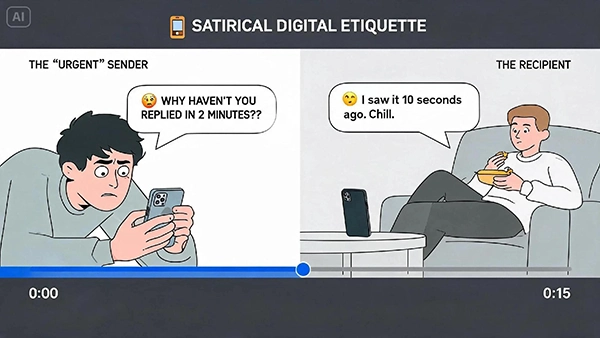
The six-minute voice note that could have been a text, the video call where someone is wearing pajama bottoms and a suit jacket.
Digital protocol is valuable for gentle satire because everyone has an opinion. Text to video AI lets you turn those tiny social sins into sharp, funny clips without a studio or a cast.
Dreamina’s Seedance 2.5 model builds each scene from your description, and you supply intelligence. Take a look at the article for the prompt and whole process.
Satire Works When It’s Recognizable
The best satire holds up a mirror. It overstates something people already identify, so the laughter comes from “that’s me” rather than “that’s them.” Digital protocol is perfect for this, because the rules are unwritten and everyone breaks them. A good sketch doesn’t lecture. It fakes the silly behavior is perfectly normal and lets the audience notice the problem themselves. That’s what keeps it kind.
Etiquette Sins Worth Skewering
Pick one habit per video:
- The reply-all: a simple “thanks” that goes to the whole company
- The endless voice note: a story with no apparent ending
- The camera-off meeting: a grid of black squares and one confrontational soul
- The “per my last email”: polite words, livid subtext
- The read-receipt standoff: two people, one ignored message
A single, clear habit keeps the video tight. Pick the one that makes you tremble hardest.
Build The Sketch In Three Dreamina Steps
Step 1: Write Your Prompt
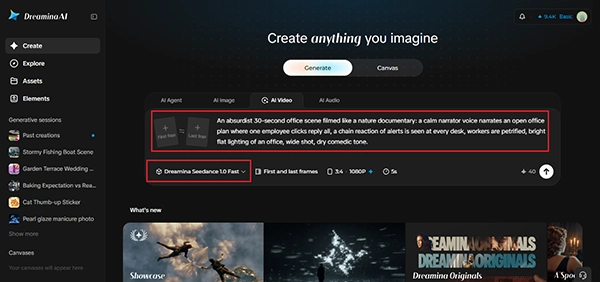
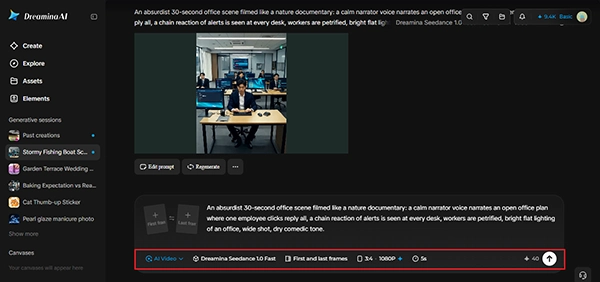
Launch Dreamina, log in, and head to the AI Video tab. Describe the environment, the characters, and their silly actions.
An example prompt for 30 seconds video is: An absurdist 30-second office scene filmed like a nature documentary: a calm narrator voice narrates an open office plan where one employee clicks reply all; a chain reaction of alerts is seen at every desk, workers are terrified, bright flat lighting of an office, wide shot, dry comedic tone. Stay true to the setting but make the actions outrageous.
Step 2: Create Your Video
Select the Seedance 2.5 model, enter the clip duration, and pick 16:9 for YouTube and 9:16 for TikTok. Click the Dreamina icon and give it some time to create. Wide shots work well for the office setting, while upright works for single-character videos. Start with a small one.
Step 3: Enhance And Export
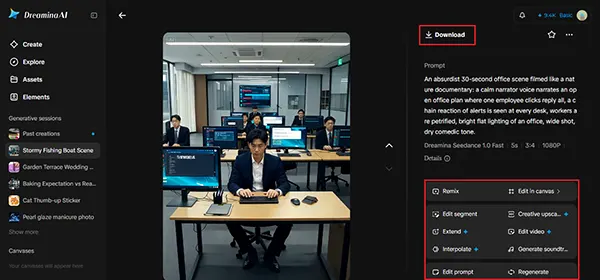
Use Dreamina’s AI editing tools to finish. Quality sharpens the footage, and Generate soundtrack adds a dry, quiet score. An impassive soundtrack beats a loud one. Export the clip and share it. If the joke feels flat, make the inflation bigger and run it again.
Exaggerate One Rule, Not Ten
Satire needs a single sharp idea. Take one small behavior and push it to an illogical intensity: a voice note that turns into an audiobook, a meeting where everyone’s camera is off and nobody is sure who’s talking. Keep everything else realistic so the overstatement stands out. If you try to excoriate five habits at once, none of them will land. Think of it as turning the volume up on one tiny detail.
Writing The Deadpan Narrator
A calm, serious narrator is the secret weapon of satire. Imagine a natural voice describing an office: “Here we see the reply-all, a creature of great confidence and no regret.” The contrast between the gentle tone and the foolish behavior makes the clip funnier. Write two or three narrator lines per clip, keep them short, and avoid clarifying the joke. Let the visuals do half the work. Read it back in your dullest voice to check the timing.
What Seedance 2.5 Adds To Satire
Sharp comedy needs clean visuals and steady characters, and a few Seedance 2.5 upgrades help.
Characters Who Stay Recognizable
Better stability from shot to shot keeps the same coworker or office across several scenes. That keeps an office feeling like one place.
Unusual Action That Holds Up
More complex, unexpected movement suits absurd moments like a motion of notifications waving across a room. Chaos is easier to describe than to film.
Cleaner Footage For Your Own Narration
Random subtitles and abandoned music are filtered out, leaving a quiet base for your voiceover. Your voice makes it yours.
Prompts In Many Languages
Multilingual support lets you adjust satire for different audiences and workplace cultures.
Pacing A Twenty-Second Takedown
Satire is best when it’s short. Open with a normal moment, present the bad behavior within five seconds, surge once, and finish with a deadpan reaction shot. Aim for fifteen to twenty seconds, and crop anything that doesn’t add to the joke. A sharp ending, like a close-up of a single puzzled face, often does more than a long punchline. Quick clips are easier to share, and sharing is the point. Test the clip on a friend and watch where they smile.
Aim At Behaviors, Not People
The best satire laughs at habits we all share. Keep your targets general, and avoid sarcastic real individuals, specific companies, or anyone’s identity. Skip logos and real product names. If a joke would hurt the person who accepted themselves in it, rewrite it so the humor sits in the situation instead. You want people to recoil and laugh at their own past mistakes, not feel singled out.
Send The Sketch
Digital protocol is a shared comedy, and everyone has a story to contribute. Dreamina and Seedance 2.5 give you a way to turn that story into a sharp little clip. Pick one habit, write the scene, and add an impassive voice. Your next video might make a whole office check their inbox twice. Tag the friend who always replies all.
Is it okay to joke about killing plants?
Yes, it is one of the most relatable aspects of plant ownership. The key is sharing the mutual grief and learning curve rather than celebrating neglect.
How do I handle viewers who take my satire seriously?
Add a lighthearted pinned comment clarifying the joke, or reply with a friendly, educational tip to gently redirect them.
Can I feature rare or expensive plants in comedy?
Yes, mocking the high-stakes stress of keeping a $500 variegated plant alive makes for excellent comedic tension.