
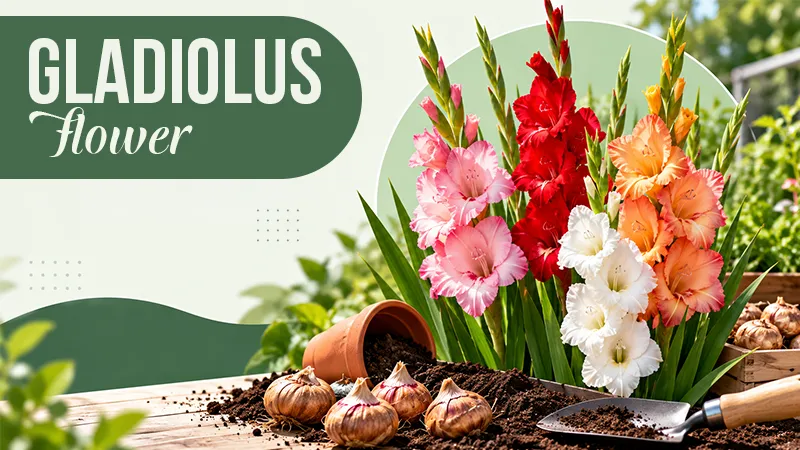
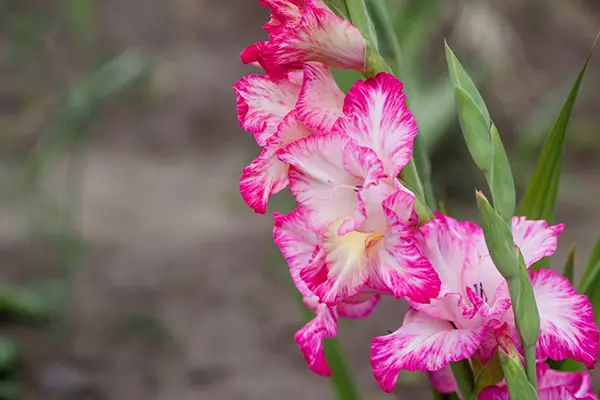
Gladiolus flowers, also known as the Sword lily, have been a gardener’s delight due to their tall flower spikes. These ruffled petal blooms are credited with their sweet fragrance and pollinator-friendly nature. Just like their appearance, their growing guide is also effortless.
With proper direct sunlight and moderate watering, these flowers bloom profusely during the months of July and September. Their moderate fertilizer needs, along with no additional care requirements, make them easy for beginners.
If you are looking forward to growing gladiolus in your garden, let me take you through a detailed guide on how to grow it in your home garden, along with some basic care guides.
What is a Gladiolus Flower? Features and Botanical Specifications
The gladiolus flower is a tender perennial flower from the Iris family. They are native to the regions of South Africa and the Mediterranean region. The average height of these flowers ranges to 2-6 feet tall, featuring 2-4 wide ruffled blooms. Gladiolus flowers are grown extensively for their dramatic height and color. These summer flowers are available in a wide range of colors, from yellow, pink, and red to white and purple, all carrying different symbolic meanings. This tall flower is hardy to zones 7-8, which means it cannot tolerate extreme winters. They bloom from July to September and then dies back in the winter.
Before moving further, let’s take a look at the taxonomy of the gladiolus flower for a better understanding of the plant.
| Botanical Name | Gladiolus spp. |
| Kingdom | Plantae |
| Division | Magnoliophyta |
| Class | Liliopsida |
| Order | Asparagales |
| Family | Iridaceae |
| Genus | Gladiolus L. |
Planting Requirements for the Gladiolus Flower
Gladiolus flowers are typically grown using underground corms, which are often mistaken for bulbs. As per BBC Gardeners’ World, the best time to plant the gladioli is during March, much after the danger of frost has passed.
Soil Type: A loose, well-draining sandy loam soil is the best for the gladiolus flower. Make sure the ideal soil pH of 6.0-7.0 is maintained and ensure proper nutrient absorption. Overly acidic soil can lead to extremely slow growth and yellow leaves due to toxicity.
Sunlight: Gladiolus are sun-loving plants that thrive in 8-10 hours of direct sunlight every day for the best growth. The gladiolus plant grows up to 6 feet tall, which can cause flopping if not exposed to proper sunlight. Although they can tolerate partial shade, it can lead to late maturity or fewer flowers.
Water Requirements: The gladiolus flowers prefer consistent watering and consistently moist soil. As per the Mississippi State Extension, 1 inch of water per week is ideal for these blooms. Make sure that you check the moisture level of the soil before watering to prevent overwatering. Excessive watering can lead to root rot.
Gardyna Insight
Follow this rule of thumb while checking the soil moisture:
Dig your finger 2 inches deep in the soil and check if the soil is dry. In case of dry conditions, water the flower immediately.
Temperature and Humidity: Another important factor for growing these summer flowers is waiting until the daytime temperature reaches between 18-30°C and the soil temperature is consistently between 13-15°C. As for the humidity, make sure the humidity is between 40-60%. These plants are hardy to USDA zones 7-8, which makes them intolerant of freezing temperatures.
How to Grow the Gladiolus Plant From Corms?
The gladiolus flowers are best grown in a site with well-draining soil that receives 8-10 hours of direct sunlight. Along with this, these flowers thrive with moderate watering and regular feeding with a balanced fertilizer ( NPK ratio: 10-10-10).
Take a look at the steps on how to grow the gladiolus flower easily in your home garden:
I. Soil Preparation
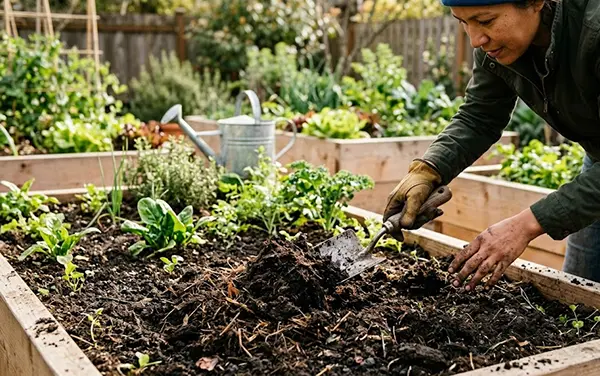
Start by selecting a site with a well-draining soil mix that receives full sun for 6-8 hours. Turn up the soil and mix it with organic compost for added nutrition.
II. Corm Selection
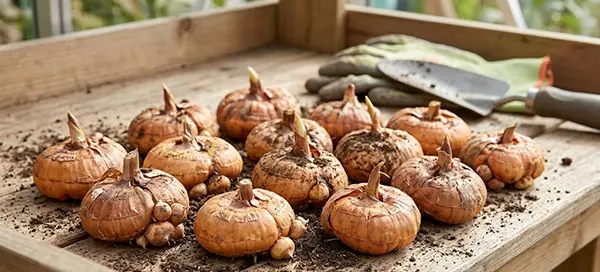
Select a healthy corm for planting. Some ways to identify it are texture, firmness, and weight. A healthy gladiolus corm is solid and firm when squeezed and weighs a little heavy due to the water content in it. While you can spot some surface blemishes, they are mostly temporary and do not cause any harm to the flower growth. As per the Missouri Extension, the right size of the gladiolus corm is around 0.5 inch to 1 inches.
III. Planting Depth
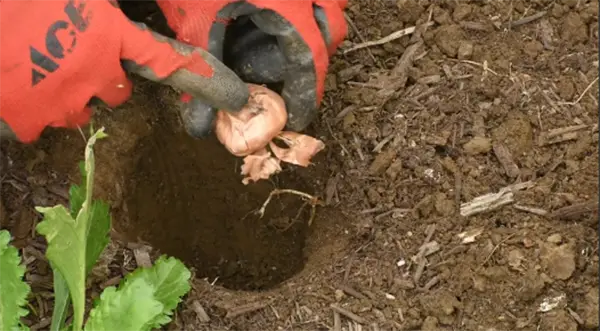
Now, dig a 4-5 inch deep hole in the soil and gently place the corms with the pointy side up. Make sure the gap between the corms is at least 3- 6 inches to ensure proper air circulation and even distribution of resources.
Cover the corms with soil and gently dab to prevent any air circulation.
IV. Aftercare
Water the plant immediately and make sure they record adequate sunlight throughout the growing season. It takes over 3 months for these flowers to grow. You can add a dose of fertilizer once every 4-6 weeks for proper nutrition.
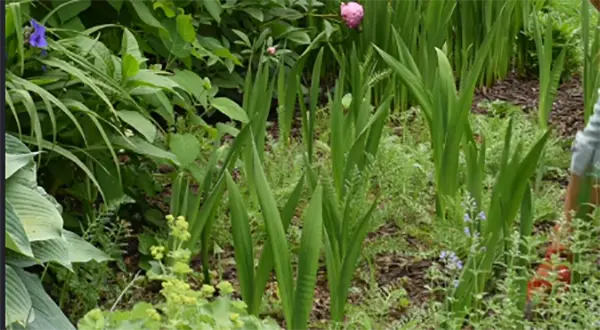
How to Care for the Gladiolus Flower?
To care for the gladiolus flower, make sure you keep the regular growing requirements in check, along with proper fertilization once every 4 weeks, stake the plant for proper support, and treat pest infestations as soon as you spot them.
Here is a list of 4 care tips for the gladiolus flowers:
1. Regular Maintenance
A healthy plant is a result of regular maintenance. Make sure the flowers receive 8-10 hours of direct sunlight every day, with 1 inch of water every week or as required. Look for signs of stress in the plant; yellowing, mushy leaves are signs of overwatering, while dry, wilted leaves indicate underwatering.
Make sure you identify these signs early on and take appropriate measures. In the initial stages, you can prune the damaged parts before the infection spreads.
2. Fertilizer
The gladiolus flowers are moderate feeders and require a decent dose of plant food throughout the growing season to ensure tall, healthy blooms. A balanced fertilizer, with an NPK ratio of 10-10-10, is ideal, but you can also go for one with a slightly high phosphorus content. Phosphorus encourages the growth of blooms. Avoid nitrogen-rich fertilizer for the flowers, as nitrogen encourages the growth of leaves, which can compromise healthy blooms.
3. Staking
Gladiolus flowers grow up to be tall plants with an average height of 6 feet. They need staking/ support in order to grow straight; otherwise, they might flop over, damaging the stem and the structure of the flower. The best time to stake these flowers is when the plant has reached 6-12 inches of height. Take a bamboo stake, preferably due to its strength, and dig it 12 inches deep in the soil right beside a stem. Tie the stake to the stem using a garden tie. Staking is ideally done right before flowering and not afterwards to give the blooms the right kind of support.
Gardyna Tip
Since the gladioli bulbs can get a little large till time of staking, it is recommended to place them at a safe distance of 3 inches from the stems to avoid damaging the bulbs.
4. Treating Pest Infestations
According to the Penn State Extension, the most common pest infestations are Botrytis Blight, Curvularia Leaf Spot, Nematodes, and Scabs. They have varied symptoms like yellow spots, stunted growth, and rectangular spots.
Take a look at the table below to understand the pest infestations better:
| Pests | Symtomps | Solutions |
| Botrytis Blight | Yellow leaf spot and neck rot, as it affects the stem of the plant. | Remove the infected plants and apply a foliar spray or Neem oil. |
| Curvularia Leaf Spot | Corm rot and light brown spots on leaves and flowers surrounded by a yellow halo. | Ensure proper spacing, clean the planting area, and use fungicide control. |
| Gladiolus Thrip | Discoloration, yellowing leaves, and silver-white streaks. | Insecticidal soap and Neem oil. |
| Nematodes | Stunted growth and corm damage. | Soak the corms in water for 15-20 mins. Plant near Marigolds. Mix organic matter in the soil. |
| Scabs | Corm rotting and stunted growth. | Proper pruning and crop rotation. Make sure you do not plant the gladiolus flower in the same garden every year. |
Concluding Remarks
In conclusion, gladiolus flowers are a perennial flower that is used for landscaping purposes due to their tall flower spikes, which are available in different colors. The gladiolus plants can be grown easily by beginners due to their low care requirements.
They are best found in summer gardens and are intolerant of freezing temperatures; hence, make sure you plant them when all danger of frost has passed. My advice to beginners is to look for signs of distress in plants and act accordingly.
Happy Gardening!
What is gladiolus called in India?
In India, the gladiolus flower is commonly known as the ‘Sword Lily.’ While this name is not limited to just India, these summer flowers are referred to using both words interchangeably around the globe.
Can gladiolus come back every year?
Yes, gladioli are tender perennial flowers and come back every year after dying back in the winter, but only if they are protected from freezing temperatures. This makes them a great one-time investment for beginners and experts alike.
Do gladiolus prefer full sun or shade?
The gladiolus prefers full sun for 8-10 hours every day for the best growth. Although they can survive in partial shade, it can lead to delayed flowering.
What is special about the gladiolus?
Gladiolus flowers, or sword lilies, are prized due to their tall flower spikes, which are great for landscaping purposes. They are also used as cut flowers and are associated with the idea of strength and integrity.
What month is gladiolus?
August is the official month of the Gladiolus plant, along with the poppy flower.
- How to grow gladioli– BBC Gardener’s World Magazine