


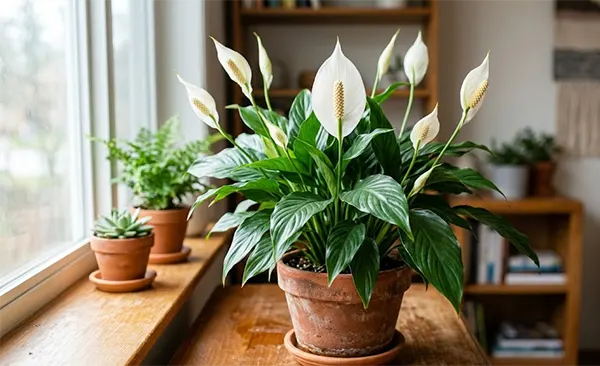
Peace Lilies are elegant tropical plants that signify balance, peace, and goodwill. Beyond its symbolic value, it is famous for its ability to filter indoor air pollutants, such as benzene, formaldehyde, and ammonia.
Mastering peace lily care is surprisingly simple and perfect for beginners. Its ability to recover from the occasional neglect makes it one of the best flowering plants to embody the motto, “Bend But Not Broken”.
Follow along this article to understand peace lily care measures, varieties, and key features to grow this houseplant easily.
Peace Lily Plant Care Measures
To care for a peace lily plant, place the pot in bright indirect light and water it when the soil feels dry. Further, keep the humidity high and occasionally fertilize, prune, and repot to support its growth.
Let’s learn peace lily care in a little depth:
Indirect Sunlight
Peace Lilies thrive best when mimicking their natural jungle-canopy home, where direct sun is filtered by tall trees. Place the plant 3 to 6 feet away from an east or north-facing window for bright, indirect light.
Moist Soil
Proper watering is a foundational step in peace lily care. It’s about maintaining even dampness without smothering the root system, like a wrung-out sponge damp to the touch, but never soaking wet. Check the top 1 to 2 inches of soil; water thoroughly only when it feels dry. Always use containers with bottom drainage holes so roots never sit in standing water.
Temperature and Humidity
As tropical natives, the peace plant prefers stable, warm indoor environments. Peace Lily care requires being kept in consistent room temperatures between 65°F and 80°F (18°C–27°C). When indoors, keep pots away from exterior doorways, open windows, and air conditioners. This houseplant also prefers high humidity of above 50%. Consider misting the leaves or placing the pot on a moisture-retentive tray of gravel to maintain required humidity.
Clean Leaves
Keeping broad foliage dust-free ensures the plant can breathe and absorb light effectively. Gently wipe both sides of the leaves with a damp cloth every few weeks. Regular cleaning also helps detect and prevent common pests.
Pruning
Routine peace lily care includes regular trimming to maintain a neat appearance and redirect plant energy into fresh growth. Snip off spent, greening, or browning blooms near the base with clean scissors. Removing decaying plant matter keeps soil clean and discourages fungal issues.
Fertilizers
Peace Lilies are light feeders that only require mild nutrient boosts during active growth. Feed every 4 to 6 weeks during spring and summer and hold off on fertilizing during autumn and winter. Peace lily fertilizer should be a balanced liquid fertilizer diluted to 1/4 strength to protect sensitive roots from salt burn.
Repotting
Repotting every 1 to 2 years gives root-bound plants fresh nutrients and room to expand. Repot when roots begin circling the topsoil or poking out of drainage holes. Use a well-draining, peat- or bark-based potting mix rich in organic matter. Move up to a pot only 1 to 2 inches larger in diameter.
Did you know?
Peace lily was named “spathiphyllum” by the Greeks, meaning ‘spathe’ as in ‘blade’ and ‘phyllon’ as in ‘leaf’.
How to Grow Peace Lily?
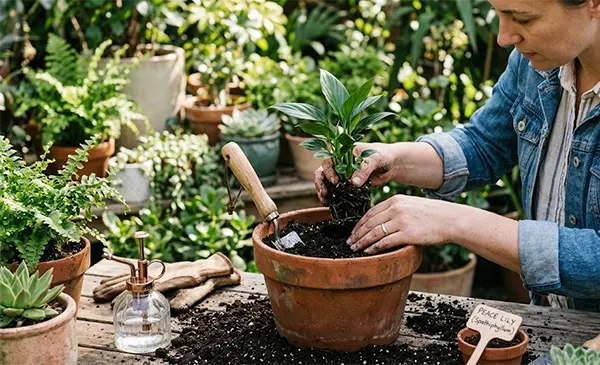
Growing a spathiphyllum cannifolium is an easy process with well-draining soil and simple tools. Let’s see the steps to follow to plant it successfully:
- Step 1: Select the pot
Choose the pot that is about 1-2 inches larger than the root ball. Ensure that the pot has drainage holes.
- Step 2: Soil Prep
Use a high-quality potting mix that drains well.
- Step 3: Place the Plant
Spread a layer of soil at the bottom of the container and place the plant in the center. Fill the sides with more soil.
- Step 4: Water Thoroughly
Water the plant thoroughly and place the container in the sunlight.
Peace Lily Scientific Overview, Native Range and Bloom Time
Native to the tropical rainforests of the Americas and southeastern Asia, the peace lily belongs to the Araceae family. Let’s see its taxonomic classification and native range:
| Kingdom | Plantae |
| Order | Alismatales |
| Family | Araceae (Arum family) |
| Genus | Spathiphyllum |
| Species | S. wallisii |
| Native Range | Tropical rainforests in the Americas and parts of southeastern Asia |
| Bloom Time | During spring and early summer |
Did you know?
Due to its white appearance, this unique plant with blade-shaped leaves gives the impression of belonging to the Liliaceae family, when in actuality, Peace Lilies belong to the Araceae family.
Key Features of Peace Lily
Beyond their lush foliage, Peace Lilies possess several fascinating botanical traits and unique characteristics that set them apart from standard houseplants. Here is what makes these elegant plants so distinctive:
- Modified leaf: What looks like a white flower petal is actually a modified leaf -called a spathe- wrapped around a central cluster of tiny true flowers -called a spadix- that fade from pure white to light green as they bloom. They are often known as peace leaves as well.
- Low Light: It is one of the best indoor plants that improve home decor due to its low light tolerance. Due to this, they can grow well in bright indoor spots.
- Toxicity: As per ASPCA, these plants are toxic to cats and dogs. They contain calcium oxalate crystals, which, when consumed, can cause the tongue to swell or even cause vomiting. Remember to keep them away from children or pets.
- Air Purifier: Peace lily plants are one of the best air purifying indoor plants, and they are also believed to increase surrounding air humidity.
Did you know?
Inspired by their appearance, people often compare peace lilies to peaceful vessels gliding across the sea for their white leaf-like sheath.
Varieties of Peace Lily
Peace lilies come in multiple varieties -dwarf, variegated, standard, giants- with their own unique height, shape, and colour. Whether you want a giant peace lily plant for the living room, need a small peace lily plant to display on your office table, or want to decorate your garden, this houseplant works for all with its types.
So, read ahead and find the variety that suits your needs:
| Image | Variety Name | Key Points |
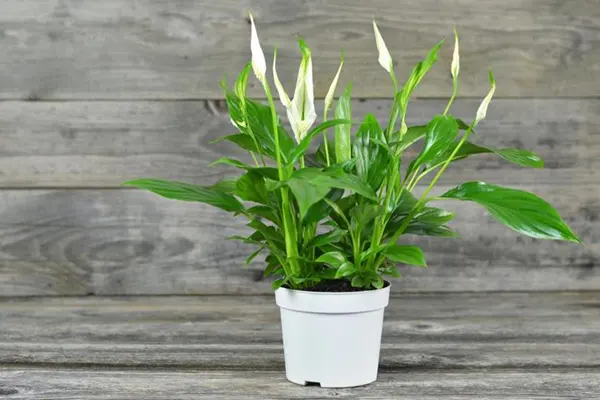 | Spathiphyllum ‘Petite’ | Height: 10-12 inches tall Appearance: Compact, bushy, glossy leaves with white sail-like spathes surrounding a pale spadix Best Setup: Small apartments, desk setups, tabletops, or bathroom windowsills |
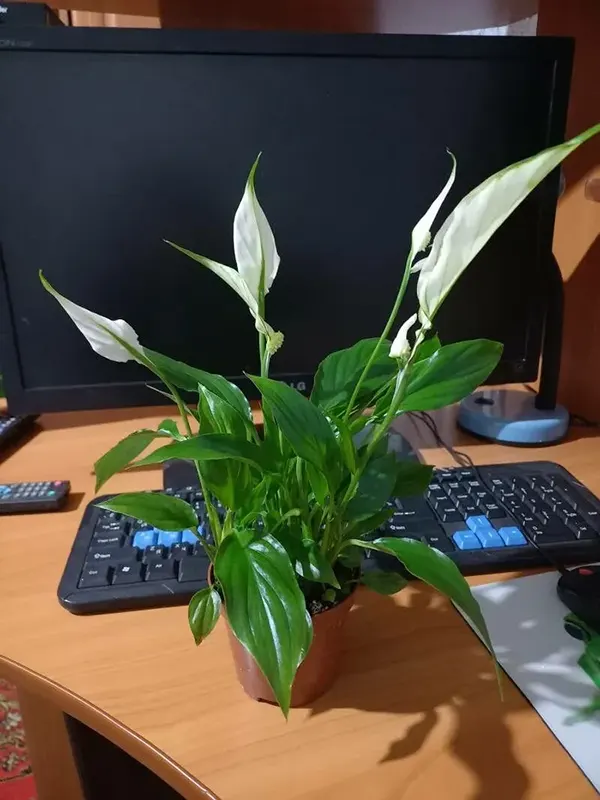 | Spathiphyllum wallisii | Height: 12-15 inches tall Appearance: Compact, bushy, graceful leaves and abundant flowering, with white sail-like spathes surrounding a pale spadix Best Setup: Small apartments, desk setups, tabletops, or bathroom windowsills |
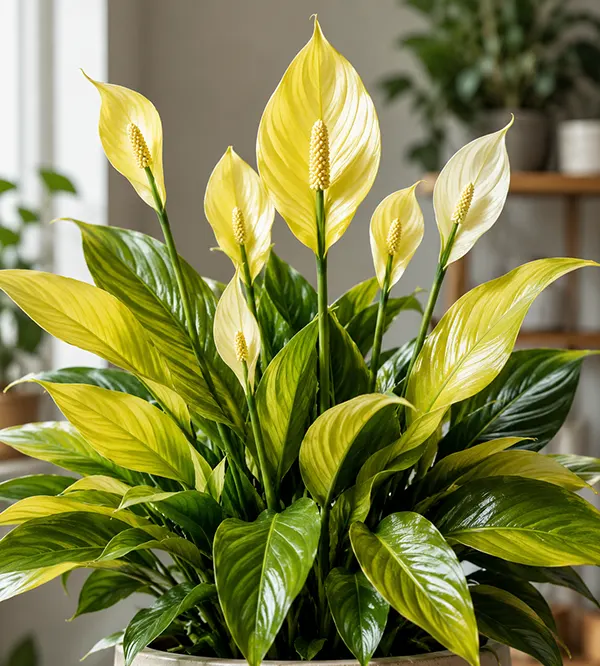 | Spathiphyllum ‘Golden Delicious’ | Height: 15-24 inches tall Appearance: Compact, vibrant, striking golden-yellow leaves and abundant flowering Best Setup: Living room coffee tables & side tables, work desks, console tables, shelves, bathroom windowsills |
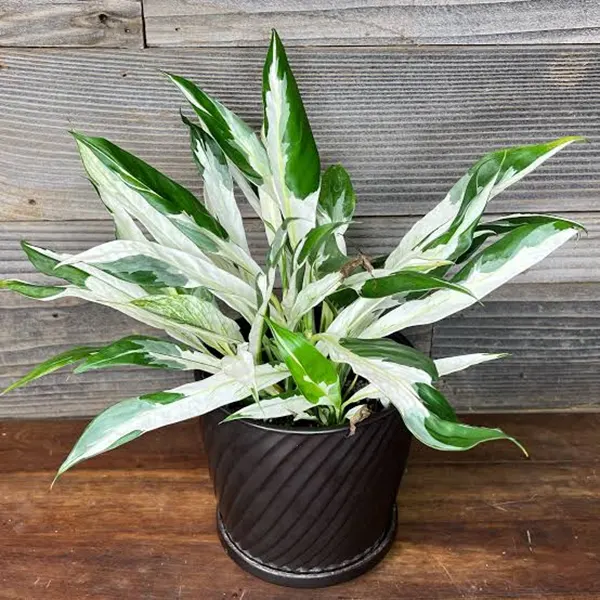 | Spathiphyllum ‘City of Angels’ | Height: 18-24 inches tall Appearance: Compact, white leaves that mature into green and long-lasting, fragrant blooms Best Setup: Nightstands, workstation, living room coffee tables, bathroom vanity |
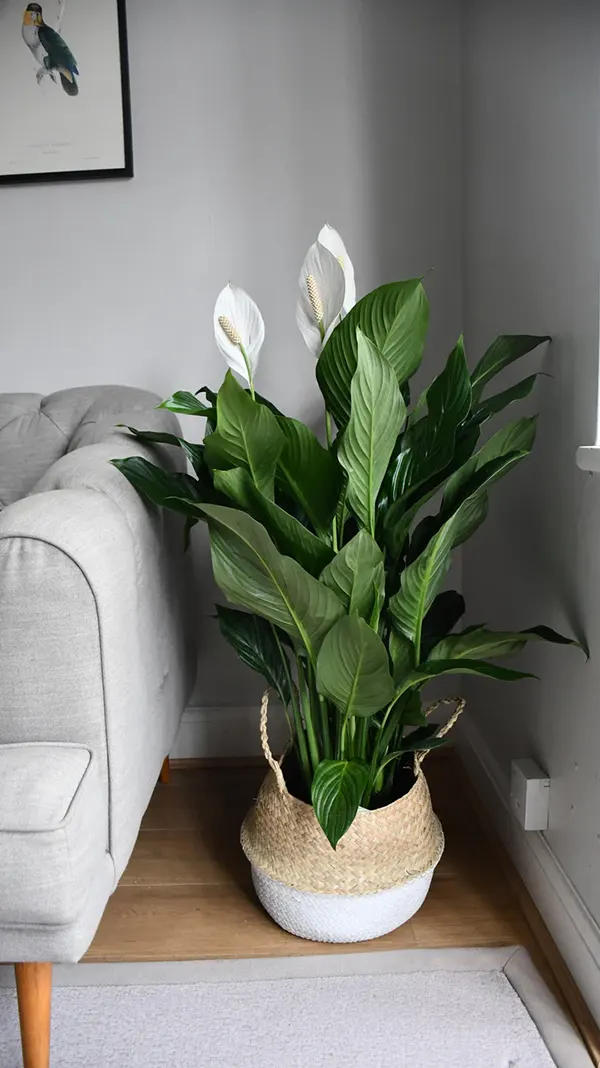 | Spathiphyllum ‘Mona Loa’ | Height: 24-36 inches tall Appearance: Mid-to-large, robust, leathery foliage and long-lasting, fragrant blooms Best Setup: Empty corners, entryways, bedrooms, executive offices |
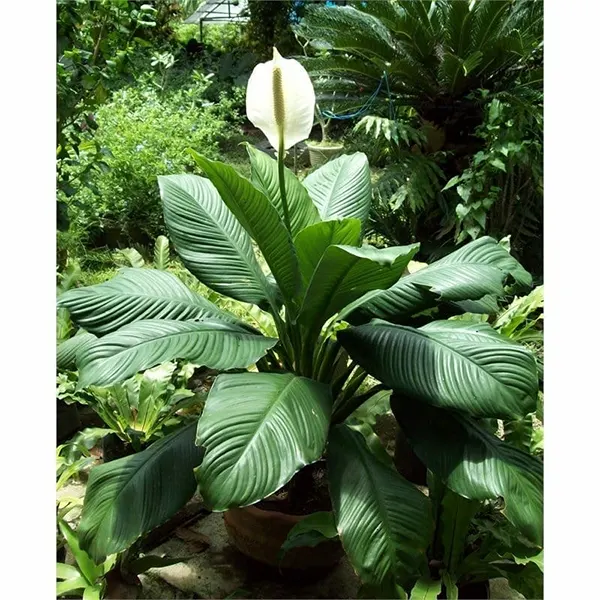 | Spathiphyllum ‘Sensation’ | Height: 48-72 inches tall Appearance: Massive, dramatic, deeply ribbed, accordion-like parallel veins Best Setup: Garden, grand entryway, open plan office, master bedroom, living room |
Pro Tip: Choose your space before choosing the variety. For a jungle feel, go with Sensation. For small spaces, go with Power Petite.
Propagation Method of Peace Lily
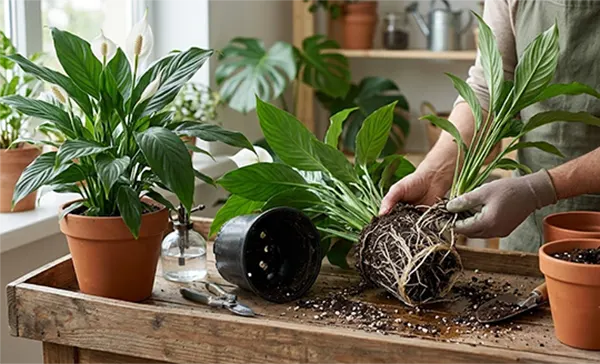
Propagating your peace lily is one of the most rewarding aspects of peace lily care, allowing you to multiply your indoor collection or share new plants with friends.
Because peace lilies grow from a central crown rather than woody stems, they cannot be propagated using simple leaf or stem cuttings. Instead, dividing mature root clumps during spring or early summer is the quickest, most reliable method to produce healthy new plants.
- Water the mother plant well a day before to reduce the root shock.
- Gently remove the plant from the pot and brush soil from the roots to observe the sections.
- Cut the root ball into smaller clusters, ensuring every section has its own set of leaves and intact roots.
- Plant each section in separate pots with fresh potting mix.
- Water the plants well and keep them in indirect bright light to support their growth.
Diseases and Pests in Peace Lily
While Peace Lilies are resilient indoor plants, proper peace lily care requires managing excessive moisture, poor air circulation, or contaminated tools to prevent fungal and bacterial pathogens. Recognizing these diseases and pests early is key to saving your plant.
Here are the diseases and pests that can affect peace lily:
Common Diseases in Peace Lily
- Root Rot: This single most common and destructive disease. Leaves turn pale yellow and severe wilting occurs, even when the soil feels wet. Below the surface, roots become soft, mushy, black, and foul-smelling.
- Bacterial Leaf Spot: Small, water-soaked dots that quickly enlarge into irregular, greasy dark brown or black lesions.
- Fungal Leaf Spot: Dry, papery, circular or angular brown/black spots across the leaf surface.
- Dasheen Mosaic Virus: Distinct feathered yellow mosaic patterns, ring spots, or wrinkled and distorted leaf growth.
Common Pests in Peace Lily
- Mealybugs: fluffy white sap-suckers hiding in leaf crevices.
- Spider Mites: microscopic web-spinning pests on the undersides of leaves.
- Fungus Gnats: tiny black soil flies that consider your plant’s roots their afternoon snack.
- Aphids & Scale: soft/hard brown clusters that coat stems in sticky, mold-inviting film.
No need to worry! Taking care of them is super easy. You just need one bottle, a homemade recipe, and 2 minutes to make the Magic Bug-Buster.
Preventive Measures to Consider
- Water Properly: Use a pot with proper drainage holes and let the soil dry out between waterings.
- Optimize Environment: Maintain 50% humidity and keep the plant in bright indirect light.
- Isolate New Plants: Isolate new plants for a short period without including them in your collection.
You may also try a homemade recipe, Magic Bug-Buster, to treat pests or as a natural mealybug treatment:
The Magic “Bug-Buster” Spray Recipe
Mix these 3 things in a standard spray bottle:
- 1 Quart (4 cups) Warm Water
- 1 Teaspoon Neem Oil
- ½ Teaspoon Dish Soap (Unscented)
Shake well and generously spray the stems and the undersides of the leaves—where pests love to hide! The soap will break down the bugs on contact, and the neem oil will ensure none of the eggs hatch.
Repeat once a week until the bugs are completely gone. A 100% Natural One for All Solution!
Bottomline
If you are new to being a plant parent, it is a good idea to choose Peace Lily as your first plant. This naturalizes the air quality, thrives in cozy indoors, and stays easy to care for. As long as you keep maintaining it on a consistent schedule, your resilient green roommate will be with you for years to come.
So, what are you waiting for? Your roommate is waiting to thrive in your home!
Why does my Peace Lily droop so dramatically?
Peace Lilies are famous drama queens! As long as the roots are healthy, watering thoroughly will perk the plant back up within 2 to 4 hours.
How long do Peace Lily flowers last?
Individual blooms usually stay fresh for 1 to 2 months. As they age, the white flower (spathe) naturally turns green and eventually turns brown. Once faded, simply snip the stem off at the base with clean scissors.
What happens if a peace lily gets direct sunlight?
Direct, harsh sunlight will scorch the foliage, leaving permanent black or crisp brown sunburn patches on the leaves.
Why isn’t my Peace Lily blooming?
The reason is lack of light. While Peace Lilies can survive in dim corners, they need medium to bright indirect light to produce flowers. If your plant is super leafy but hasn’t bloomed in months, move it closer to a bright window.
Why are the tips of my Peace Lily’s leaves turning brown?
Brown, crispy tips are usually caused by low humidity, underwatering, or sensitivity to tap water. Try switching to filtered water or rainwater, misting near the plant, or running a humidifier.
Are Peace Lilies toxic to cats and dogs?
Yes. Peace Lilies contain insoluble calcium oxalate crystals. If chewed, they cause intense mouth irritation, drooling, and digestive distress in pets and humans both. Always place your plant out of reach on a high shelf, plant stand, or mantel.
How often should I water my Peace Lily?
Water when the top 1 to 2 inches of soil feels dry to the touch. Always test moisture with your finger rather than following a strict calendar schedule.
How do I know if it’s drooping from overwatering or underwatering?
- Underwatered: Leaves feel soft, thin, and papery, and the soil feels completely dry. (It will perk back up within hours after watering).
- Overwatered: Leaves feel limp and soft, and may show yellowing or black patches, while the soil remains wet or soggy.
Can a Peace Lily grow in water without soil?
Absolutely! Peace Lilies do very well hydroponically. Thoroughly wash the soil off the roots, submerge only the roots in a vase of clean water, and replace the water every 1–2 weeks.
How often should I fertilize my Peace Lily?
Peace Lilies are light feeders. Apply a balanced liquid houseplant fertilizer diluted to 1/4th strength only 1 to 2 times a year (or every 6–8 weeks during active growth in spring and summer). Never fertilize a dry, dormant, or sick plant.
- peace lily – Britannica
- Peace lilly – BBC
- How to care for peace lily – BBC Gardeners’ World Magazine