



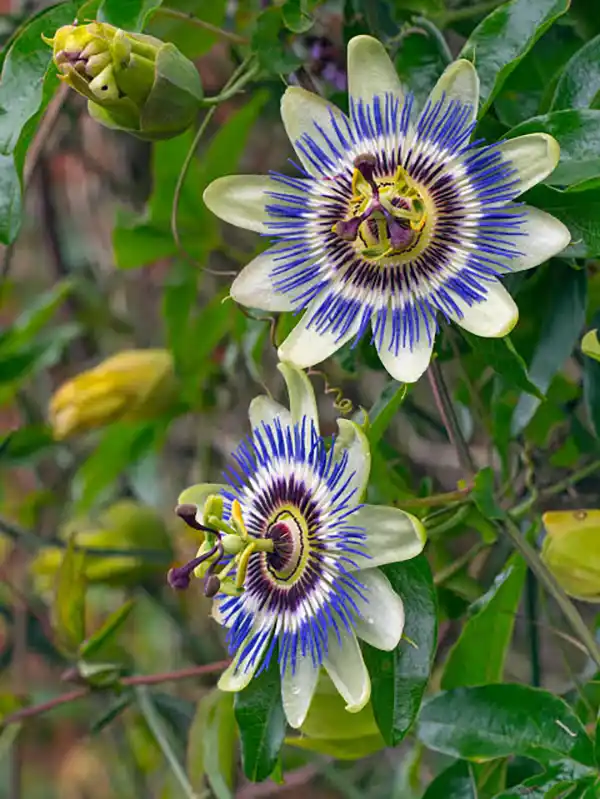
Passion fruit is a fast-growing vine with striking flowers and aromatic fruit. The plant is widely known as a low-maintenance vine. It has a fruit that is rich in nutrients and offers many health benefits, as it is a powerful antioxidant that reduces oxidative stress, helps control cholesterol levels, supports digestion, and helps regulate blood pressure.
Passion flower blooms over a long period from early summer to autumn, and is planted in spring after the last frost. To know about Passiflora edulis ideal growing conditions, care tips, growing techniques, etc., read the article.
Taxonomy and Ideal Growing Conditions for the Passion Plant
Passion plant is widely recognised for its nutritious fruit. It is a perennial vine that prefers warm weather conditions. Passion flowers generally fall into two groups: hardy and tender. The hardy types are the ones that are able to grow outside in a sunny, sheltered location, while the tender ones grow in a conservatory or warm greenhouse.
For more general information, here is the taxonomic overview and ideal growing conditions of the plant:
| Botanical name | Passiflora spp. |
| Common names | Passionflower plant, passionflower vine, maypop, and granadilla |
| Kingdom | Plantae |
| Order | Malpighiales |
| Family | Passifloraceae (Passion Flower Family) |
| Subfamily | Passifloroideae |
| Genus | Passiflora L. |
| Hardiness | 7 to 10 USDA zones |
| Light Requirements | Bright, direct sunlight with partial shades |
| Maintenance | Low |
| Plant type | Perennial, vine |
| Flower colour | Red, pink, purple, blue, green, and white |
| Fruits | The passion fruit is oval, usually around 2 to 3 inches in diameter. |
| Soil | Well-drained, moist, sandy loam soil with slightly acidic to neutral pH levels of 6 to 7. |
| Water Requirements | Passions require regular watering during their flowering and fruiting season. Deep watering is much more preferable for the passion plant. Note: Avoid waterlogging, as it can cause root rot and promote fungal disease. |
| Mature size | 10 to 30 ft. tall and 3 to 6 ft. wide |
| Fertilizers | The Passion plant should be monthly fertilised with a balanced fertiliser during the growing season. |
| Native area | South America, Hawaii, Australia, South Africa, and North America |
| Characteristic | Pollinator-friendly |
Nutritional Value of Passion Fruit
Passion fruit, along with its delicious taste, offers a number of nutrients to your body. Here is the list of nutrients in 100 grams of raw fruit.
| Nutrient | Value per 100 grams |
| Calories | 97 kcal |
| Carbohydrates | 23 g |
| Fiber | 10.4 g |
| Sugars | 11.2 g |
| Protein | 2.2 g |
| Fat | 0.7 g |
| Vitamin C | 30-33 mg (33% daily value based on a 2,000-calorie diet) |
| Vitamin A | 1274 IU (8% daily value based on a 2,000-calorie diet) |
| Iron | 1.6 mg (1.6 to 3.6% of daily value) |
| Potassium | 348 mg (1.8 to 2.4% of daily value) |
| Magnesium | 29 mg |
| Phosphorus | 68 mg |
| Water | 72.9 g |
| Folate | 14 mcg |
Nutritional value may vary by the ripeness of the fruit.
The best way to include passion fruit in your diet is by using it as a puree, fresh fruit juice, desserts, jellies and jams, and sauces.
How to Grow Passion Vine?
Growing a passion fruit plant is relatively easy if you live in a warm climate. Here are a few simple steps you need to follow to grow the passion fruit plant:
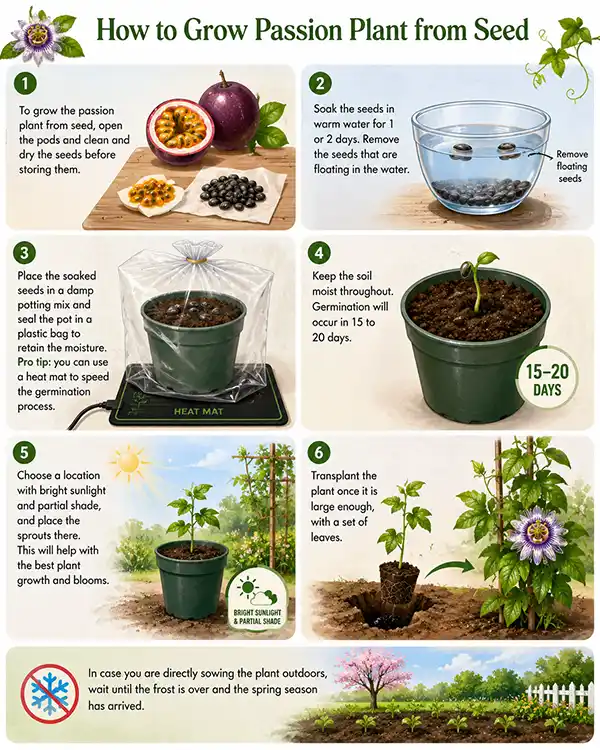
- To grow the passion plant from seed, open the pods and clean and dry the seeds before storing them.
- Soak the seeds in warm water for 1 or 2 days. Remove the seeds that are floating in the water.
- Place the soaked seeds in a damp potting mix and seal the pot in a plastic bag to retain the moisture. Pro tip: you can use a heat mat to speed the germination process.
- Keep the soil moist throughout. Germination will occur in 15 to 20 days.
- Choose a location with bright sunlight and partial shade, and place the sprouts there. This will help with the best plant growth and blooms.
- Transplant the plant once it is large enough, with a set of leaves.
In case you are directly sowing the plant outdoors, wait until the frost is over and the spring season has arrived.
Propagating Passion Vine Plant
You can propagate the passionflower by softwood cuttings and tip layering methods. Here is the step-by-step process to propagate a passion vine plant using the softwood cutting method:
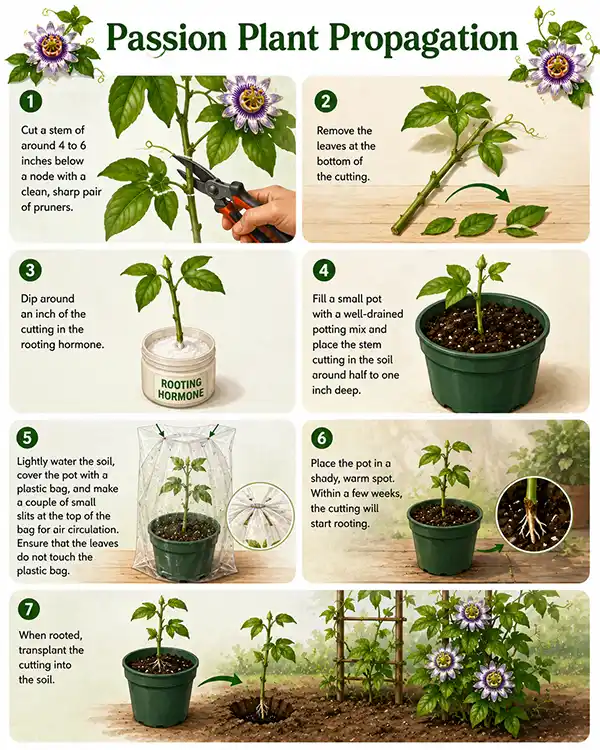
- Cut a stem of around 4 to 6 inches below a node with a clean, sharp pair of pruners.
- Remove the leaves at the bottom of the cutting.
- Dip around an inch of the cutting in the rooting hormone.
- Fill a small pot with a well-drained potting mix and place the stem cutting in the soil around half to one inch deep.
- Lightly water the soil, cover the pot with a plastic bag, and make a couple of small slits at the top of the bag for air circulation. Ensure that the leaves do not touch the plastic bag.
- Place the pot in a shady, warm spot. Within a few weeks, the cutting will start rooting.
- When rooted, transplant the cutting into the soil.
Another way to propagate the passion plant is by tip layering. Here are some simple steps that can be followed:
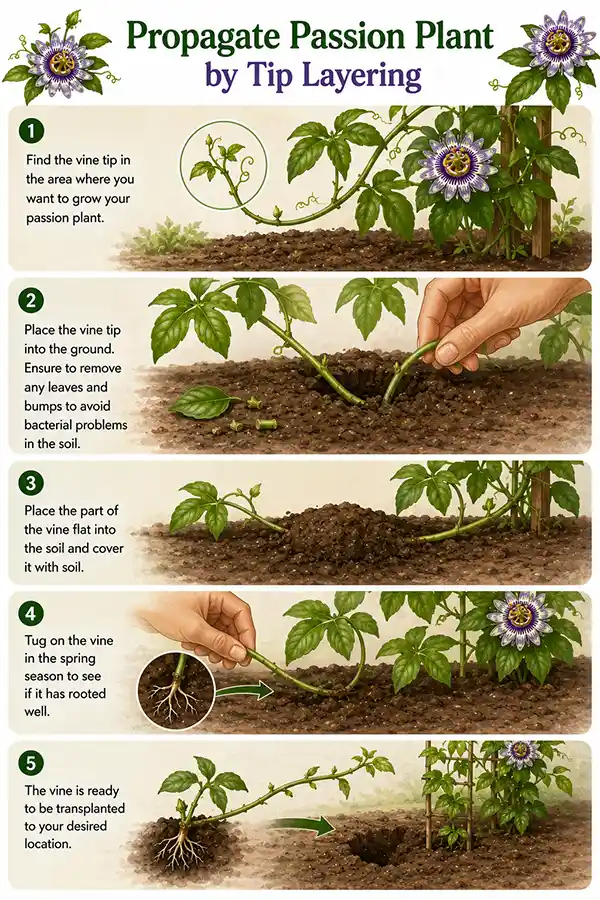
- Find the vine tip in the area where you want to grow your passion plant.
- Place the vine tip into the ground. Ensure you remove any leaves and bumps to avoid bacterial problems in the soil.
- Place the part of the vine flat into the soil and cover it with soil.
- Tug on the vine in the spring season to see if it has rooted well.
- The vine is ready to be transplanted to your desired location.
Ideal Caring Tips For Passion Plant
Planting is the first step towards the growth of a healthy plant. But people often tend to think of it as the last step. The most essential step after planting the seed is to care for it in order to achieve the plant’s healthy growth. Here are a few passion plant care tips:
- The plant location plays a vital role in the proper growth of the plant. Place your passionflower vines in full sun to partial shade.
- Plant passion flowers plants in well-drained soil.
- Water the passion plant every week until established.
- Fertilised the plant with balanced fertiliser in early spring.
- In winter, choose a sheltered location for the vine to avoid any damage.
- Check your plant for pests like scale, spider mites, and whiteflies. If spotted, use homemade insecticidal soap or neem oil.
Takeaways
Passionflower fruits are edible, and the flowering vine looks beautiful around structures. The plant grows rapidly and blooms from midsummer to early fall, but lasts only for a day. The plant also attracts pollinators and produces nectar both inside and outside the petals.
The plant’s fruit is also enriched with various nutrients, which make it beneficial for health, and its low-maintenance makes it a gardener’s favourite.
If you are planning to grow a passion flower plant, this spring is the perfect time. Happy planting!
When do passion flowers bloom?
Passion flower blooms from spring till the fall season.
What is the most suitable weather for growing a passion plant?
Spring season is considered to be the perfect time to plant passion plants, as it prefers warm weather.
What are the common pests that can attack the passion plant?
Scales, spider mites, and whiteflies can attack your passion plant. To avoid any pests from attacking your plant, spray neem oil or any other organic pesticide.
Is the passion plant pollinator-friendly?
Yes, the passion plant is pollinator-friendly.
- Passion flower: Britannica
- Passionflowers Genus Passiflora: iNaturalist