

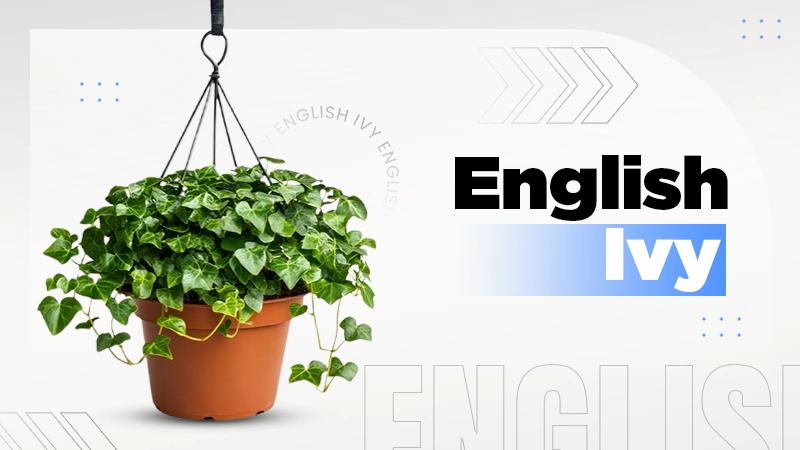
English ivy is the most common traditional houseplant. You will always find it creeping and dangling from the large front iron doors. But due to its aesthetic appeal, some people also consider it for outdoor use in their gardens.
Once established, this vine knows no limits as it keeps growing as much as the conditions allow. That, however, might come across as a potential con for many households! To learn more, refer to the following sections, as we have elaborated the growing guide, care requirements, and common pests and diseases with solutions that actually work.
What is English Ivy?
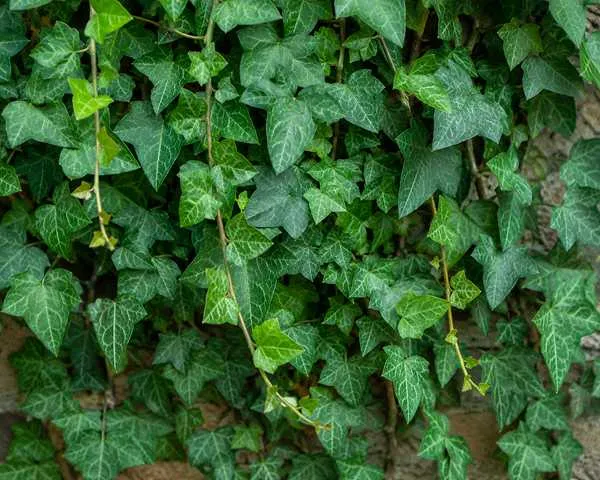
English ivy (Hedera Helix) is an evergreen perennial. It is commonly known for its ability to spread as a ground cover. With a support nearby, it typically climbs to a great height. People usually pick this species for its lush, evergreen leaves.
You will also have small greenish flowers on the woody vine of English Ivy. It is best when planted during the spring season. However, make sure that it is not invasive in your part of the world. If you don’t keep check on its growth, it might grow rapidly and prove to be harmful for other plant species in the vicinity.
According to ASPCA, English ivy is toxic to dogs, cats, and horses. The major signs of its toxicity once ingested are vomiting, abdominal pain, diarrhea, and hypersalivation. From a few leaves to 5 to 10 berries can trigger the toxicity.
Consider some basic details about this ornamental plant below.
| Common name | English ivy, common ivy, European ivy |
| Botanical name | Hedera helix |
| Family | Araliaceae |
| Plant type | Perennial, evergreen climbing vine |
| Mature size | Grows by climbing and spreading as much as possible |
| Sun exposure | Part shade to full shade |
| Soil type | Fertile and moist |
| Soil pH | Neutral to slightly alkaline |
| Bloom Time | Fall |
| Flower Color | Greenish-white, greenish-yellow |
| Hardiness zones | 4–13 (USDA) |
| Native area | Europe, Scandinavia, Russia |
| Toxic | For people and pets |
Compatibility: If you are looking for a suitable flower species to accompany English Ivy, consider Ageratum. Its blooms will look great against the lush green background of Ivy leaves.
How to Grow English Ivy?

To plant English ivy, consider the following simple 7-step process.
Step 1: Take a healthy stem from an established English ivy plant.
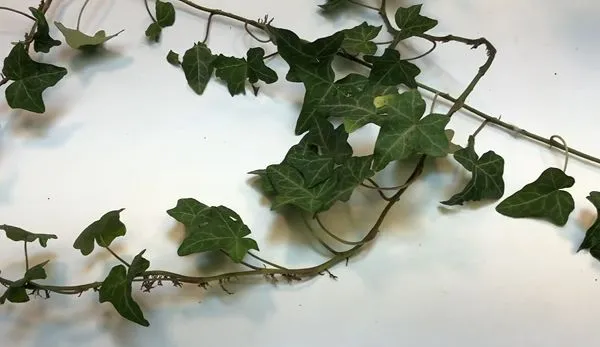
Step 2: Cut it into several pieces, each 4 to 5 inches long.
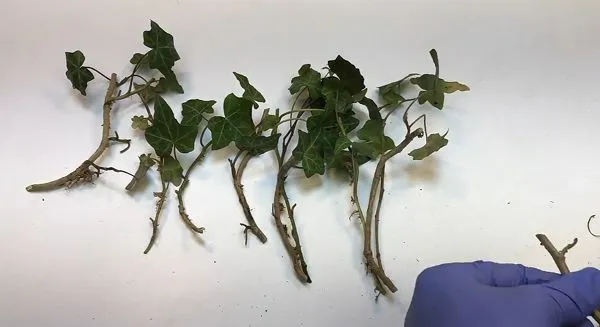
Step 3: Place each cut stem in clean water and put the container in shade without direct contact with the Sun.
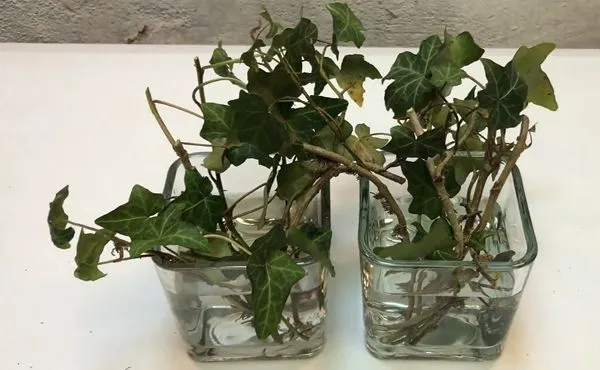
Step 4: Within 15 days, you will start observing new growth, as pointed out in the image below.
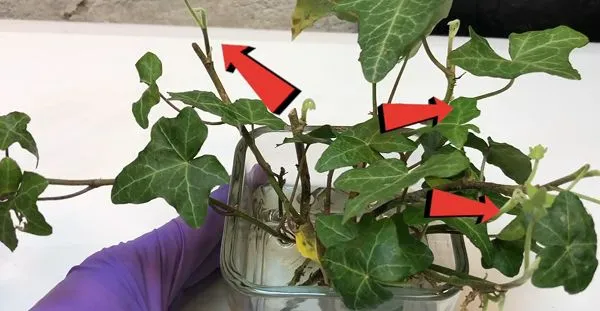
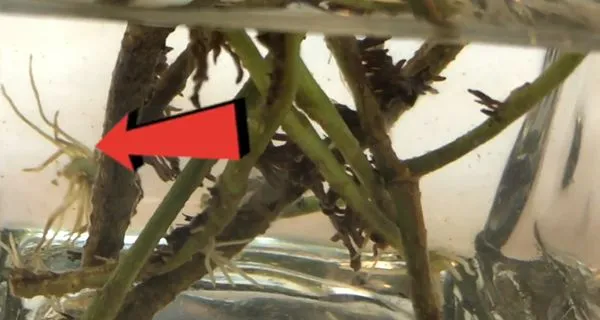
Step 5: Check if the new roots have also started appearing inside the water.
Step 6: Take each stem out of the water container and transfer it into organic soil.
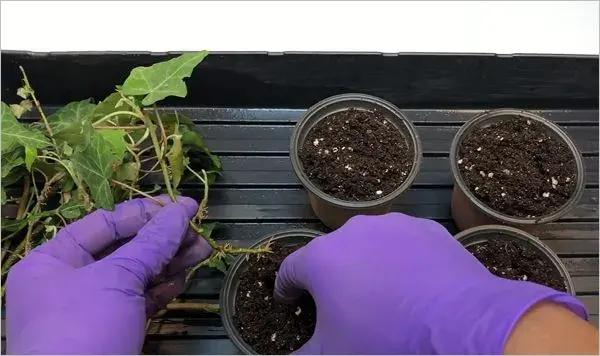
Step 7: After 35 days, check each stem. Remove the dead branches and keep the established ones. And your little pots of established English ivies are ready for distribution across your garden.
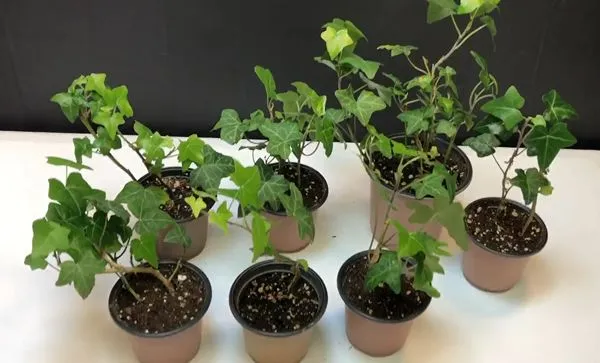
Along with these steps to grow English ivy, also pay attention to drainage, sunlight, moisture, and nutrition.
- Drainage: Plant your ivy in well-drained soil. So, you can have a healthy vine without having to worry about root rot. A very young plant must be grown in a pot first, where excessive water will get eliminated quickly. And managing the soil richness and conditions will be easy too.
- Sunlight: Exposure to the Sun must be from partial to full shade. Don’t put your vine under scorching heat. This is a species that does well in the shade.
- Moisture: Keep the soil slightly dry but still moist. This plant doesn’t tolerate soggy soil conditions well. That usually happens when you don’t water your ivies properly. Only water as much as needed to help retain the right level of moisture and prevent waterlogging.
- Nutrition: Don’t forget to feed your vine after every 14th day during the spring and summer. You can use a 20-20-20 fertilizer for this matter.
A 20-20-20 fertilizer is a balanced diet for a plant. The numbers—three times 20—stand for the NPK ratio. Here, the first 20% is for Nitrogen (N). The second 20% is for phosphorus (P), and the third 20% is for potassium (K).
That is how you can grow an ivy creeper plant in your garden, backyard, or any other place with suitable conditions.
If you are looking for a ground cover that bears vibrant flowers, you might want to consider creeping thyme. English ivy is a good choice as well, but you don’t get those vibrant flowers here.
English Ivy: Pruning, Propagating, Potting and Repotting
After growing the ivy plant, now you need to ensure its good care. So it can grow up to its full potential. Pay attention to proper pruning, propagating, potting & repotting. Consider the following elaboration for more context.
- Pruning: Use hard pruning once in a few years to revitalize the plant. You can use clean and sharp shears for your trimming. All this cutting is crucial to keep your ivy’s growth in check and manageable, especially during Spring.
Handy advice: If you want to remove an established English ivy vine from a tree bark, don’t rip it off. That might hurt the tree and its parts. The best part here is to cut it off from the ground where the vine begins its ascent. Once the supply of water and essential nutrients is over, the vine around the tree bark will eventually become dry, weak, and dead!
- Propagating: For growing new ivy plants, you just need to cut stems from the old and established vines. After pruning, you will end up gathering various stems. Use these for propagation purposes. The simple steps that you should follow are as follows. However, don’t forget to take care of the following precautions.
- 1. Use healthy stems almost 4 to 5 inches long. Keep the cut end in water. You can use a bottle for it. Then wait for roots to grow out.
- 2. Once the roots have developed, transfer each stem in the bottle to the ground where you might want to grow it in full measure.
Do you know? You can also propagate Verbena this way. It is another great plant species to be used as a ground cover.
- Potting & repotting: You can grow this plant by keeping it in a pot initially. If the initially planted ivy has increased in size, you can then repot it. Before repotting, however, make sure that you have chosen the right size of vessel with suitable soil quality. Small ivy plants can be repotted once a year, while for large vines, that is once every two years.
Even if you aren’t repotting, don’t forget to replenish the soil with essential nutrients with a 20-20-20 fertilizer in the same pot.
Common Requirements to Grow English Ivy
To grow an English ivy plant, you need to ensure the right conditions. It includes partial to full shade, well-drained soil, enough water (not soggy), the right temperature & humidity, and triple-20 fertilizer.
- Part to full shade: All your ivy needs is just part to full shade. It doesn’t need a blazing sun to bloom fully. That is why it is considered the first choice as a ground cover, especially in a traditional, old-school way. If you have plenty of tree shade in your garden, that is great for this shade-loving creeper.
- Well-drained soil: For soil, just remember one simple thing. It should be able to drain well. It shouldn’t retain a high concentration of water or moisture. If you grow this vine in a dry climate, a thick cover of mulch will help retain enough moisture in the soil.
Do you know? This plant will grow even in a wide variety of poor soil. However, the right quality of soil will allow this creeper to flourish up to its full potential.
- Enough water, not soggy: The ivy creeper prefers moist but dry soil that is not soggy. If the soil is soggy, that will harm the plant by rotting its parts. The top of the soil or ground should feel dry before you add more water to it. Don’t allow standing water to keep your ivy healthy.
- Right temperature and humidity: The best temperatures are between 70 and 90 degrees Fahrenheit. Additionally, this ivy needs medium to high humidity. It is so delicate that it doesn’t like either cold winter wind or high summer heat.
- Triple-20 fertilizer: Just feed your ivy creeper every 14 days in spring and summer. Use a 20-20-20 fertilizer for overall well-being and growth.
Don’t use fertilizer if your plant is struggling in some way, i.e., unfavorable weather conditions, pest infestation, internal diseases, etc. It will help minimize the stress level on the creeper.
English Ivy Common Pests & Plant Diseases
If you have made up your mind to buy an English ivy online, make sure you are well aware of common pests and plant diseases. This traditional creeper can easily become host to mealybugs, aphids, spider mites, and more in the absence of proper care.
Major solutions are provided in the table below.
| Pests and Diseases | Solution |
| Mealybugs | Spray neem oil, and that will help eliminate these bugs. This is the most natural mealybug treatment you can do at home. |
| Spider mites | For these as well, you can use neem oil and insecticidal soap. |
| Aphids | Mix water and dish soap together and spray it all over the affected foliage. |
| Bacterial leaf | Remove leaves with spots. Apply a protective spray of water to vinegar to the rest of the leaves. Keep the ratio 10 to 1 when creating this mixture. |
| Root rot | It is typically caused by warm and humid weather. Remove the vines with root rot and keep the rest healthy with fungicide. That will protect the new foliage. |
Conclusion
So, that has been a general discussion about English ivy care and how to grow it yourself. The major point that you need to take care of is that it loves shade and moist yet dry soil. These conditions aren’t very hard to accomplish if you are a garden geek! And always check the foliage of the vine for potential infestation. Catching a disease or pest colonies earlier can make all the difference for a healthy creeper.
Is English ivy easy to care for?
Yes, it is easy to care for because it needs very little attention to thrive. It is the best choice for covering your landscaping among flower plants. You can also use it among established trees to increase the amount of foliage in your garden.
How fast does English ivy grow?
It is an aggressive creeper, and thus it can grow pretty rapidly. Outdoors, it establishes quickly and expands as much as possible. Make sure that you don’t combine it with medium-height plants. It can creep all over, suffocating and subjecting them to a lingering death.
Can English ivy grow indoors?
You can grow it indoors, but that is not advisable if you have kids or pets. It is a toxic creeper that can compromise your health if ingested by mistake. So, make sure you only grow it outside your home.