

There are some plants that produce oxygen at night and help you breathe easier. These houseplants are natural air purifiers that not only enhance the quality of sleep but also bring a touch of greenery indoors.
If you are looking for the right high-oxygen plants for your home, this guide will walk you through the 10 best plants that produce oxygen at night, along with some tips to create an indoor oxygen garden.
Quick Answer
The plants that produce oxygen at night use a specialized metabolic process called Crassulacean Acid Metabolism (CAM). These plants include snake plant, aloe vera, orchids, peace lily, and tulsi.
Top 10 Plants that Produce Oxygen at Night
Plants are vital in our surroundings as they provide oxygen and enhance the air quality. Some of the plants that produce oxygen at night include snake plant, aloe vera, peace lily, and tulsi plant.
Let’s talk about the 10 best oxygen plants for home and their growing conditions:
1. Snake Plant
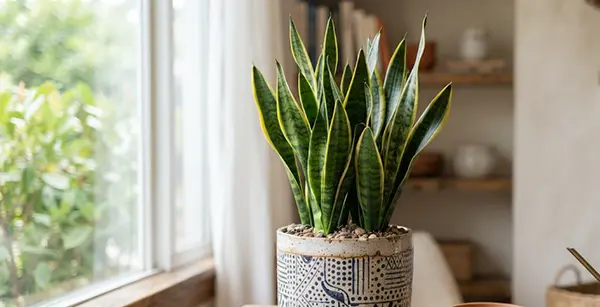
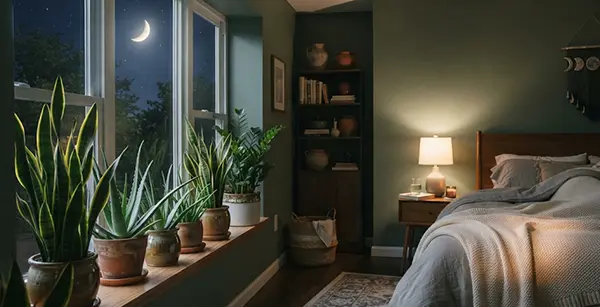
Snake plant is one of the best Crassulacean Acid Metabolism (CAM) plants. It exchanges gases at night and is considered one of the best indoor plants for oxygen. The plant is also famous as Saint George’s Sword, Mother-in-Law’s Tongue Plant, and Viper’s Bowstring Hemp. It has striking upright leaves that look structured in bedrooms and home offices. The plant is hard to kill and has a modern look.
| Botanical name | Dracaena trifasciata |
| Watering requirement | Allow the soil to dry out completely between watering, avoid overwatering that can cause root rot. |
| Soil preference | Loose, fast-draining mix combined with perlite or sand. |
| Sunlight needs | Bright, indirect light. |
| Best for | Office desks, bedside table, living room, balcony. |
2. Aloe Vera
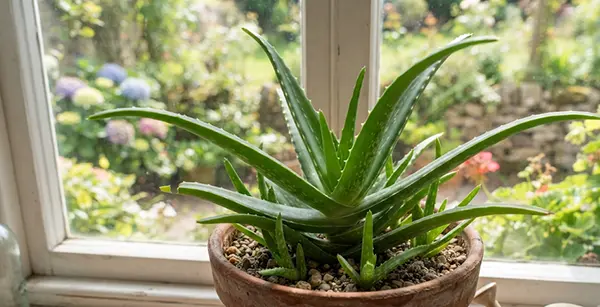
Aloe vera is a succulent that uses CAM photosynthesis. This is a popular, easy-to-care-for plant. It has fast-growing leaves that are filled with soothing gel. The plant releases oxygen at night and absorbs carbon dioxide. It is one of the best medicinal plants that is used for skin and hair care.
| Botanical name | Aloe vera (L.) Burm.f. |
| Watering requirement | Allow the soil to dry out completely between waterings; avoid overwatering, which is a common cause of plant death. |
| Soil preference | Fast-draining cactus or succulent mix. |
| Sunlight needs | Bright, indirect light. |
| Best for | Sunny windowsills, kitchen, or balcony. |
3. Gerbera Daisy
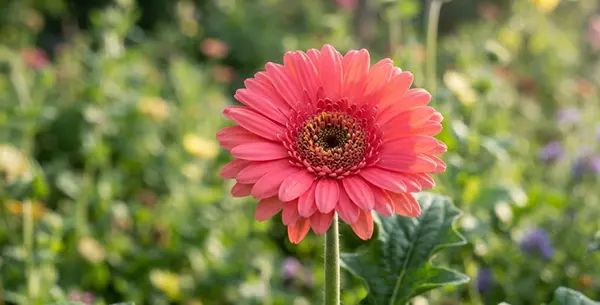
Gerbera daisy is a tender perennial plant that belongs to the Asteraceae family. The flowering plant features large blooms that resemble sunflowers in shades of sunny yellow, bright pink, snow white, and ruby red. This cheerful and colourful plant emit oxygen at night. The blooms can elevate the mood, making it a great choice for bedrooms.
| Botanical name | Gerbera jamesonii |
| Watering requirement | Allow the topsoil to dry out between waterings. |
| Soil preference | Fertile, loose, and well-draining soil. |
| Sunlight needs | Full sun to partial shade. |
| Best for | Sunny windowsills, balconies, terraces, and garden beds. |
4. Christmas Cactus
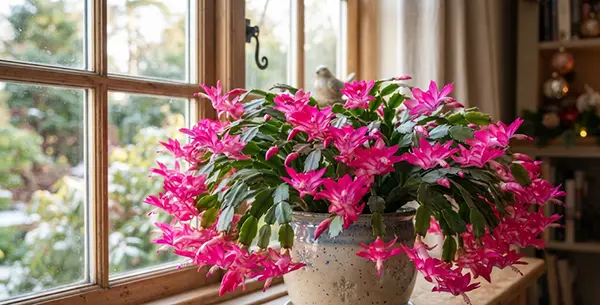
Christmas cactus is a low-maintenance houseplant that blooms in the middle of winter. It is a popular decorative plant that also engages in CAM photosynthesis and releases oxygen at night. The plant is native to Brazil and is also known as winter cactus, holiday cactus, and crab cactus. It has a trailing or cascading growth habit that makes it visually pleasing for different spaces.
| Botanical name | Schlumbergera × buckleyi |
| Watering requirement | Water when the top inch of the soil feels dry; reduce the watering frequency during fall and winter. |
| Soil preference | Well-draining potting mix combined with perlite or peat. |
| Sunlight needs | Bright, indirect light. |
| Best for | East- and north-facing windowsills, living rooms, dining rooms, and kitchens. |
5. Peace Lily
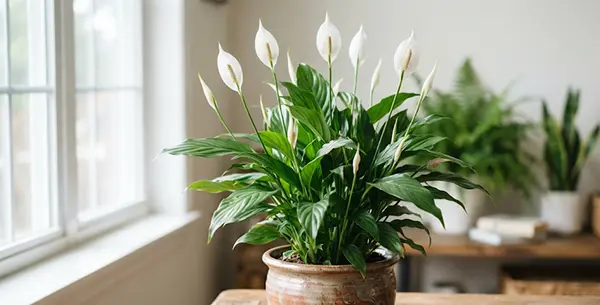
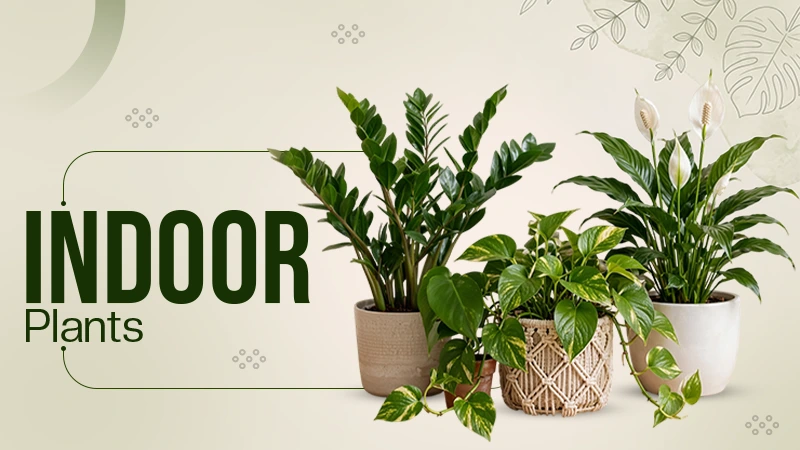
Peace lily is adaptable and low maintenance indoor plants that improve home decor. This is one of the plants which give oxygen at night and purifies the air by removing toxins. It produces white flowers that resemble those of the calla lily. The plant can grow up to three feet tall, featuring big, bold leaves.
| Botanical name | Spathiphyllum wallisii |
| Watering requirement | Water when the top 1-2 inches of soil feels dry; avoid waterlogged soil that can lead to root rot. |
| Soil preference | Rich, well-draining, and airy potting mix. |
| Sunlight needs | Bright, indirect light. |
| Best for | Living room, bathroom, bedroom, and kitchen. |
6. Spider Plant
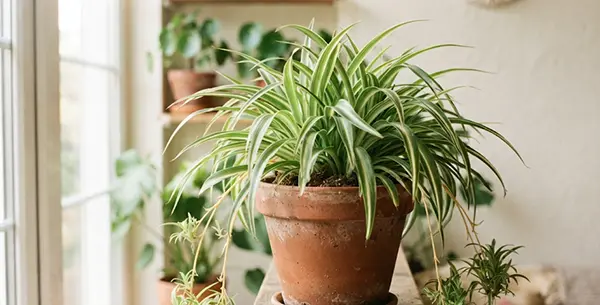
Spider plant is one of the best air purifying indoor plants that can remove formaldehyde, nitrogen dioxide, carbon monoxide, ozone, benzene, toluene, and cigarette smoke. This is a clump-forming herbaceous perennial that is native to the coastal areas of South Africa. It is one of the plants that gives oxygen at night. This plant can tolerate low light and can be easily propagated through plantlets.
| Botanical name | Chlorophytum comosum |
| Watering requirement | Allow the top inch of the soil dry out completely between watering; avoid overwatering that can cause root rot. |
| Soil preference | Loose, well-draining potting soil |
| Sunlight needs | Bright indirect light |
| Best for | Hanging baskets, near windows, high shelves, kitchens or bathrooms |
7. Tulsi Plant
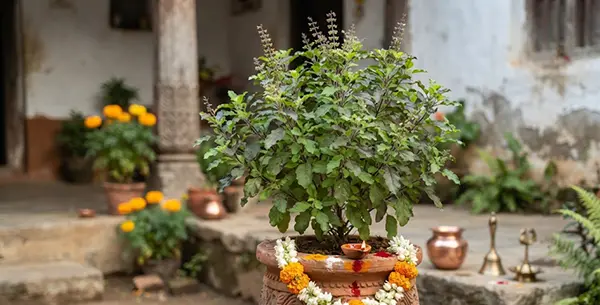
Tulsi plant is a revered plant in India due to its spiritual and medicinal importance. This is one of the oxygen giving plants that looks excellent in indoor spaces. It has aromatic leaves and is widely believed to purify the air. On top of that, its clove-like fragrance creates a calming effect.
| Botanical name | Ocimum tenuiflorum |
| Watering requirement | Water when the top inch of the soil feels dry. |
| Soil preference | Aerated, porous, well-draining soil. |
| Sunlight needs | Bright, direct sunlight. |
| Best for | Balconies, windows, and entrances. |
8. Lavender

Lavender features evergreen greyish-green foliage and has a delicate fragrance. This is one of the plants oxygen at night for the homes. It is a pollinator-friendly shrub that has medicinal and ornamental value. It has a mounded shrub form and upright flower spikes. The plant is great for creating informal hedges and as an accent plant.
| Botanical name | Lavandula angustifolia |
| Watering requirement | Allow the soil to dry out completely between waterings; established plants are drought tolerant. |
| Soil preference | Fast-draining, lean soil. |
| Sunlight needs | Bright, direct sunlight. |
| Best for | Sunny windowsill, garden beds, and containers. |
9. Orchids
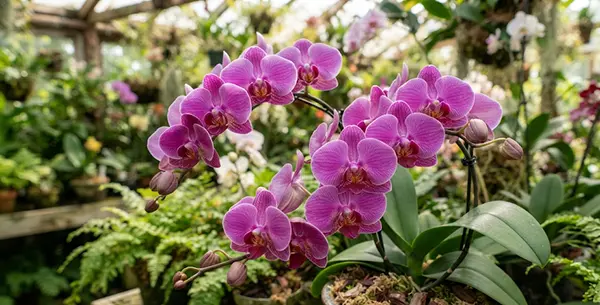
Orchids are delicate flowering plants that emit oxygen at night. The plants have long-blooming exotic flowers and an elegant structure. They are wonderful plants to decorate the home and purify the air. These are available in an array of colours, sizes, and shapes, offering endless possibilities for ornamental use. They can thrive with minimal care and have unique growth patterns.
| Botanical name | Orchidaceae |
| Watering requirement | Water once a week and allow the roots to dry out between waterings. |
| Soil preference | Loose, fast-draining mix of coarse tree bark, charcoal, perlite, sphagnum moss, or coconut husk. |
| Sunlight needs | Bright, indirect light |
| Best for | Sunny windowsill, patio, balcony or sheltered garden based on the variety. |
10. Sacred Fig

The sacred fig, or peepal tree, is a famous plant in Indian culture. This is a species of fig tree that is deeply revered in Buddhism. It is one of the plants which produce oxygen at night. It is commonly planted outdoors due to its aggressive root system, but smaller plants can help in a better living environment.
| Botanical name | Ficus religiosa L. |
| Watering requirement | Allow the topsoil to dry out slightly between waterings. |
| Soil preference | Average, moist, well-drained soil. |
| Sunlight needs | Full sun to partial shade. |
| Best for | Open area, bright sunny window. |
Benefits of Keeping Indoor Oxygen Plants
Indoor oxygen plants make the air fresh and reduce stress. They also promote better sleep quality and focus. These indoor plants also enhance the aesthetic appeal.
Let’s see the benefits of these plants:
- Fresher air: The plants contribute to fresher air in the indoor environment. They also regulate humidity and help combat dryness caused by air conditioners and heaters.
- Less stress: The greenery of these oxygen rich indoor plants enhances the mood and promotes less stress.
- Better sleep environment: If the plants are kept in the bedroom, they promote a better sleep environment through air purification and psychological relaxation.
- Aesthetic appeal: Indoor plants bring beauty, warmth, and calming energy to the interior space with different colours, shapes, and sizes.
- Enhanced focus: These plants can enhance concentration, cognitive performance, and workplace productivity through their visual calmness and stress reduction.
Tips for Creating Your Own Indoor Oxygen Garden
If you want to create an indoor oxygen garden and make a collection of the most oxygen giving plants, you can follow some tips. For instance, choose plants according to light conditions, use a well-draining potting mix, and enhance the humidity.
- Choose the plants according to the light conditions. CAM plants like aloe vera and snake plants grow in low to bright indirect light.
- Plant one mature plant per 100 square feet for indoor air filtration.
- Always use a well-draining potting mix, and make sure the pot has drainage holes.
- Most of the plants prefer high humidity. Use a pebble tray or mist the leaves during dry winter months.
- Rotate the plants regularly for even growth. Also, prune the plant occasionally and deadhead the spent flowers to encourage growth.
- Indoor plants are very sensitive to chemicals. Wipe the leaves with a damp cloth or use mild homemade solutions while treating the pests.
Concluding Remarks
The plants that produce oxygen at night are great for creating an oxygen-rich sanctuary. Plants like tulsi, peace lily, snake plant, and aloe vera can provide a fresher, calmer, and better-looking interior space. Choose the right plant according to your space and follow the growing conditions. Also, consider the above-mentioned tips for creating an indoor oxygen garden.
Can I grow a snake plant for oxygen?
Yes! You can grow a snake plant for oxygen, as it performs Crassulacean Acid Metabolism (CAM). It allows the plant to absorb carbon dioxide at night and release oxygen.
Does a money plant release oxygen at night?
No! A money plant does not produce oxygen at night. It undergoes cellular respiration in the dark, meaning it absorbs oxygen and releases carbon dioxide.
What are 24-hour oxygen plants?
24-hour oxygen plants are botanical species that use Crassulacean Acid Metabolism (CAM) to release oxygen and absorb carbon dioxide. Some of the 24-hour oxygen plants are the snake plant and aloe vera.
What are the oxygen releasing indoor plants?
Some of the oxygen releasing indoor plants are the snake plant, aloe vera, and peace lily.
Do plants take in oxygen at night?
Yes! Most of the plants take in oxygen at night.
- Do Plants Emit Oxygen and Carbon Dioxide at Night? – Britannica
- Crassulacean Acid Metabolism – ScienceDirect’
- Sansevieria Trifasciata: A Low-Maintenance, Air-Purifying Plant for Improved Indoor Health – International Journal of Pharmaceutical Sciences