

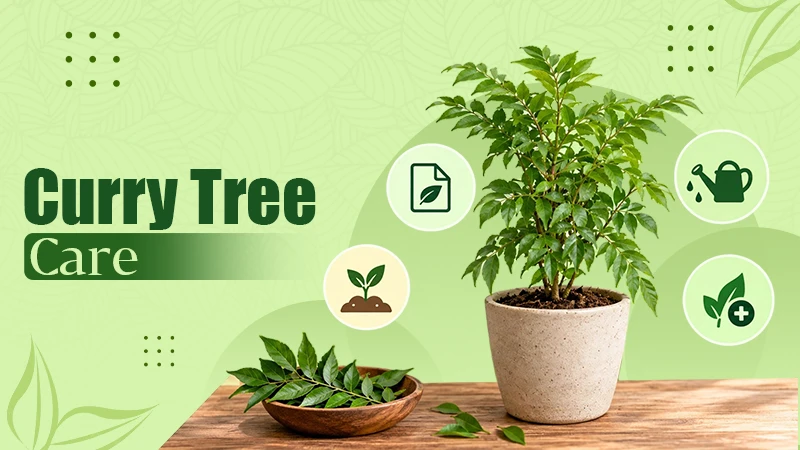
Curry trees have been part of Indian gardens for ages. These neem-like-looking leaves are packed with nutrition and aroma. From adding flavour to dishes to calming digestive issues, these green leaves do it all without needing much care.
This tropical evergreen tree can be easily planted in home gardens and, due to its fast-growing habit, you do not have to wait long to enjoy its versatile benefits. Popularly grown through stem cuttings, the curry leaves enjoy damp soil and full sun, but once the first set of leaves have emerged.
Moving further in the article, let me take you through a detailed guide about the curry tree, along with its benefits, growing guide, and some basic care tips.
What is a Curry Tree? Features and Botanical Specifications

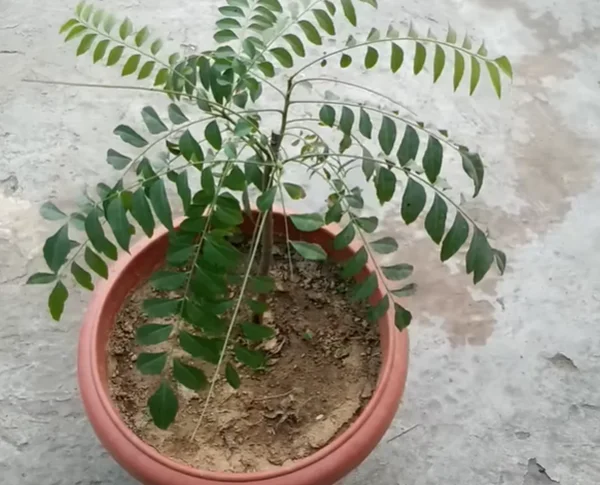
Part of the Rutaceae family, the curry tree is a tropical, subtropical evergreen shrub/small tree that is native to India and Sri Lanka. This tree grows to an average height of 20 feet and has teardrop-shaped leaves that emit a citrusy scent, along with small berries that turn purple when ripe. While mainly used for culinary purposes, the curry leaves also possess various medical properties, which makes this a versatile medicinal plant. Due to the leaf color and shape, the curry tree is often confused with the neem tree as well, but both are different plant species.
Before moving further, take a look at the botanical specifications of the curry tree for a better understanding:
| Botanical Name | Murraya koenigii (L.) |
| Kingdom | Plantae |
| Clade | Angiosperms |
| Order | Sapindales |
| Family | Rutaceae |
| Genus | Murraya |
| Species | M. koenigii |
What are the Benefits of the Curry Tree Leaves?
Curry tree leaves are primarily used for culinary purposes due to their fragrance in South Asian countries. Alongside, these leaves contain certain bioactive compounds that help in treating various ailments related to digestion, acne, dandruff, and hair loss.
Here are the major benefits of the curry tree leaves in detail:
Culinary Purposes
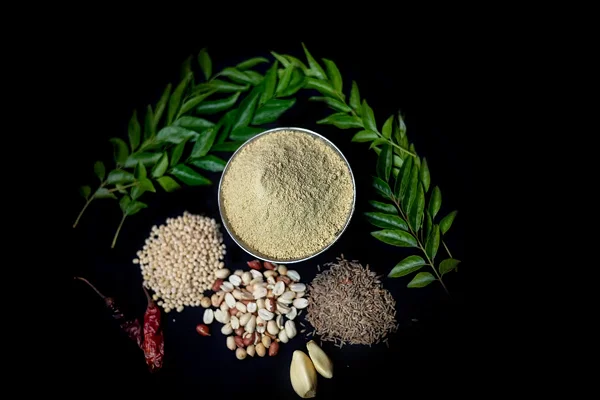
- The curry leaves have an intoxicating sweet and spicy fragrance, which is used at the beginning of cooking along with ghee and mustard. Locally known as ‘tadka’, curry leaves add essential oils and fragrance to the food, enhancing the aroma of the dish.
- Majorly used in South Asian countries like Sri Lanka and India, some popular dishes that utilize curry leaves are poha and stews.
Medicinal Use
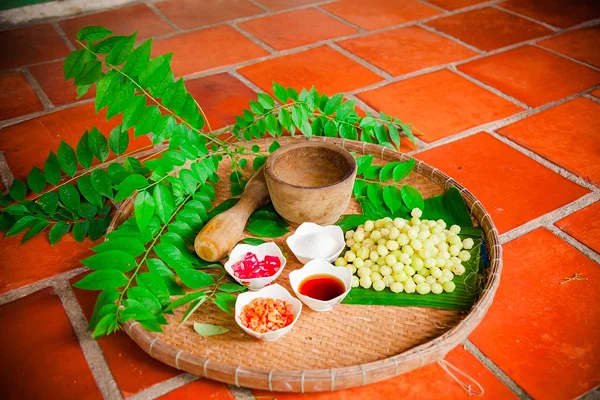
- As per the Indian Journal of Environmental Studies, curry leaves contain several bioactive compounds and alkaloids, which help fight oxidative stress and act as an anti-inflammatory agent used to treat wounds.
- Curry leaves are filled with nutrients and bioactive compounds, which also help fight acne and promote healthy skin. A simple way to incorporate this remedy would be to boil the leaves in water, strain it, and spray it on your face daily. Additionally, using it in a hair mask with yogurt and honey once a week also helps with dandruff and hair thinning.
- These sweet neem leaves are said to stimulate the digestive enzymes, which helps in treating gastrointestinal issues.
Growing Requirements to Plant a Curry Tree
A curry tree can be easily planted at home using stem cuttings. It requires well-draining, loamy soil with an acidic to neutral soil pH, regular watering, and nitrogen-rich fertilizer.
Here are 4 main growing requirements for the curry tree:
1. Sunlight
The curry tree requires proper sunlight for 6-8 hours every day. While curry plants can tolerate partial shade, it is usually recommended to provide them with sufficient sunlight; otherwise, it can lead to leggy growth.
2. Watering
Curry plants have moderate watering needs and thrive with 1 inch of water every week. Make sure that the soil remains consistently moist throughout the growing season. However, be a little mindful while watering, as it can lead to waterlogging, which can cause root rot.
3. Soil
The best soil for curry plants is a mix of rich, well-draining soil for outdoor planting and fertile loamy soil for indoor plants, with a consistent soil pH of 5.5-7.0. Add some organic compost for added nutrients and 20-30% peat moss for improved aeration. This ensures that the water penetrates well into the soil without clogging, and the soil breathes better, providing better nutrition.
4. Fertilizer
The curry plant is considered to be a moderate to heavy feeder plant. They are mainly grown and harvested for culinary uses, and they need to be growing leaves throughout the growing season. The best fertilizer for the curry plant is a balanced 10-10-10 liquid fertilizer. Make sure the plant food is rich in nitrogen, as it promotes the growth of leaves.
How to Plant Curry Leaves at Home?
Curry leaves are most commonly grown using stem cuttings an take almost 3 months to grow completely.
Take a look at this step-by-step guide on how to grow curry leaves at home:
Step 1. Pre-planting Preparation
Take a well-draining terracotta pot and fill it up with some fertile soil mix. Add some compost and peat moss to the soil for better aeration and nutrition. Do not feed the plant with liquid fertilizer at the time of planting, as this can stress the plant.
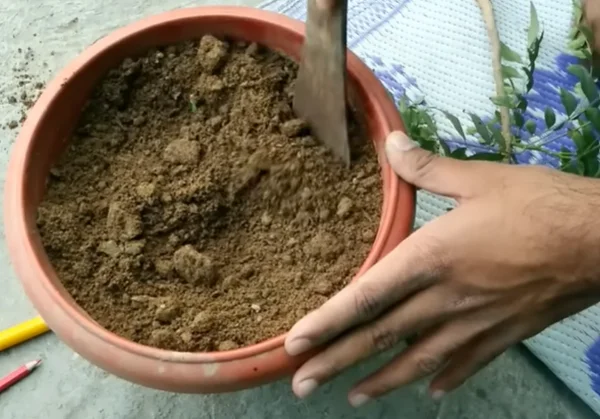
Step 2. Selecting the Right Stem
Next, take a hardwood curry stem cutting and remove all the leaves from it. Cut the stem at a 45-degree angle and make soft scratches around the cut. This will help create scar tissue, which encourages root growth. Right before planting, you can also dip the stem in turmeric or rooting hormone to stimulate growth.
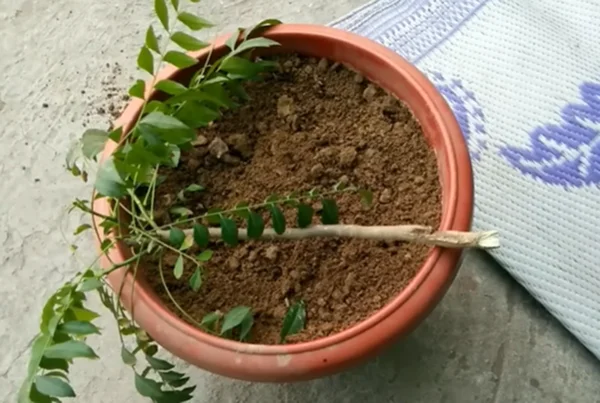
Step 3. Planting
Dig a hole and place the stem at least 2 inches deep in the soil. Water the plant immediately and keep it in shade. Once the leaves have started emerging, you can shift it to direct sunlight.
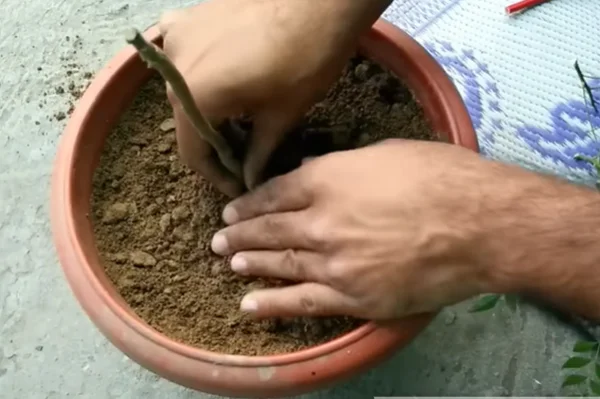
Step 4. Aftercare
Make sure the plant receives full sunlight for 6-8 hours daily, with proper watering and plant feeding every month during the growing season. Avoid sunlight before the leaves appear, as discussed in the step above, because it can lead to scorching.
Care Requirements for a Curry Tree
The curry tree leaves are really easy to care for. Some important care tips for the plant are proper sunlight, water, and fertilizer, along with regular pruning and assessing pest infestations in the plant.
Take a look at all the care tips for the curry leaf tree in detail:
1. Growing Requirements
First, make sure the basic growing requirements are met. These leaves need at least 6-8 hours of direct sunlight to grow. While they can tolerate partial shade, it can lead to leggy growth. Water it once a week and make sure the soil is not waterlogged. Lastly, feed the plant regularly to keep the leaves healthy. You can check the plant’s health by how its leaves behave. Wilted or brown leaves may be a sign of a stressed plant; hence, check and act accordingly.
2. Pruning
Pruning is one of the most important care steps for the curry leaf tree. It helps with a proper structure. The best time to prune the curry leaf tree is spring or summer, when the plant is growing actively. Start by removing the yellowing and damaged leaves before the infection spreads to the entire plant. After the pruning is done, feed some plant food to encourage new growth.
Gardyn Tip
Avoid fertilizing in winter, as the plant is preparing to enter dormancy and any sort of fertilization can stress the plant.
3. Pest Infestations and Solutions
The curry leaf tree is susceptible to various pests and diseases, like Asian citrus psyllid bugs, mealybugs, and scale insects. These are caused by improper watering, overcrowding, and excessive nitrogen fertilizers.
Take a look at this table to understand the pest infestations in the curry leaf tree:
| Pests | Causes and Symptoms | Solution |
| Asian Citrus Psyllid Bugs | Twisted, curled leaves Orange flat clusters on new shoots Can be caused by improper watering and excessive nitrogen in plant food. | Malathion spray or Neem oil. |
| Scale Insects | Sticky honeydew on leaves and yellowing leaves, which is caused by over-fertilization and lack of proper air circulation. | Manual removal or insecticidal soap. |
| Mealybugs | White cotton clusters, sticky leaves, and yellowing ends that are caused by stress and overfeeding, especially in new plants. | To treat mealybugs, isolate and prune the plant, then apply isopropyl alcohol or neem oil. |
Gardyna Insight
As per the Arizona Cooperative Extension, once a plant is infected with Asian citrus psyllid bugs, it becomes unproductive. Therefore, appropriate measures should be taken immediately.
Concluding Remarks
In conclusion, curry leaves are an Indian kitchen staple and have been used in dishes for flavour and aroma. These green leaves are often confused with Neem leaves but have a less bitter taste than the latter. Growing these leaves is not only extremely beneficial for culinary purposes but also for medicinal reasons. Easily grown from stem cuttings, my advice to beginners growing the curry tree for the first time is to avoid placing it in direct sun before the leaves emerge.
Happy Gardening!
What is the curry tree used for?
The curry tree is used to grow curry leaves, also locally known as kadhipatta, which is used in cooking due to its sweet and spicy aroma.
What is the difference between curry tree and curry plant?
Curry trees and curry plants are two completely different species. The tree grows slender, thin leaves, which are used in cooking. The plant also grows similar-looking leaves, but they are used for ornamental gardening.
Can you eat the fruit of the curry tree?
Yes, the berries of the curry leaf tree are edible, while this tree is mainly grown for its aromatic scent.
What is the Indian curry tree?
The Indian curry tree is a tropical, subtropical evergreen shrub that grows green, aromatic leaves used for medicinal purposes.
Is the curry tree fast-growing?
Yes, the curry tree is considered a fast-growing evergreen tree that can grow in 60 days with proper care.
How to grow curry plant– BBC Gardeners World