

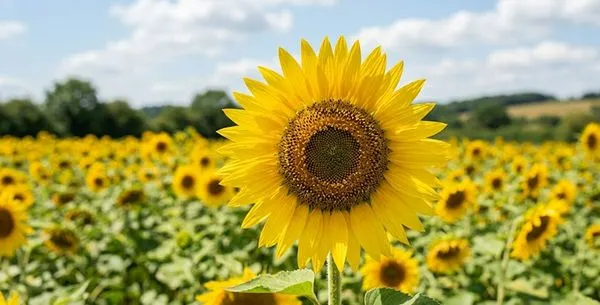
The common sunflower is a warm-season annual, perfect for bringing a pop of color, food, and wildlife to diverse spaces. It is one of the most loved plants to build a pollinator-friendly garden. From the cheerful blooms to crunchy sunflower seeds, this plant is ideal for gardens, kitchens, and vases.
Whether you wish to grow it for culinary purposes or to get the visuals of your own sunflower fields, here is all the information for you about sunflower, including planting, care, harvesting, and propagation.
Common Sunflower at a Glance: Quick Information Box
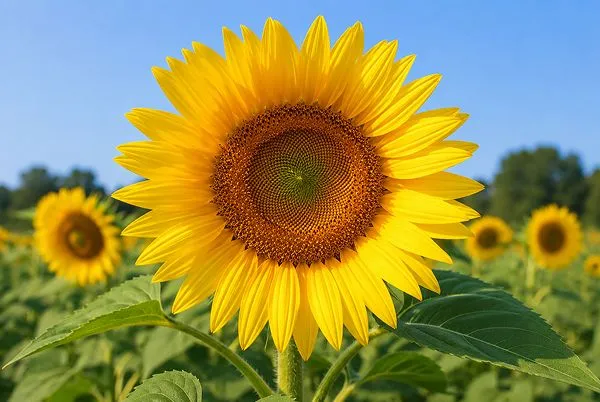
These sunflowers, native to North America, belong to the Asteraceae family. They are grown as annuals and can reach different sizes depending on the variety.
Here’s the quick information, including sunflower scientific name, size, native range, and growing zones:
| Botanical Name | Helianthus annuus |
| Family | Asteraceae |
| Genus | Helianthus |
| Native Range | North America |
| Growing Zones | USDA zones 2-11 |
| Plant Type | Annual |
| Bloom Time | Summer and fall |
| Plant Size | Size differs based on the variety: 1-3 feet (dwarf), 4-8 feet (garden), 10-16 feet (giant) |
| Toxicity | As per ASPCA, these are generally non-toxic to dogs, cats, and horses |
| Invasiveness | If heads shatter, they may self-seed, but they do not spread by rhizomes. |
Common Sunflower Key Features
Sunflowers are highly valued for their yellow flowers, edible nutritious seeds, and large green leaves. These plants are not resistant to deer and rabbits and often need protection from them.
- Flower: These annuals feature blooms in yellow colour and a reddish-brown central disk. Heads usually open in 3-8 days from the outer ring inward.
- Seeds: There are oilseed varieties and confection varieties. The confection seeds are large and used for snacking. The black oilseed seeds are comparatively small and pressed into sunflower oil. Both varieties roast easily and can be used in sunflower butter.
Did you know?
Despite being called seeds, sunflower seeds are actually the fruits of the plant called “achene.”
Foliage: The flowering plant features large, oval-shaped green leaves of size 4 to 12 inches. Its foliage can be built into a shade-casting canopy that suppresses weeds.
Deer and Rabbit Resistance: According to Rutgers deer resistant plants list, sunflowers are occasionally severely damaged by deer. It’s been noticed that deer often browse on tender young shoots, mature leaves, and flower buds.
In the case of rabbits, they have very low resistance. They aggressively clip and devour the young sunflower seedlings. To protect them, use fencing or netting and harvest the heads promptly.
Did you know?
Sunflowers are the universal symbol of adoration, loyalty, joy, and longevity due to their sun-seeking habit and radiant look.
How to Plant Common Sunflowers?
You can grow sunflowers easily by directly sowing them in the ground after the last frost when the temperatures are above 55°F. Keep sowing the seeds every 2-3 weeks for a summer-long display. These plants can also be grown in large containers.
Here are the steps to plant sunflowers from seeds:
Planting in the Ground
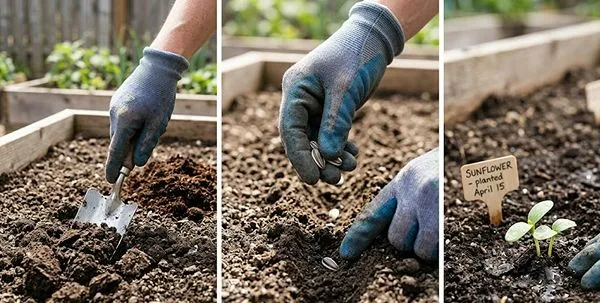
- Step 1: Pick a spot with full sun. Prepare soil by loosening it around 8-12 inches deep and mixing compost for better moisture retention.
- Step 2: Plant the seeds ½ – 1 inch deep in the prepared soil. Space them well. For instance, 6-9 inches for cut types, 12-24 inches for branching types, and 18-30 inches for giant types.
- Step 3: Keep the soil well moist, and within 7-10 days the seeds will germinate.
Planting in Container
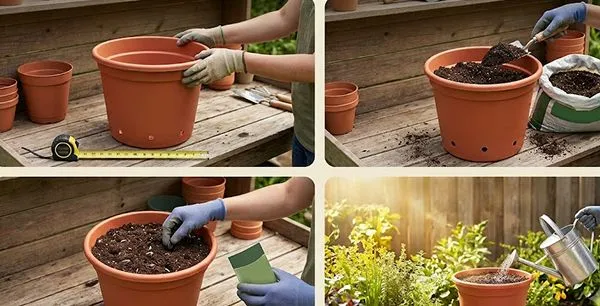
- Step 1: Select a large container with a capacity of around 7 to 10 gallons. Ensure that the pot has drainage holes.
- Step 2: Fill the container with potting mix and organic matter.
- Step 3: Plant the seeds ½ to 1 inch deep with the potting mix. Space multiple seeds in the pot a few inches apart.
- Step 4: Water well and keep the pot in a location receiving full sun. As it is an annual plant, there is no need to repot it.
Quick Tip
Sunflower seedlings attract wildlife. Consider protecting them with row covers or screening. Remove the cover once they are about 1 foot tall.
Care Essentials to Grow Common Sunflowers
Common sunflowers are warm-season annual plants that thrive best in full sun and well-draining soil. Further, they need consistent watering, light feeding, and staking to grow well.
Here are the care essentials to grow common sunflowers:
Sunlight Requirements
These are among the flowering plants for home gardens that thrive best in full sun. Plant them in a location that receives 6-8 hours of daily direct sunlight. As they are heliotropic (flower heads follow the sun), proper sunlight helps them remain straight.
Soil Preference
Sunflowers are capable of growing in any kind of soil, including poor, dry soil. However, these plants require well-draining soil that is rich in organic matter.
Watering Needs
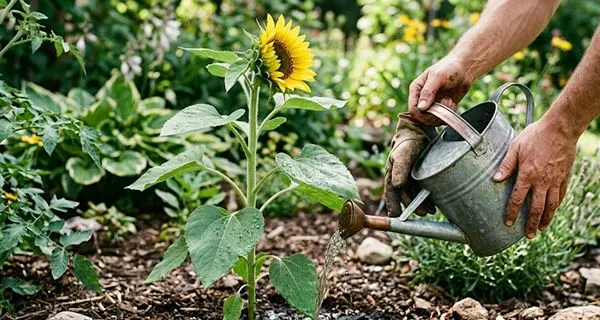
Though Helianthus annuus is considered a drought-tolerant plant, watering it regularly encourages flowering. During the seedlings’ establishment, keep the soil well moist. After that, allow the top 1-2 inches of the soil to dry out before every watering session.
Study Insights
A 2022 study by Frontiers highlights that the successful sunflower establishment of double cropping depends strongly on the seedbed moisture. The optimal moisture ensures rapid emergence and reduces seedling losses, particularly from bird damage.
Fertilizers
If you are using rich, loamy soil to plant it, you will usually not need to feed it with fertilizers. Though if you have poor soil, feed the plant with slow-release fertilizer high in phosphorus and potassium at the start of spring. Feed it with natural compost tea or worm casting tea to grow plants without chemicals.
Staking and Support
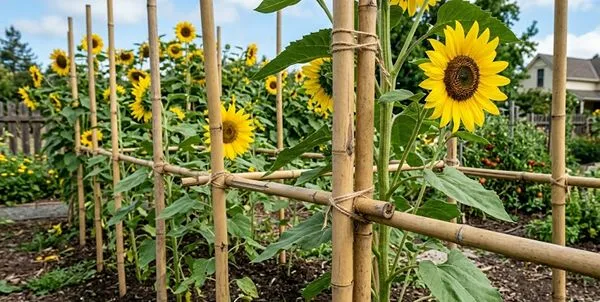
It’s considered beneficial to plant sunflowers in groups so that they can support each other in wind and rain. Growers stake tall and top-heavy varieties early to keep them upright. For support, plant them along the fence; use bamboo stakes, T-posts, or twine grids.
Overwintering
There is no need to overwinter these plants. These are annuals and will succumb to frost. You may leave some of the heads for wildlife or harvest them for seed.
Quick Tip
Sunflowers don’t need pruning, but they can benefit from the occasional trimming. If they show any signs of browning or drying, cut them to the ground level. You may also deadhead them to encourage blooming.
Types of Common Sunflowers
Common sunflowers come in a wide variety based on height, colour, and growth habit. Some of the popular types include ‘Sunny Smile’, ‘Teddy Bear’, ‘Vincent’s Choice’ and ‘Taiyo’.
Let’s see the different types of sunflower height, growth habit, and cultivars:
| Type | Cultivars | Key Points |
Dwarf & Patio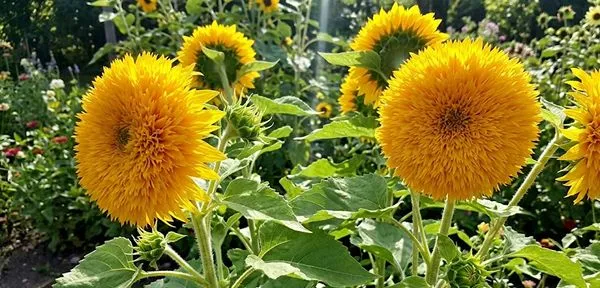 | ‘Sunny Smile’, ‘Teddy Bear’, ‘Firecracker’ |
|
Cut Flower Singles(Pollenless)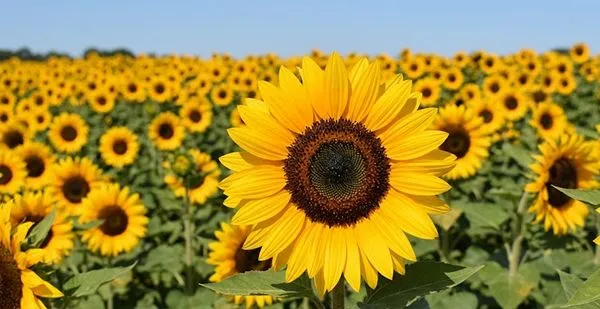 | ‘Sunrich Gold’, ‘Sunrich Summer Provence’, ‘ProCut’, ‘White Nite’, ‘ProCut ‘Red’, ‘Vincent’s Choice’ |
|
Cut Flower Singles (Pollen-bearing)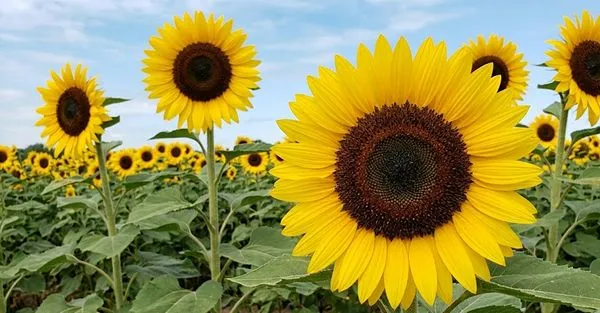 | ‘Valentine’, ‘Taiyo’ |
|
Branching Garden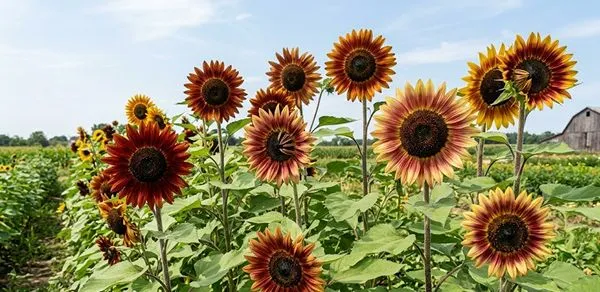 | ‘Autumn Beauty’, ‘Evening Sun’, ‘Ring of Fire’, ‘Velvet Queen’, ‘Floristan’ |
|
Giants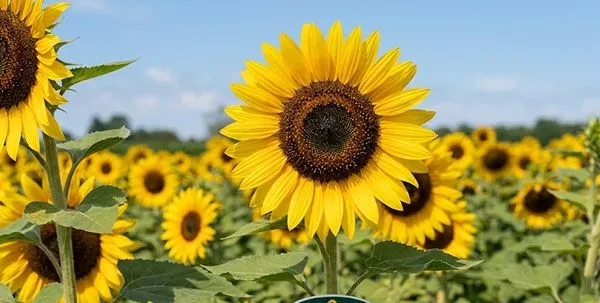 | ‘Mammoth Grey Stripe’, ‘Russian Mammoth’, ‘Arikara’ |
|
Study Insights
A study by the National Center for Biotechnology Information concludes that the aerial parts of sunflowers, especially those harvested at the mid-flowering stage, are an effective source of obtaining high antioxidant phenolic extracts.
Harvesting and Storage of Sunflower Seeds
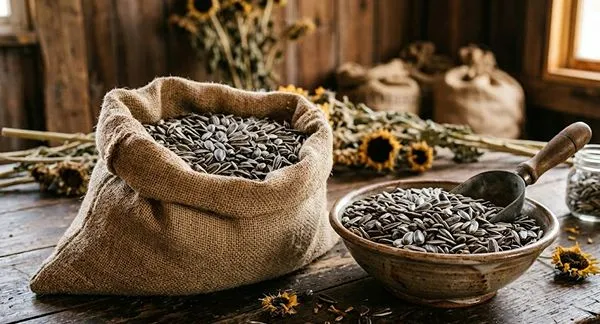
Sunflower seeds are harvested roughly 80- 140 days after planting. To harvest the seeds, cut the whole flower head with about 1 foot of stem attached when the petals are dry or mostly dropped.
Hang the heads indoors in a well-ventilated space for a couple of weeks to finish drying. Remove the seeds and store them in an airtight container.
When to Harvest?
When the backs of the heads turn yellow-brown, and the petals are dry and mostly dropped, it’s time to harvest the seeds. In confection types, the seeds appear plump and stripy, and in oilseed types, they loosen with a finger rub.
How to Harvest?
To harvest the seeds, cut the head with 12-18 inches of stem. Hang in a warm spot indoors, bagged in mesh or paper, away from insects and rodents. When the seeds are completely dry, rub the seeds off the flower head over a tray before storing them.
Storing and Using Seeds
Store the dried seeds in an airtight container. If you want to use them for a longer time, freeze them. You can roast the seeds and use them for snacking. They can also be baked into breads or churned into sunflower butter for sandwiches and sauces.
Study Insights
A double-blind, randomized, placebo-controlled study by the National Center for Biotechnology Information reveals that the sunflower seed extract (SUN-CA) could be an effective and safe management option for obesity.
Propagation Method for Common Sunflowers
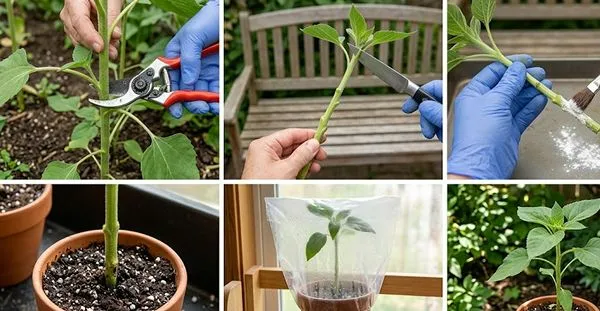
You can propagate sunflowers through stem cuttings. Take the cuttings before the season’s growth has matured, root them, and relocate them outdoors. Still, propagating them through seeds is simpler and faster (steps mentioned above).
Here are the steps to follow to propagate them through cuttings:
- Step 1: Cut a 4-6 inch long stem with pruning shears or a sharp knife. Make sure that it does not have any buds or flowers.
- Step 2: Remove the lower leaves to see the nodes, and cut the top ½ inch of the stem, leaving the top leaves behind.
- Step 3: Remove the soil from the leafless section and apply rooting hormone to that part.
- Step 4: Bury that cut end in a peat moss mix or sand and cover it with the plastic bag.
- Step 5: After 2-4 weeks, relocate the cuttings outdoors into shade for a week before placing them under full sun.
Quick Tip
Plant sunflowers in gentle arcs or “ribbons”; this softens wind and helps make a photogenic sunflower field edge.
Pests and Diseases in Common Sunflowers
Various pests and diseases can affect these annual plants. Some of the common pests include aphids, spider mites, thrips, wireworms, and cutworms. They can also be affected by diseases like powdery mildew, botrytis, and phoma black stem.
Let’s see the lists of common pests and diseases and their signs and solutions:
Pests That Affect Sunflowers
| Pests | Signs and Solutions |
| Aphids |
|
| Spider Mites & Thrips |
|
| Cutworms & Wireworms |
|
| Flea Beetles, Japanese Beetle and Grasshoppers |
|
| Stink Bugs & Leafhoppers |
|
| Caterpillars |
|
Diseases in Common Sunflowers
| Diseases | Signs and Solutions |
| Powdery Mildew |
|
| Downy Mildew |
|
| Alternaria Leaf Blight |
|
| Phoma Black Stem |
|
| Botrytis (Gray Mold) |
|
Quick Tip
Growing thyme and basil underplantings helps sunflowers as they invite predators that help with caterpillars and aphids.
Final Words
Common Sunflower is pleasing to the senses with bright yellow petals and a woody fragrance in summer. It comes in a wide variety, ranging from the compact ones for containers to the giant types for proper sunflower fields.
As you understand all the necessary sunflower information, you can grow these elegant annuals in diverse spots, whether you want to grow them for culinary use, cheerful bouquets, or awesome garden visuals. Consider growing them with good companion plants like zinnias, peppers, and cosmos to support their health.
What is sunflower botanical name?
Sunflowers are scientifically called Helianthus annuus.
Are sunflowers safe for pets?
Yes! Sunflowers are considered safe for dogs and cats.
What is the difference between oilseed and confection sunflower?
The oilseed variety has small seeds that are used for pressing oil. The confection variety has large, striped seeds that are used for snacking.
Can I grow sunflowers in containers?
Yes! You can grow them in containers. Use the dwarf varieties, choose a large container, and water regularly.
How long do sunflowers bloom?
The common sunflower heads show petals for 7-10 days.
- Common Sunflower (Helianthus annuus L.) – U.S Department of Agriculture
- Common sunflower – Iowa State University
- HELIANTHUS ANNUS (SUNFLOWER): THE MAGNIFICENT PLANT-A REVIEW – ResearchGate
- sunflower – Britannica
- How to grow sunflowers – BBC Gardeners’ World Magazine