

The Madhu Kamini plant is an ornamental tree that is characterized by its charming green foliage, lovely white flowers, and sweet fragrance. This plant can be planted in home gardens, balconies, pots, and landscapes, thanks to its beautiful look and easy-growing nature. If grown in proper conditions such as sunlight, soil, watering, and pruning, the plant can be cultivated into a beautiful shrub that invigorates outdoor spots with its fragrance and beauty.
If you have walked past a hedge full of small jasmine flowers and beautiful green leaves, you definitely know about the Madhu Kamini plant. It is so popular that it can be found in temples, gardens, and city hedges as well.
In this article, we have curated all the information regarding the features of Madhu Kamini, how it can be identified, the kinds of this plant, and its benefits, as well as tips on its growth and care.
What Is the Madhu Kamini Plant?
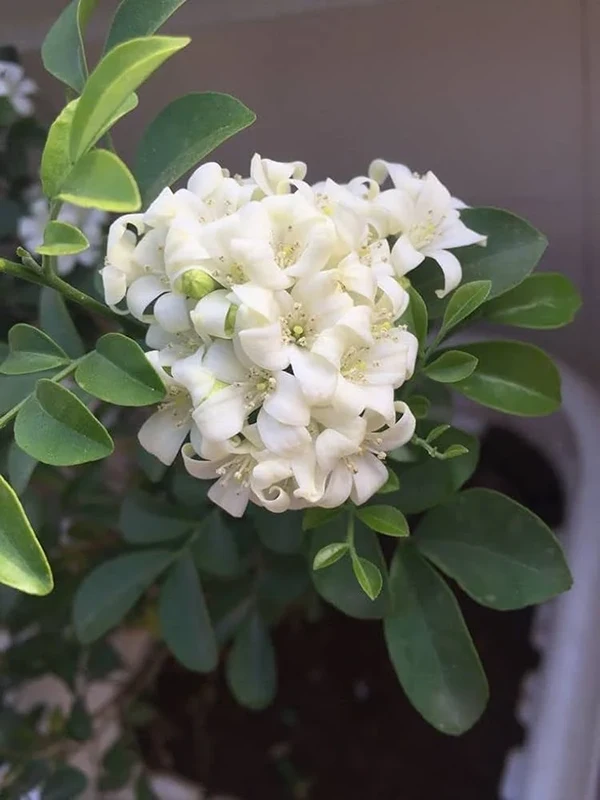
Madhu Kamini is an evergreen species that belongs to the Rutaceae family of plants, including citrus plants. This plant is found in tropical and subtropical parts of Asia where it is grown as an ornamental tree or shrub. The mature plant of Madhu Kamini appears bushy, with leaves that are dark green in color, and produces small clusters of white flowers with a wonderful fragrance.
When the flowers bloom, the fruits form, turning red as they mature. It is a very famous ornamental plant that is grown in homes, parks, and gardens due to its ornamental nature and easy maintenance.
The name Madhu Kamini actually conveys its meaning: Madhu means the sweetness of the honey fragrance of the plant, and Kamini means a wonderfully beautiful woman, signifying its flowers.
How to Identify a Madhu Kamini Plant
These are the main pointers that can help you with the identification of Madhu Kamini plants:
Identifying the Madhu Kamini plant is not hard if you know what to look for:
- Leaves: The leaves of the plant are small, dark green, and glossy, and are arranged in a pinnately compound manner along the stem.
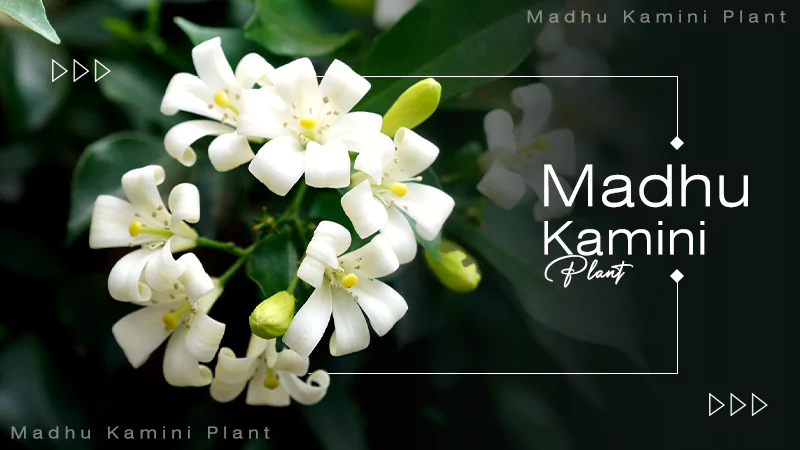
- Flowers: The madhu kamini flowers are star-like and pure white, with 5 petals, and are usually found in clusters.
- Fragrance: The plant has a sweet, strong floral fragrance similar to jasmine plants, especially at night.
- Fruits: After flowering, the bush develops small reddish-orange berries that give it its name, “Orange Jasmine”
- Bark: The plant has smooth, grey-brown bark on the woody stem.
- Growing Quality: The plant can be kept as a shrub or trimmed into a hedge.
What are the Different Types of Madhu Kamini Plants?
Madhu Kamini, also known as orange jasmine, has three main varieties based on plant growth, its size, and leaf shape. Below is a table with the plant’s image and description:
| Plant variety and image | Description |
Normal (large) Kamini 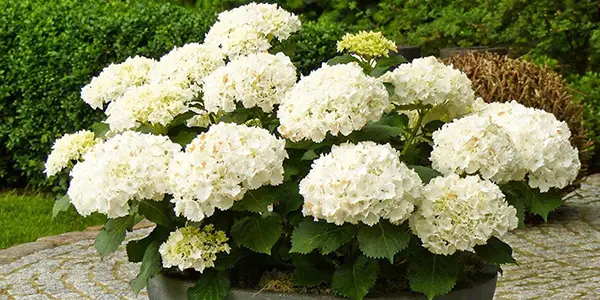 | The normal Kamini plant variety grows like a large bush or small tree with big glossy leaves and clusters of sweet, fragrant white flowers. The plant grows around 7 to 10 ft. tall and is preferred for growing outdoors as garden borders and hedges. |
Mini Kamini 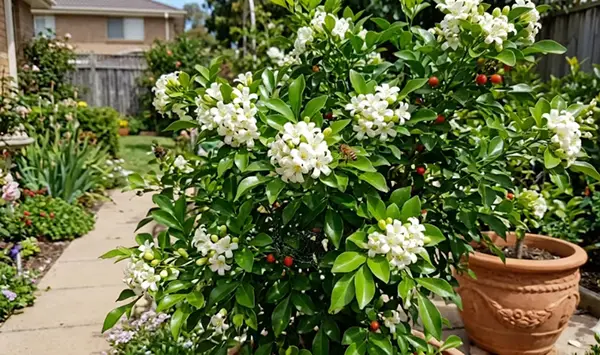 | Mini Kamini is a medium-sized shrub with medium flowers and smaller leaves. It is generally dense and bushy. This variety of Kamini plant is perfect for balconies and medium pots, as it grows around 2 to 3 ft. tall. |
Table Kamini or Micro/dwarf Kamini 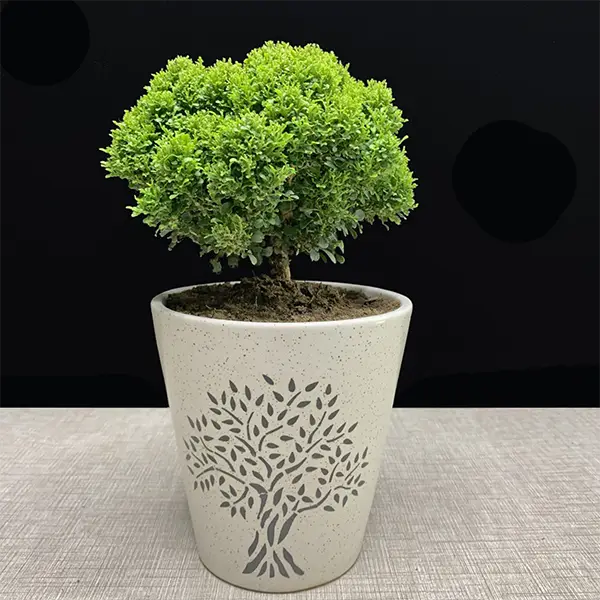 | The table kamini plant is a compact variety with very small leaves. It is often used as an ornament and increases aesthetic value indoors. |
Fact
People often confuse the Madhu Kamini plant with night-blooming jasmine or the raat ki raani plant, but the two are completely different from each other. While the Madhu Kamini plant (Murraya paniculata) belongs to the Rutaceae family, raat ki rani (Cestrum nocturnum) is from the Solanaceae family.
Madhu Kamini: Taxonomic and Key Characteristics
Biological Classifications and Common Names of Madhu Kamini Plant
| Specifications | Details |
| Botanical Name | Murraya paniculata |
| Family belongs to | Rutaceae (Citrus family) |
| Genus | Murraya |
| Common Names | Madhu Kamini, Orange Jasmine, Chinese Box, Mock Orange, Satinwood |
| Native Region | South Asia, Southeast Asia, Australia |
| Plant Type | Evergreen shrub/small tree |
| Height | 2-7 meters |
| Fragrance | Strong Aroma |
Special Characteristics of the Madhu Kamini Plant
Madhu Kamini plant has several amazing features that appeal to home gardeners, such as its attractive appearance throughout most of the year thanks to its evergreen leaves, as well as its white flowers. Some are pointed out as
- Multiple Blooms: Unlike most ornamental plants, Madhu Kamini can bloom many times in a year, especially after periods of rain and humidity.
- Pleasant Scent: The strongest scent is experienced in the early hours of the morning and late evening, which makes the plant popular in gardens with seating areas.
- Resilient Plant: The plant responds well to pruning and can be used for creating hedge shapes or topiary designs without problems.
- Low Pest Attacks: The plant is resistant to most pests found in the garden, with only rare instances of having attacks from citrus leaf miners.
- Moderate Growth: The plant grows at a slow to moderate pace and, though its growth is significant, it is not considered an invasive plant.
- Bee-Friendly: The plant is known for its ability to attract pollinators such as bees and butterflies due to its fragrant flowers.
Did you know?
- The Madhu Kamini flowers were offered to deities in ancient times, and they were often attributed as symbols of harmony, peace, love, and prosperity.
- The glossy, dark green, dense leaves of the Kamini plant have a citrus aroma when crushed.
Why Grow Madhu Kamini? Benefits and Garden Uses
The Madhu Kamini plant has many uses in gardening and adds beauty to various kinds of spaces. Some benefits of the plant include:
- Natural Air Freshener: It produces a strong and sweet odor that fills the air around it naturally.
- Multiple Applications in Landscaping: It is ideal for edging, hedges, topiary, bonsai, or decorative use.
- Low Maintenance: After the initial establishment, the plant does not need much attention and can survive in full sun and partial shade.
- Natural Air Purifier: This plant can improve air quality around the house, just like any other shrub has thick leaves.
- Attracting Beneficial Insects: It attracts bees and butterflies, making it a useful addition to a pollinator-friendly garden.
- Medicinal Uses: Parts of the plant are known to have anti-inflammatory and antibacterial qualities in traditional medicine.
- Providing Privacy: Its thick growth can work as a natural privacy screen.
- Year-Round Greenery: It is an evergreen shrub and enhances the look of gardens during winter while other plants remain dormant.
- Vastu & Ornamentation: It is popularly planted near the entrance and garden areas of a house in India because of the fragrance and good significance of the shrub.
- Cultural importance: Some traditions in India associate it with good luck and use it for ceremonial purposes as well as for decorative purposes.
- Entrances and patios: Planting it near a frequently used area will help you enjoy the benefits of its blossoms and fragrance.
With sufficient sunlight, well-drained soil, regular watering, and occasional pruning, Madhu Kamini can make a lasting addition to the home garden.
How to Grow Madhu Kamini Plant?
How to Cultivate the Madhu Kamini Plant: When planted in a suitable location that has good light, drainage, and space, Madhu Kamini can be grown easily. Here are some common tips to grow the Kamini plant
Choosing an Appropriate Site
Plant in a site that is well-lit and receives a minimum of 6-8 hours of sunlight each day, along with sufficient airflow. In warm tropical and subtropical climates, Madhu Kamini grows satisfactorily. In the garden, ensure to keep space for the growth of the branches and allow for proper care in the future.
For balcony and terrace planting, choose an appropriate pot and position it in the light. Compact forms like the table Kamini or dwarf Kamini do excellently well in bright sunlight or in light but indirect sun.
Planting Madhu Kamini in the Open Ground
- Choose a healthy Madhu Kamini plant that has strong stems and healthy leaves.
- Find a location that has the presence of ample sun and has the right kind of soil that is rich in organic matter like compost and/or well-rotted manure.
- Dig a pit about twice the width of the root mass and a little deeper.
- Plant the Madhu Kamini in such a way and at a depth that is the same as the roots planted during the earlier stage.
- Mix the dug-up earth with completely decomposed compost or organic manure in a 2:1 ratio.
- Set the sapling in the middle of the pit, ensuring the root collar is at the same level as the ground.
- Fill in the hole slowly while pressing down the soil around the sapling so that there is no air in the soil.
- Water generously just after planting to help the plant settle down.
- If you are planting several saplings to form a hedge, space them 50–80 cm (20–32 inches) apart for a dense hedge, or up to 1 m (39 inches) apart for a looser screen.
- Support the young plants with stakes if the place is windy, until their roots settle down completely.
Growing Madhu Kamini in Pots
Here is how to grow the table Kamini plant
- Select a pot that is 12 to 15 inches wide and has good drainage holes.
- Use a good potting mix that allows good drainage — a mixture of garden soil, cocopeat, and compost is best.
- Put some broken pieces of pots or pebbles at the bottom for drainage.
- Put the pot in a bright place like a balcony or terrace where it gets some sun and brightness.
Transfer all your indoor plants into bigger containers every couple of years as they grow, or when you see roots protruding from their drainage holes.
How to Propagate a Madhu Kamini Plant?
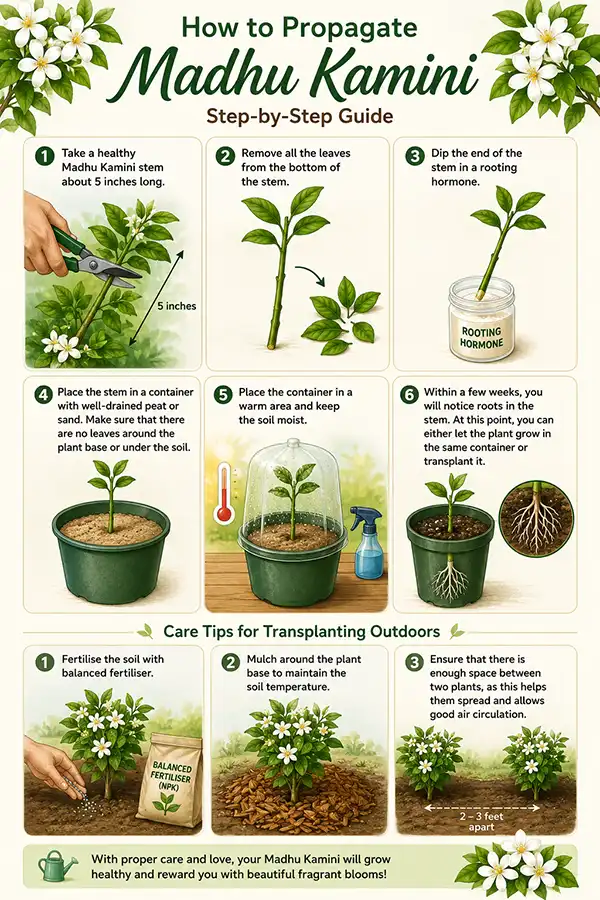
The most effective way to reproduce Madhu Kamini plant is using stem cuttings.
Propagate using Stems
- Select a strong stem having the size of 10-15 cm long and has some leaf nodes.
- Remove the lower leaves of the stem, leaving only two to three leaves at the top.
- The end of the plant can be dipped into rooting powder to hasten the formation of roots (this step is not essential, though).
- The cutting should be done in such a way that at least one node is below the soil
- The cuttings of the plant need to be watered moderately and covered either with a bag or placed in a humid, shady place.
- Roots usually appear in the range of 3-5 weeks, and after they form, they can be transplanted into a larger pot or a garden.
Propagation through Seeds
Another way to propagate the Kamini Plant is through seeds
- Gather ripe orange-red berries from the plant and extract the seeds from them.
- Wash the fruits off and let the seeds dry for some time.
- Sow the seeds into seed-starting medium, about half an inch deep.
- Keep it moist at all times and place the tray away from direct sunlight but not in a very shaded spot.
- It can take from 2 to 4 weeks for the seeds to germinate, which is slower than cutting propagation.
- Once seedlings grow their true leaves (3-4 leaves), they should be transplanted into pots before planting out.
Madhu Kamini Plant Care
Madhu Kamini requires proper care to keep its foliage thick and to promote regular flowering. Its main requirements include good lighting, well-draining soil, sufficient watering, and periodic fertilization.
Light
Madhu Kamini prefers bright light; it should get bright direct light or partial sunlight for a minimum of 4-6 hours each day. Though it can endure partial shade, it should be remembered that not enough light would usually yield a plant with scanty foliage and not many flowers. In
Soil Requirement
This plant is not very demanding, but it grows best in well-drained, loamy soil that is heavy in organic matter. It prefers a mildly acidic to neutral pH of about 6.0–7.5. You should avoid heavy clay soil because that can hold excess water and can cause root rot problems. Adding compost or organic matter during planting can also improve drainage and fertility.
Watering Requirements
Water regularly to keep the soil moist but not wet. In summer, watering three or four times will be enough, depending on the weather. In winter, reduce watering frequency and allow the topsoil to dry out a bit between waterings. Always check the moisture of the soil before watering because overwatering is a more common problem than under-watering. Potted plants dry quicker than planted ones, so be more vigilant with their watering.
Fertilizer Application
During the growing seasons, you should feed your Madhu Kamini with balanced NPK fertilizer once every four to six weeks (for example, 19-19-19). Alternatively, you can also use organic options such as well-rotted cow dung, vermicompost, or bone meal, which are quite good for proper growth and blooming. During the dormancy period in winter, either reduce or
Pruning and Shaping
- Regularly trim to keep up the shape of the plants and help with more flower blooming.
- Trim hedges every 4-6 weeks during the period of growth to maintain good form.
- Cut off the dead, unusable, and crowded branches for better air circulation.
- Light pruning after every blooming helps with the next flowering.
If practicing topiary techniques or bonsai cutting, make slow and steady pruning instead of doing everything at once.
Weather
Madhu Kamini grows in warm and humid areas of tropical or subtropical regions, with the best temperature being 20-35 degrees Celsius.
The plant does not mind heat too much but is susceptible to frost and low temperatures that can damage or kill the plant. In areas with cold winters, the potted plants should be moved inside when the temperature falls below 10 degrees Celsius.
Moderate or high humidity will keep the leaves in better condition and help with flowering.
Pests and diseases
Madhu Kamini has to deal with the same garden pests like aphids, scale insects, mealybugs, and mites. Therefore, it is necessary to check leaves, branches, and the new growth for possible infestation signs regularly. For mealybug infestations, natural mealybug treatment can help manage the problem.
Possible symptoms are curled or discolored leaves, sticky residues, visible insects, or damage to the new growth. Proper air circulation and watering can mitigate the problem. An infected part of the plant can be cut off and washed with water if infestation is minor.
Repotting and Wintering
Repot potted plants of Madhu Kamini every one to two years, preferably in spring, to renew the soil and give roots space. The size of the new pot should be about 2-3 inches bigger in diameter than the previous one. In winter, due to lower temperatures, growth slows, so water and fertilizer use should be limited. If frost occurs, cover the plant with mulch or move it into a warm place.
Common Madhu Kamini Plant Problems and Solutions
Madhu Kamini is usually easy to grow, but in some cases it can have minor problems when light, watering, drainage, cutting, and other factors are not appropriate. Most problems can be solved once the causes are found out and the growing method of the plant is changed depending on the discovered faults.
Madhu Kamini Does Not Flower
The reasons may include an insufficient amount of light, too much nitrogen fertilizer, the plants are still young, or a wrong procedure of pruning. It can happen when the plant is healthy but growing in semi-darkness, as it produces many leaves but few flowers.
What to do: It is important to provide a brighter spot with sunlight for the plant and prevent giving it too much nitrogen, as it leads to more leaves than flowers. Finally, if the plant was planted or propagated recently, it takes time to produce many flowers.
Madhu Kamini Letting Its Leaves Go Yellow
Possible causes: The yellowing of leaves may stem from overwatering, bad drainage, root problems, an imbalance of nutrients in the soil, or just natural aging of the older leaves.
What to do: Try to check the moisture in the soil before watering again. If the soil stays wet for an extended period, consider changing the way of watering and improving drainage. Ensure that the pot has enough drainage holes to allow excess water to run out of the pot. Do not add any fertilizer until the watering and root issues are resolved.
Madhu Kamini Leaves Curling
Possible causes: Leaves may curl due to hot weather stress, erratic watering, a lack of humidity, abrupt environmental changes, or insect infestation.
What to do: Inspect the undersides of the leaves and new growth for insect infestations such as aphids, mealybugs, or spider mites. Keep the soil moist enough without making it too wet, and ensure that the plant is protected from extreme heat and abrupt changes in the climate.
Madhu Kamini Is Growing at a Very Slow Pace
Possible causes: Slow growth may be due to inadequate lighting, poor growing conditions, lack of nutrition, limited root growth, or the plant is acclimating after planting/repotting.
What to do: Ensure that your plant has plenty of light and is planted in fertile, well-drained soil. If the plant is in a pot, make sure that the roots are not congested. Do not over-fertilize as improving growing conditions is likely a better option than simply fertilizing.
Madhu Kamini Plants Dropping Buds
Possible causes: Bud drops can be caused by sudden changes in environment, irregular watering, excessive heat, root stress, or pest-inflicted damage.
What to do: Maintain a consistent watering schedule and do not allow your plant to completely dry out between waterings. Inspect the buds and surrounding leaves for infestations and provide shade during very hot weather.
Madhu Kamini exhibits Root Rot
Probable Causes: Root rot occurs mainly due to a state of prolonged water accumulation in soil, poor drainage, or overwatering. Occurrence of this disease is high where the plants are growing in heavy soils or containers with poor drainage.
Kind of Remedies: The soil and root quality must be assessed before watering if wilting symptoms are present. Necessary steps must be taken to repair soil drainage and remove dead roots if replanting is required as per the diagnosis. Use fresh, well-drained soil during transplantation, and avoid overwatering.
Sooty Mold on Leaves of Madhu Kamini
Probable Causes: Sooty mold may appear as a black covering on the leaves when honeydew, the waste of sap-sucking pests, builds up on the leaf surface.
Remedies: Locate and control the source of the pest infestation, especially on new shoots and the undersides of leaves.
Dealing With Pests on Madhu Kamini
Possible causes: Aphids, mealy bugs, scales, and spider mites are among the most common pests that are associated with Madhu Kamini common problems, leading to curling, yellowing leaves, sticky leaves, weak growth, and damaged new shoots.
What to do: Simply check the plant regularly for new growth and underneath the leaves. Whenever necessary, remove the heavily damaged leaves or shoots and treat it with a suitable insecticide or horticultural remedy. Keeping good air circulation along with maintaining the right amount of moisture, is required to make it fruitful, ensuring its healthy growth.
Takeaways
Madhu Kamini, also commonly known as orange jasmine in English, is a beautiful, fragrant flowering plant that is native to Asia and the Indian subcontinent but is now commonly found all over the world. This aesthetic plant can be grown both indoors and outdoors and has glossy, shiny, green leaves.
Planting Madhu Kamini in your space will not only fill it with positivity, but it will also enhance the aesthetic of your space while releasing its flower fragrance.
You can definitely add a Madhu Kamini plant to your garden in the next growing season and let your space have a heavenly aroma.
Happy growing!
What is Madhu Kamini plant called in English?
The Madhu Kamini plant is known as orange jasmine or mock orange.
Madhu Kamini flower blooms in which season?
The Madhu Kamini flower blooms from spring till early autumn. The peak flowering time is during the warm summer and humid monsoon.
Which common pests can attack Kamini plants?
Pests like aphids, spider mites, mealybugs, and scale insects can attack your Madhu Kamini plant. Use organic pesticides to remove them.
Can Kamini plants grow in pots?
Yes, the compact-sized table Kamini plant can easily be grown in pots. Ensure that the pot has a proper drainage hole and is around 12 to 14 inches.
Is Madhu Kamini an indoor plant?
Madhu Kamini is an outdoor plant that grows well in bright sunlight. It can be grown indoors in very bright locations that receive several hours of direct or strong indirect light, but it generally blooms better outdoors.
Why is my Madhu Kamini not flowering?
They are usually caused by poor nutrition, either from lack of sunlight or too much nitrogen fertilizer, or by being too young or improperly pruned. Place in a sunnier spot – 6–8 hours of sun; limit high-nitrogen feeds and pinch out light blooms to promote flowering.
Does Kamini need full sunlight?
Madhu Kamini can handle some shade, but it can thrive and flower abundantly with at least 4-6 hours of sunlight a day.
Can you grow Madhu Kamini from cuttings?
Yes. Select 10–15 cm semi-hardwood stem cuttings with a few nodes, cut away the lower leaves, optionally dip in rooting hormone and plant into a moist, well drained mix. Roots typically develop in 2-4 weeks in warm, humid environments.
What is the maximum height of the Madhu Kamini plant?
Madhu Kamini can grow to approximately 3-7 m (10-23 ft) in the ground depending on the variety and pruning. It is typically trimmed to 1-2 m (3-6 ft) or smaller, and kept in pots or table/dwarf varieties.