

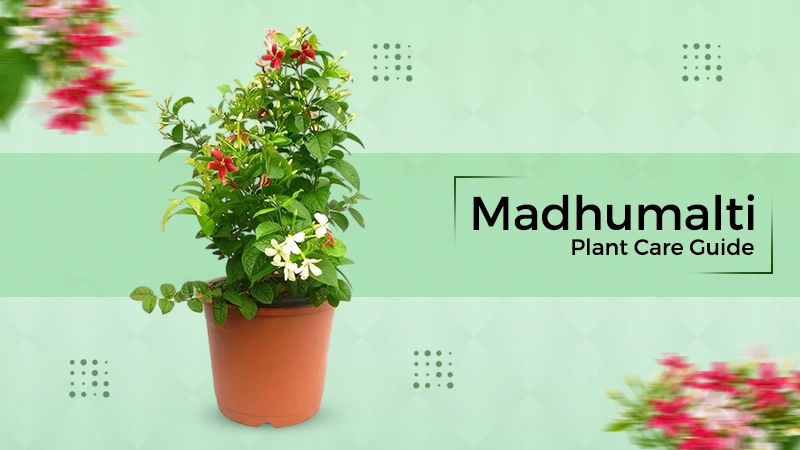
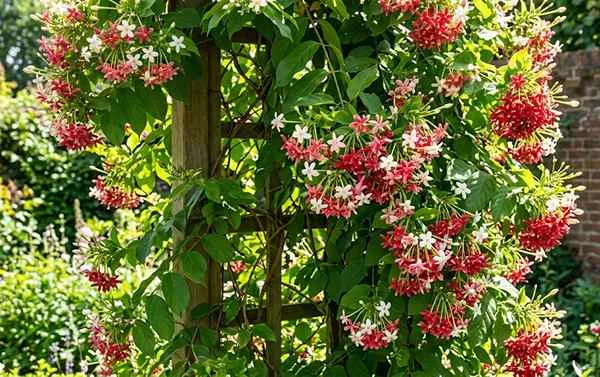
Madhumalti plant, also known as Rangoon Creeper, is a fast-growing climber that brings color and fragrance to any garden. Its flowers initially bloom bright white, then shift to pink before turning deep red, often all at once on a single vine, making it a stunning climber for fences, walls, or trellises.
Native to tropical regions of Asia, the Madhumalti plant is relatively easy to grow with proper sunlight, watering, and support, making it a popular choice among flowering plants for home gardens.
This article covers everything you need to know to grow a healthy, thriving Madhumalti, from its key characteristics and care requirements to common problems and how to solve them, so your creeper can reach its full height and beauty.
Quick Facts
- Common English Name: Rangoon Creeper
- Scientific Name: Combretum indicum
- Plant Family: Combretaceae
- Plant Type: Flowering woody climber
- Flower Colours: White, pink, and red
- Known For: Fragrant, colour-changing flowers
- Best Uses: Fences, pergolas, walls, arches, and trellises
Madhumalti Plant: Taxonomical Hierarchy and Key Characteristics
Madhumalti Plant (Rangoon Creeper) is a woody climbing vine that is famous for fast growth and colour-changing blooms. Belonging to the Combretaceae family, the perennial has a strong scent and effective medicinal properties.
Let’s take a look at its taxonomy and special characteristics:
Taxonomical Classification and Common Names of Madhumalti Plant
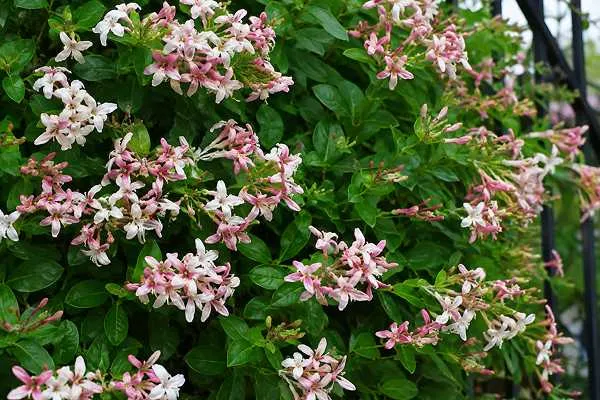
| Kingdom | Plantae |
| Family | Combretaceae |
| Genus | Combretum |
| Species | C. indicum |
| Binomial Name | Formerly known as Quisqualis indica, now classified as Combretum indicum. |
| Common Names | Madhumalti, Malti, Rangoon Creeper, Chinese Honeysuckle, Burma Creeper, Jhumka Bel, Madhu Malti, Madhumalti Bel, Madhumalti Ki Bel, Madhabilata (Bengali), Malati, Malti Bel, Madhumalti Vel (Marathi), Burmese Grape Vine |
Special Characteristics of Madhumalti Plant
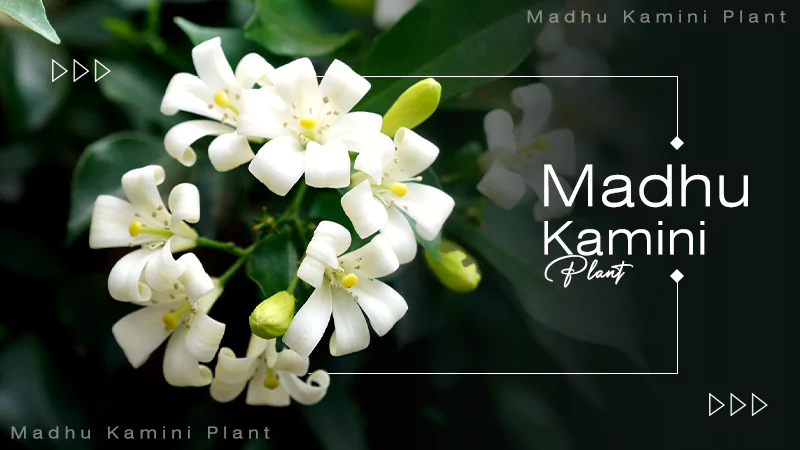
- Colour Changing Blooms: One of the most interesting aspect of these plants are their colour-changing flowers. As the flower opens, it is of pure white colour. On the second day, it transitions into soft pink, and on the third day it matures into deep red.
Because flowers keep blooming at different times, a single cluster showcases multiple colours.
- Intense Fragrance: Madhumalati has a strong yet sweet fruity scent that gets even more intense in the evenings and at night. This makes it ideal to be planted in gardens and outdoor dining spaces.
- Fast Climber: It has a fast growth rate and can grow 3 to 5 feet per season, quickly covering walls, trellises, and fences up to 15-20 feet in optimal conditions.
- Medicinal Value: Malti plant has a history of being used in traditional medicine. With its antimicrobial, anti-inflammatory, and antioxidant properties, the madhumalti plant benefits in treating many different ailments.
Did you know?
The madhumalti oil extract is used in making many perfumes and aromatherapy products. It is believed to have a calming effect on the body and mind.
Madhumalti Plant Benefits
There are many benefits of growing Rangoon Creeper, from adding flowers and greenery to better utilizing vertical garden spaces. Here are some of the important benefits of the Madhumalti plant.
- Aesthetic Appeal: Madhumalti transforms gardens to colorful landscapes with their blossoms that begin as white and develop into pink and deep red shades upon maturity.
- Attracts Pollinators: Butterflies and other pollinating insects will be drawn to the flowers, thereby creating a healthier garden that attracts more pollinators.
- Natural Green Cover: Madhumalti is a vine, therefore, it has the ability to provide more than just foliage, in that it flourishes across fences, walls, arches, and pergolas with its vining beauty.
- Vertical Gardening: Madhumalti can grow upward with proper support, which helps garden lovers to introduce flowering plants without occupying their ground space.
- Relatively Low Maintenance: Madhumalti is a relatively low-maintenance plant however, it still needs adequate sunlight, regular watering, occasional feeding, suitable support, and pruning.
- Easy to Propagate: Madhumalti can be grown with healthy stem cuttings, which makes it easy for gardeners to grow new plants from their old plant.
Single Petal vs Double Petal Madhumalti Flower
Madhumalti is available in both single- and double-petalled flower forms. Both have the same basic growing requirements, but they differ in flower appearance.
Single Petal Madhumalti Flower
- Classic variety with simple, tubular flowers
- Colour changes from white to pink to deep red
- Fast-growing and fragrant
Double Petal Madhumalti Flower
- Fuller, layered blooms with a more ornamental look
- Creates a denser floral display on the vine
- Fragrant and similarly easy to grow
Both varieties can grow under similar growing conditions. Choose the single-petal type for a traditional look, or the double-petal type for fuller, more ornamental blooms.
How to Grow Madhumalti Plant
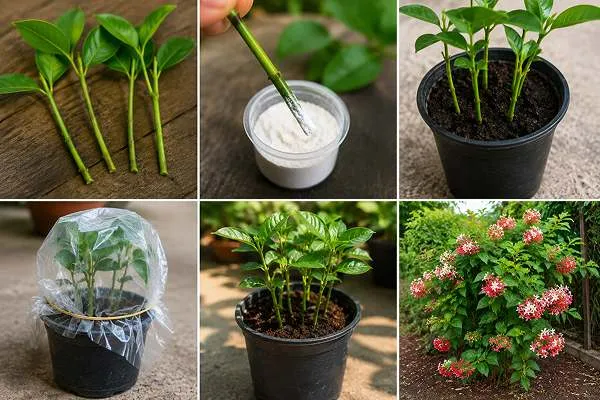
The best time to grow Madhumalti vel is in the spring or early summer through stem cuttings. The process includes selecting a healthy cutting, placing it in rich potting soil, ensuring proper sunlight and watering, and transplanting to a larger container or the ground.
Take a look below to learn the steps to propagate the plant:
Checklist of Materials Needed
- Plant cuttings
- Potting Soil
- Pot or Container
- Water
- Rooting Hormone Powder
- Plastic Bag
- Sharp Pruning Shears
- Step 1: Choose the healthy 4-5 inches long cuttings with at least 2-3 leaves. Select the ones that have not flowered yet and don’t show any signs of damage.
- Step 2: Prepare the selected cuttings by cutting the bottom of the stem at a 45-degree angle below the leaf node. Dip the cut end into rooting hormone to encourage root growth.
- Step 3: Make drainage holes in the pot and fill it with potting mix. Bury the end of the stem into the soil. Water the soil lightly to settle it down.
- Step 4: Cover the container with a plastic bag and secure it with a rubber band to create a mini greenhouse. This will help provide the right humidity to make it grow optimally.
- Step 5: Place the pot in bright indirect sunlight and maintain consistent moisture. Within 4-5 weeks, the roots will form.
- Step 6: As it establishes a strong root system, transplant it into a larger container or to the ground.
Pro Tip
Repot the young plants annually to a 1-2 inch larger container to support its growth. In the case of larger plants consider repotting every 2 years.
How to Care for Madhumalti Plant?
The Madhumalti plant grows well across most of India’s plains, coastal regions, and warm climates (similar to USDA zones 9-11). It only needs winter protection in cold, high-altitude regions like Himachal Pradesh and Kashmir. It needs direct to partial sunlight, consistent moisture, and well-drained, fertile soil. The perennial also benefits from occasional pruning, fertilizing, and mulching.
Let’s see the madhumalti plant care calendar before the detailed care measures:
Quick Rangoon Creeper Care Calendar (Month by Month)
- March to May: Trim the old leggy stems in the early spring to encourage new growth and blooming. Feed the plant with balanced organic fertilizer or compost. Also, increase watering as the weather is warming up.
- June to August: Provide consistent watering in summer. For potted plants, water daily during peak heat. Apply slow-release liquid fertilizer every 3-4 weeks to support flowering.
- September to October: Monsoon offers heavy, fragrant blooming. Ensure that the pots or garden beds drain well to prevent waterlogging.
- November: Clean up the spent flowers and lightly prune the wild shoots. Stop feeding the plant as cooler weather approaches.
- December to February: In the cooler zones, the plant drops some leaves and slows down. Reduce the watering and water only when the soil feels dry. Move the pots to a frost-free shelter if the temperature drops near freezing in your region.
Now that you have understood your monthly care tasks. Here are the general care measures that you have to follow:
Sunlight
Madhumalti in English Rangoon creeper needs direct sun to partial shade to thrive well. Place the perennial in a spot that receives at least 6 hours of direct sunlight. Provide afternoon shade if your area receives harsh sunlight.
Soil and Fertilizer
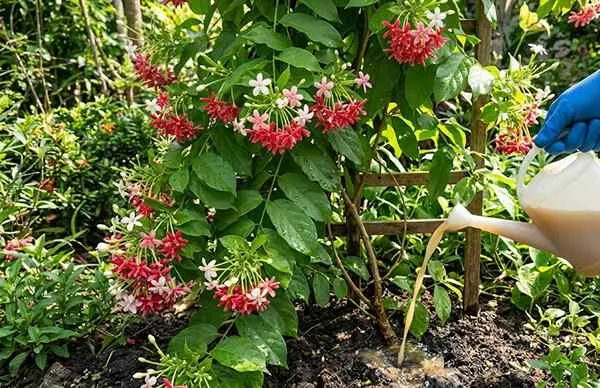
Madhu Malti plant prefers well-drained, fertile soil that is rich in organic matter. If the soil area is heavy clay it’s better to amend it with compost or peat moss to improve drainage.
In madhumalti flowering season, it benefits from regular fertilizer applications. It’s best to use a water-soluble fertilizer every 3-4 weeks to support its growth. Do not overfertilize; it will lead to excessive foliage but fewer blooms. If you like to grow plants without chemicals, you can use organic compost and cow manure also.
Watering
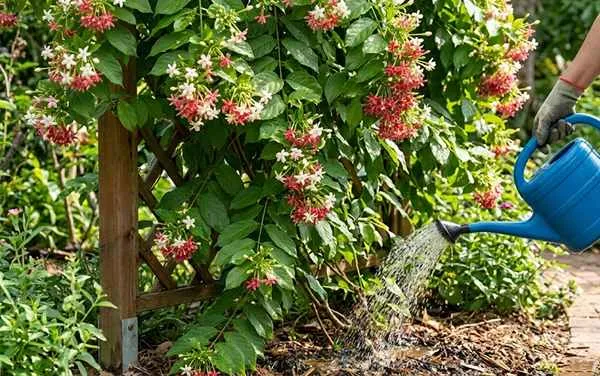
Madhabilata tree needs regular moisture once or twice a week, especially in its active growing season. Consistently water it, while avoiding waterlogging. Once the roots are well established in the plant, it can tolerate some drought. But for abundant growth, regular watering is always beneficial. Cut back watering in winter as the plant enters its dormancy.
Pruning and Support
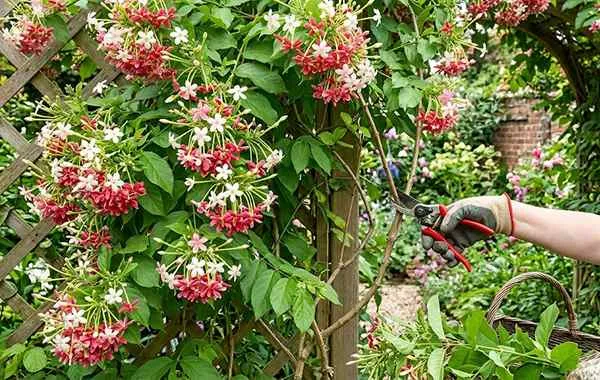
Pruning supports growth and prevents the plant from becoming leggy. Cutting back the perennial in early spring encourages new growth. Trim again after the end of the flowering season to provide structure. Focus on removing the dead and damaged branches and suckers that appear at the base of the Rangoon Creeper.
As it is a climber, it needs support like a trellis, fence, or pergola to grow well. The plant’s vines can be trained in the preferred manner to give the desired look in the garden.
Growing Madhumalti in Pots
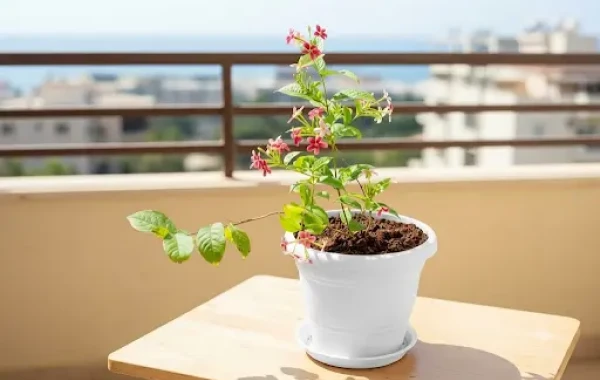
For balconies and terraces, grow Madhumalti in a pot of at least 12 inches to give its roots enough room. Use a well-draining potting mix with cocopeat and compost, place a trellis or suitable support inside the pot for the vine to climb, and keep the pot in a spot that receives full sun.
Mulching
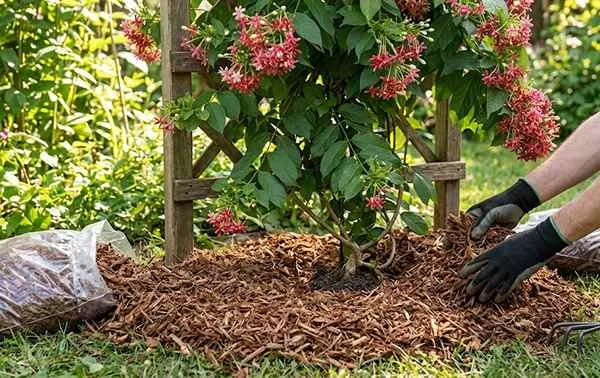
Mulching around Madhumalti helps conserve moisture, regulating the soil temperature, and suppressing weed growth. For this, apply a 2-3 inch layer of organic mulch, including leaves, straw, and wood chips in early spring. Top it up in autumn if it is needed.
Winter Care

If you live in colder regions, you may grow Rangoon creeper plants in pots and bring them indoors during the winter months to prevent frost damage. You may also cover the plant with a frost blanket or burlap to protect it from hard freezes.
Pro Tip
Place the blooming rangoon creeper near a window. This will add in your space a sweet fragrance that works as one of its underrated charms.
Structure and Support Ideas with Madhumalti Plant
Rangoon Creeper is a fast-growing, vigorous woody vine. It works well for covering fences and walls, framing entryways, and creating a privacy screen.
| Structure | Idea |
Pergolas and Gazebos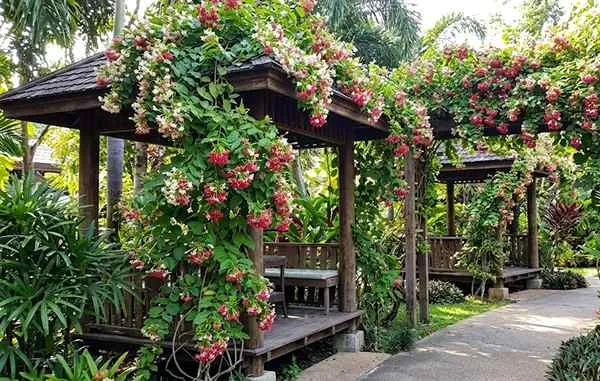 | Train the Madhumalti flower vines to climb over the pillars. With time, it will form a dense canopy that offers cooling shade and evening fragrance. |
Entrance Arches | Plant them on both sides of the gates or entryway. It will lead to a multi-coloured floral appearance. |
Balcony Railings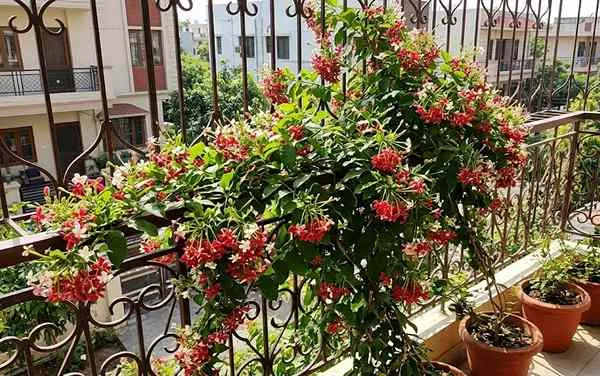 | Plant the dwarf varieties in large containers on terraces or high-rise balconies. Over time, the blooms will spill over the edges. |
Boundary Fences and Walls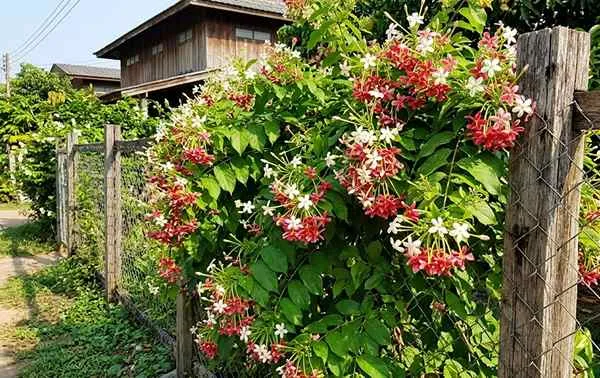 | Use wire guides or trellis against plain brick or concrete walls to add a colourful display on plain surfaces. It can also be woven through the open fences to form a dense privacy screen. |
Why Is Rangoon Creeper Not Flowering? Common Causes and Fixes
A healthy-looking Madhumalti vel that fails to bloom is one of the most common complaints from Indian gardeners.
Here are the main reasons and how to fix each one.
Leggy Growth
Leggy growth or sparse vines can be caused by a lack of pruning and no structural support.
- Fix: Provide support with a trellis, balcony, or fence to guide the climber. Also, occasionally prune back unruly stems in early spring or autumn to encourage better shape.
Poor Flowering
Lack of sunlight and overfertilizing may cause poor flowering. The plant needs at least 5-6 hours of sunlight daily to bloom abundantly.
- Fix: Move the plant to a brighter spot and feed it with phosphorus-rich fertilizer instead of a high-nitrogen one.
Spider Mites and Mealybugs
Pests like spider mites and mealybugs may appear in hot and dry conditions. Warm weather speeds up their growth.
- Fix: For spider mite or mealybug treatment, spray leaves with water to increase humidity. Apply organic neem or insecticidal soap in severe infestations.
Leaf Drop
Leaf wilting or dropping is normal during winter, and usually it is not a sign of any disease. If leaves are dropping in summer, it is generally caused by underwatering or improper sunlight exposure.
- Fix: Water the plant deeply until water runs out of the bottom of the pot. Move the pot to a sunny spot to ensure optimal sunlight.
Not Enough Sunlight
Rangoon Creeper need regular access to full sunlight to grow vigorously and produce more flowers, with lots of flowers. A lack of direct sunlight causes the growth of thick, dark leaves and stems.
- Fix: Relocate or rotate the planter to a location where it will receive adequate direct sunlight.
Too Much Nitrogen Fertilizer
Too much nitrogen can make a plant grow lots of leaves but fewer flowers, especially if you keep feeding it high-nitrogen fertilizer over and over.
- Fix: Switch to a phosphorus fertilizer (bone meal or flowering fertilizer) and apply every 4-6 weeks during the growing season.
No Pre-Spring Pruning
Failure to prune the plant properly at the right time may result in excessive vegetative growth of plants, which may hinder the plant’s ability to form flower shoots as well.
- Fix: Make sure to prune in the late winter or just before the most active growth period in your area. Remove all unnecessary or excessive growth but leave the main structure of the plant intact.
Season and Temperature
Madhumalti is a tropical plant that grows and flowers the most through Spring to Fall. However, it has been noted that during Cold seasons, it will lose leaves and may suffer from growing too much and getting frost.
- Fix: Winter growth may be slower and have less flowers, however, this may be normal with all plants. If a region has frost, but is mild, protect the plant from getting too cold, or put the plant in a protected/indoor space.
Frequent User Queries Related to Madhumalti Plant
A plant grower’s journey is surely filled with daily learning. On Reddit, I found many queries regarding the care of their Rangoon creeper plant, including its support, dark spots on leaves, and blooming.
Let’s look at some of them and find their possible solutions:
- Divkashy shows his concern: Rangoon creeper help! In the provided image, there is yellowing between leaf veins and a few dark spots. The user also mentions that water, drainage, and sunlight seem fine.
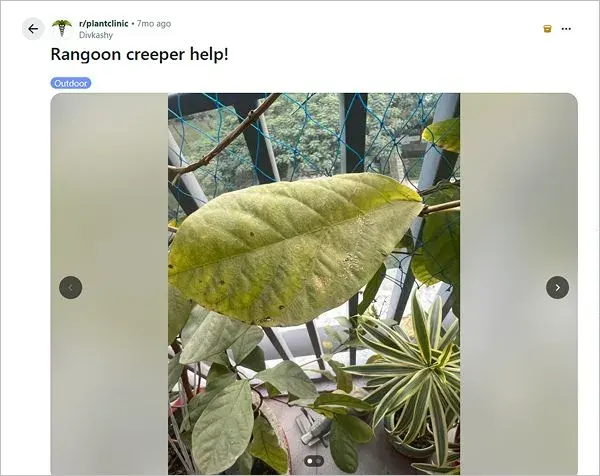
Solution: The reason for the yellowing and spots on the leaves could be cold stress or nutritional deficiencies. Check the undersides of the leaves first for signs of pests. Remove the affected foliage and apply balanced fertilizers. If it continues to spread, treat it with fungicide.
- Logical_Escape_6008 asks how to train this Rangoon creeper to climb over the gate canopy.
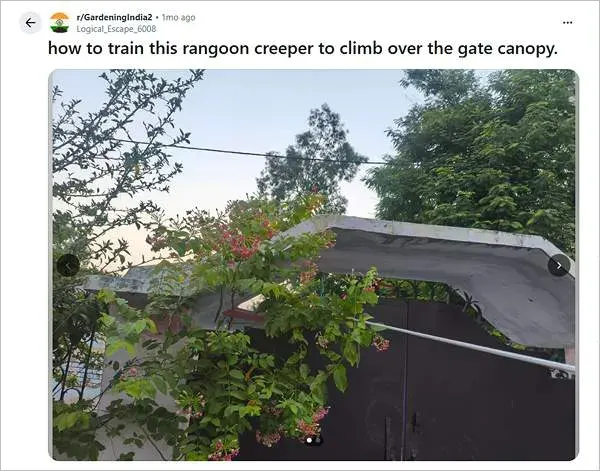
Solution: This plant needs support if you want to make it climb over the gate canopy. With plant ties, tie the young shoots to the canopy and guide them in the direction you want. Also, do regular pruning to maintain its shape.
- Flaky-Boysenberry-37 wants to know: Will my Rangoon creeper bloom this year? She also says that all the old leaves in the plant dropped in December, and it has not bloomed till September. The fertilizers used are bonemeal, vermicompost, and an NPK solution (once).

Solution: From the image, the plant looks healthy, so there is a chance that it will bloom once the weather warms up. Too much nitrogen can negatively affect its growth. Hence, it’s suggested to switch to phosphorus- or potassium-rich fertilizer instead.
Final Thoughts
Madhumalti (Rangoon Creeper) is famous for its flower clusters that magically change colours. from white to soft pink and finally to deep red. This perennial has therapeutic properties and is widely used for ornamental purposes in balconies, entryways, and in gardens.
Bring the Rangoon creeper home to build a pollinator-friendly garden. By fulfilling the plant’s sunlight, water, and soil requirements, you can see it blooming abundantly in your outdoors.
What is the bloom time of the madhabilata flower?
The plant blooms from March to November, with peak flower production in the warm summer and monsoon.
What do you call a madhumalti flower in English?
Madhumalti is called Rangoon creeper or Chinese honeysuckle.
What should I do if the Rangoon creeper plant is waterlogged?
To save the waterlogged plant, stop watering immediately and move potted plants to a bright spot. If root rot has started, repot the plant in fresh soil and cut the mushy black roots.
What should I do if the malti plant is moldy?
If the plant is moldy, wash the foliage with soapy water and prune the affected stems. Spray the plant with organic neem oil.
What is the Madhumalti flowering season in India?
The flowering period of Madhumalti in India is from February until May, and again from August until November, with its respective flowering schedules being dictated by the local environments and climatic conditions.
Can Madhumalti be grown in a pot?
Yes, it can grow in a 12 inch pot, when provided a trellis or support, and a full sun position. They also require a loose potting soil mix with cocopeat and compost.
How fast does Madhumalti grow?
Under ideal conditions Madhumalti plants can grow 3 to 5 feet per year and can reach a max of 15-20 feet with proper support.
What is the difference between Madhumalti and Bougainvillea?
Both are climbing plants but belong to different species. Madhumalti produces fragrant, tubular flowers in various colors. Bougainvillea produces brightly colored, papery bracts that are not scented. Madhumalti needs slightly more moisture and shade than Bougainvillea.
Can Madhumalti survive North Indian winters?
Madhumalti slows down growing in North Indian winters (December-February) and may even shed a few leaves when it gets too cold. They will grow back on their own in March when the temperature picks up. Avoid pruning and repotting during winters.
Does the Madhumalti plant attract snakes?
No, this is a myth. The Madhumalti plant is largely unappealing to snakes. Snakes look for prey, moisture and shelter; the Madhumalti plant does not provide any of those things.
What are the other names of the Madhumalti plant?
Madhumalti is known by several regional names across India, including Rangoon Creeper, Jhumka Bel, Madhu Malti, Madhumalti Bel, Madhumalti Ki Bel, Madhabilata (Bengali), Malati, Malti Bel, Madhumalti Vel (Marathi), Chinese Honeysuckle, and Burmese Grape Vine.
- Rangoon creeper – single and double – University of Florida
- A comprehensive review on Chinese honeysuckle (Qusqualis indica): A Traditional Chinese plant – National Center for Biotechnology Information
- Combretum Indicum Linn. A Comprehensive Review of Phytochemistry and Pharmacological Properties – International Journal of Pharmaceutical Sciences
- Study of antioxidant and anti-diarrheal activity of whole plant of Madhumalti {Quisqualis indica Linn.} – ResearchGate