

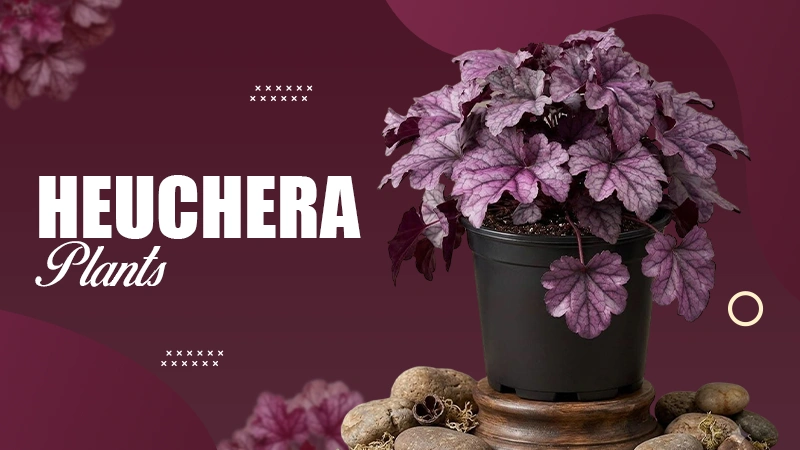
Did you become the biggest fan of this foliage-rich heuchera plant the minute you caught its attraction in your neighbour’s garden? Well, if you want to know more about it, that is the place to be. Technically, heuchera is the name of a genus in the Saxifragaceae plant family that contains various colorful species you can fill your garden with. We have included major ones in this read below.
Before you go to the nursery or an online store to buy a heuchera plant, read all the crucial things here. Learn how to plant its varieties for maximum healthy leaves! That is because no matter how much you spend, your saplings will not grow and shine until you provide them with the right conditions.
Brief Introduction About Heuchera
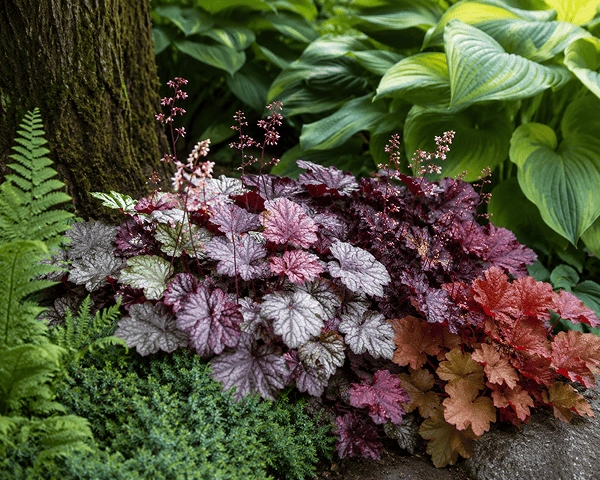
Heuchera, also known as coral bells, is a perennial that comes with very attractive and colorful foliage. It is one of the easiest aesthetic plants to grow and get eye-opening results during full bloom. Consider the most basic information regarding this plant in the table below.
| Hardiness | 4 to 9 USDA zones |
| Can tolerate (or high resistance) |
|
| Color availability | All types of colors available with beautiful patterns on leaves |
| Blooms | Heuchera plants typically produce flowers of coral, red, white, or pink colors |
| Fauna attraction | Butterflies and hummingbirds |
| Genus or Species? | Genus |
| Family | Saxifragaceae |
| Common names | Alumroot and coral bells |
This genus contains species that can be mixed and grown with all the flowering plants that bloom all year round!
How to Plant Heuchera?
The only way to plant Heuchera is to balance all the crucial aspects together, such as time, spacing, light, soil, watering, fertilizing, pruning, & pots. Consider how you do that in the following points.
- Time: The most essential piece of advice is to plant coral bells heuchera in fall and spring.
- Spacing: Don’t forget to provide ample spacing. For example, you just need to plant one sapling 1 to 2 feet apart from the other.
- Light: From full sun to shade, every type of light condition is suitable. You are going to get the best type of foliage when at least 4 to 6 hours of direct sunlight are available.
- Soil: Heuchera flowers need rich, well-drained soil conditions. However, they are also well-adapted to tolerate clay or rocky soils and even the presence of salt.
Small tip: Always check your soil quality. And, if it is all clay, ensure proper drainage first before planting your Heuchera species. Or, waterlogging will destroy them before anything grows!
- Watering: Your soil has to be well-moistened but not soggy to suffocate an establishing plant. However, once established, you don’t need to worry about watering too much, as it is drought-tolerant.
When it is particularly hot, make sure you add sufficient water to the soil.
- Fertilizing: You can use a thin layer of compost in spring. Furthermore, for Heuchera species in containers, choose a water-soluble product and use it as per the instructions provided.
- Pruning: Foliage that has withered away or is about to can be eliminated with gentle snaps using your fingers. This plant doesn’t require fancy pruning.
- Pots: You can grow this plant in any type of container. The only thing that you have to make sure of is the drainage hole. So, waterlogging doesn’t cause the death of the maturing plant!
You should know! If you want to transfer a species of Heuchera from the container to the ground, early fall is the right time to do that. If you are buying saplings online, first know about the nitty-gritty. You should know how to choose healthy saplings online for quality foliage and assured growth.
What are the Best Varieties of Coral Bells?
The best species under the genus of Heuchera, requiring minimal coral bells care, are listed and highlighted in the table below. It includes Black Pearl, Wildberry, Peachberry Ice, Wild Rose, Silver Gumdrop, and Toffee Tart.
| Species | Images | Details |
| Black Pearl | 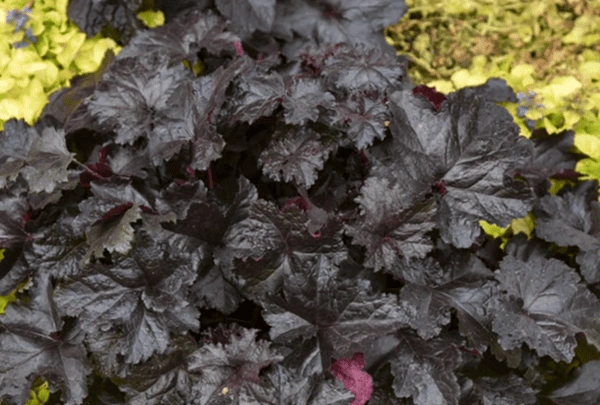 |
|
| Wildberry | 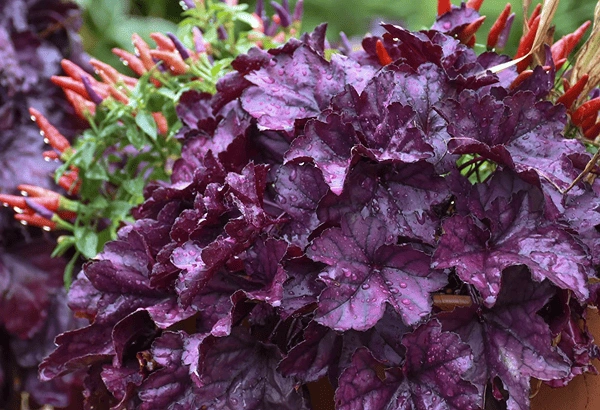 |
|
| Peachberry Ice | 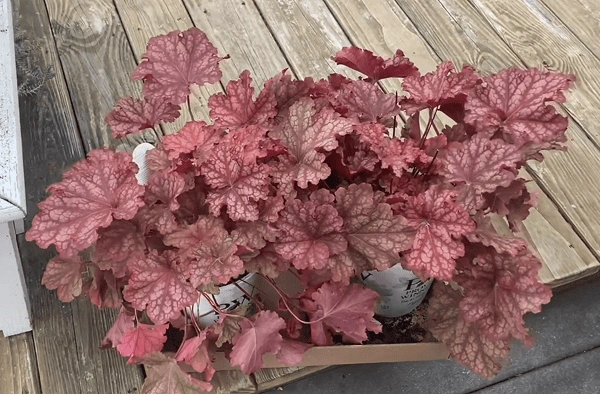 |
|
| Wild Rose | 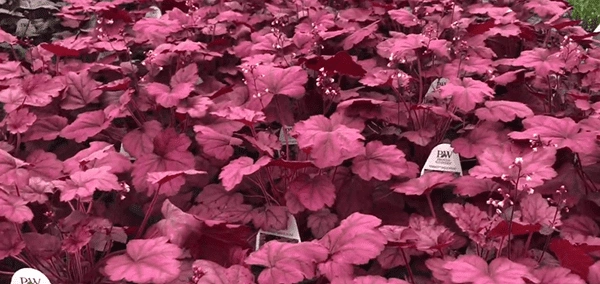 |
|
| Silver Gumdrop | 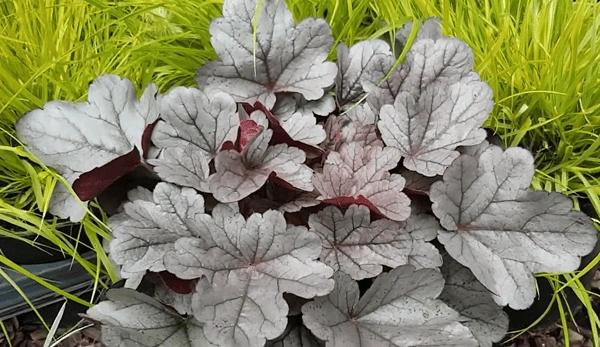 |
|
| Toffee Tart | 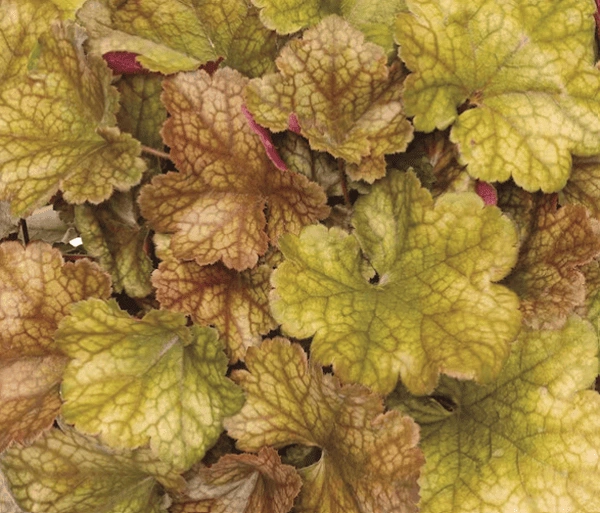 |
|
Handy advice: You can even grow all these species and mix them in your garden for maximum colors and vibrancy. That would attract most of your local butterflies and other pollinators during the blooming season.
How to Choose Which Heuchera Species is the Best for You?
You can choose what Heucheras will go well in your garden arrangement by looking at certain crucial information, such as native area, USDA growing zones, height, and sun exposure. For an idea, consider the following 10 species with this information.
| S. No. | Heuchera Plant Species | Details |
| 1. | Melting Fire | Native area: North America USDA growing zones: 4 to 9 Height: 9 to 18 inches Sun exposure: Full sun to partial shade |
| 2. | Lime Marmalade | Native area: North America USDA growing zones: 4 to 8 Height: 9 to 18 inches Sun exposure: Full sun to partial shade |
| 3. | Electra | Native area: North America USDA growing zones: 4 to 9 Height: 8 to 12 inches Sun exposure: Full sun to partial shade |
| 4. | Venus | Native area: North America USDA growing zones: 4 to 9 Height: 8 to 10 inches Sun exposure: Full sun to full shade |
| 5. | Caramel | Native area: North America USDA growing zones: 4 to 9 Height: 8 to 12 inches Sun exposure: Full sun to full shade |
| 6. | Can Can | Native area: North America USDA growing zones: 4 to 9 Height: 10 to 25 inches Sun exposure: Full sun to partial shade |
| 7. | Amber Waves | Native area: North America USDA growing zones: 4 to 9 Height: 9 to 12 inches Sun exposure: Full sun to partial shade |
| 8. | Midnight Rose | Native area: North America USDA growing zones: 4 to 9 Height: 10 to 24 inches Sun exposure: Full sun to partial shade |
| 9. | Delta Dawn | Native area: North America USDA growing zones: 4 to 9 Height: 8 to 12 inches Sun exposure: Full sun to full shade |
| 10. | Zipper | Native area: North America USDA growing zones: 4 to 9 Height: 6 to 8 inches Sun exposure: Full sun to partial shade |
Heucheras don’t last for a long period of time. However, you can keep them year after year if you follow proper splitting, dividing, and replating techniques. Tutorials are easily available in this regard on the internet.
The Best Ways to Use Coral Bells in Your Garden!
You can place Coralbells in any possible way in all types of gardens, whether small or large. And, they will keep on accentuating the looks, taking the curb appeal to the next level. Note that you don’t use this plant for indoor gardening.
However, for some ideas to get started, consider the following points.
- You can plant all colors of Heuchera species in ceramic pots and place them on the borders of the garden.
- Grouping also works well. Just place potted, well-established plants in groups of 3 to 4 at random in different places. It particularly works best with other foliage-rich outdoor garden plants, such as Artemisia, Boxwood, Caladium, etc.
All the species in this genus fit well when used for groundcover along with other large leafy plants for shade.
- Plant alongside a pathway to provide a prominent feel to your garden.
- If any part of your garden feels dull, you can choose the brightly foliaged species and throw them in that spot. That will uplift the overall spirit of your garden.
Did you notice? Heuchera leaves are themselves decorative! You don’t need to wait until it is the bloom season for the plant to look beautiful and rich. The foliage itself is what will keep your garden or outdoor spaces back to life all the time.
- Choose colors that would stand in contrast with the nature of your outdoor spaces and furniture there!
Avoid: You should not pick any matching colors as that blends everything up, leading to no extra value.
- If you are a big fan of a rock garden, ensure you mix any plants under this foliage-rich genus with alpines and succulents.
Handy tip: Connect with any garden community on Reddit or other social media sites. That will help you come across new ideas and try different things with this plant.
Learn About What Goes Well With Heuchera!
Heuchera plants can give a new life to your garden area if used well with other plants. Astilbe, hellebores, hosta, bleeding heart, ferns, geranium, iris, bugleweed, etc., are the best species to make combinations.
However, you need to be particular about shady and sunny sites. This information is included in the table below.
| Scenarios | Corabell species to be combined with |
| For shady locations | Astilbe, hellebores, hosta, bleeding heart, ferns, lamium, and Japanese forest grass |
| For sunny sites | Artemisia, geranium, iris, bugleweed, lysimachina, daylilies, lady’s mantle, and ornamental grasses |
Ideal Places Where You Can Plant Heucheras
You might want to place a dark-colored foliage plant in a particular spot! But, do you really know if it is the right move for that particular species? Learn about various tips below in this regard. The table tells you about things to notice first before selecting containers, the ground, special spots in the garden, etc.
| Places | Things to notice |
| Containers | Pick up large ones with proper drainage for maximum growth. |
| The Ground | Choose the soil that is not clayey in composition. That is because such soil has high water retention capabilities, which will kill your healthy Heuchera plants. |
| Partially shaded areas | All species under this plant genus grow perfectly well in partial shade. [Note: Best for paler-leaved coral bells plants. They get scorched with too much sunlight!] |
| Sunnier spots | These are best for dark-colored foliage, as full sun provides depth to their texture. |
| A prominent spot (that catches the sight of most visitors) | It is best for this genus when combined with other low-lying plants. |
| Under shrubs with some canopy | Such are the most preferred spots for many variants in this plant family. And there is no need to worry too much about heuchera care as well. |
| Spots with established tiarellas and heucherellas in your garden | This combination is suitable for most plants under this genus, as they prefer similar growing conditions. |
Is Heuchera the Right Choice for Your Garden?
All the heuchera species bloom perfectly in full to partial sun. So, it is the right choice if your garden receives 4 to 5 hours of direct sunlight. However, if you have variants that need more shade, try to plant them under the plants with large foliage so that shady conditions can be maintained!
If you choose the “Can Can” Heuchera coral bells that can grow up to 25 inches, make sure you provide enough space for it to grow. The container should be large, and once sufficiently established, place the plant in rich garden soil.
Conclusion
Heuchera is practically known for its rich and vibrant foliage. Pick up any type of heuchera, and you will be taken aback by the intricate yet beautiful patterns on its leaves. A well-established plant in this family looks like a beautiful bouquet in itself. It doesn’t need to wait for the blooming season to shine! Additionally, you have plenty of colors to pick from and decorate your outdoor areas. What more does a gardener need?
Do heucheras like shade or sun?
Some like shade and some sun. If you aren’t sure, always plant your heucheras in pots so that you can later move them to the best preferred conditions.
Does heuchera come back every year?
That is why this genus is categorized as a perennial.
Will heuchera spread?
they don’t spread and invade the area themselves. They stay well rooted and grow on top wherever you have planted them initially.
- Proven Winners: Heuchera – The Ultimate Guide to Coral Bells from Proven Winners®
- RHS: How to grow heuchera
- The Spruce: 10 Best Varieties of Heuchera