
You must be looking for the best time to water plants. Well, that is the concern of many beginners who have just started out as fresh gardeners. There is no single rule that every gardener needs to follow for watering. It is a delicate practice that must be dealt with in close consideration of other factors, such as your plant’s water needs, the weather in your area, where your plants are mostly placed, and others.
For a detailed elaboration, take a complete look at the following article.
Quick Answer:
In the morning, you can water your plants from sunrise until 10 A.M. In the afternoon, simply avoid it. However, in the late afternoon, you can water your plants after 3:30 P.M. only in an emergency when you are not available for watering in the evening and your plants need water twice a day. And, as long as the evening time is concerned, consider it after 4 P.M. until nightfall. And avoid watering at night.
Best Time to Water Plants in the Morning
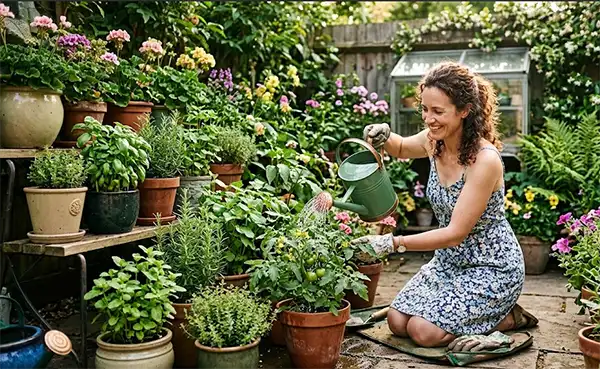
The morning is indeed the best time to water plants. Water as much as sufficient before 10 A.M. in the morning. That is because at that time, the sun hasn’t reached its peak and the atmosphere is relatively cooler. Thus, if you water at this time, very little will evaporate instantly. As a result, the soil will retain moisture for longer, and your plants will have plenty of time to absorb this essential liquid as much as possible.
Please note: All the drainage holes at the bottom of the plant pots are open and functional. The water you pour must be able to easily get out of them.
Reason (why): If a pot doesn’t have a sufficient hole for drainage, overwatering will lead to excessive water retention, leading to the death of the plant. Most plants just cannot tolerate both extremes, such as no water or a lot of water. So, pick a balanced approach!
A handy garden tip: If you have plenty of common sunflowers in your garden, make sure that you only water the roots when the top 1-2 inches of the soil gets dry!
Best Time to Water Plants in the Late Afternoon
Watering your plants in the afternoon is a bad idea! You can water in the late afternoon after 3 or 3:30 PM if it is an emergency. If you need to go out in the evening and thus you wonder if you could water your plants a little early or in the afternoon, you are not alone. Such situations often crop up. Just on those particular days, water after 3 or 3:30 P.M. That is the answer to your question, “What is the best time to water the plants in the late afternoon?” So, at least the sun isn’t at its peak at this time, and thus the harm can be minimized.
In case you ask, “When should we not water the plants?” don’t water from 10 A.M. to 3 or 3:30 P.M. It is when the sun rises and reaches its peak!
Furthermore, consider the following major reasons why you shouldn’t water your plant in the afternoon.
- Leaf scorch: Whenever you have to water in the late afternoon as an emergency watering plan, only water the roots. If you sprinkle water on leaves, they can get scorched due to water droplets acting as lenses and magnifying the heat of the sun. That also happens due to a rise in humidity.
- Temperature shock: When you pour cool water over hot plant roots or leaves, that leads to a very strong shock, weakening the structure of the plant considerably. It is like the pain in your tooth nerves when you have something too cold.
- Water evaporation: Watering in the afternoon means plenty of water gets evaporated, and the roots don’t get enough to drink!
So, avoid watering plants in the afternoons generally. And if it is an emergency, watering the roots only, not the leaves, in the late afternoon is completely fine. And you should also follow that for all your medicinal plants.
Best Time to Water Plants in the Evening
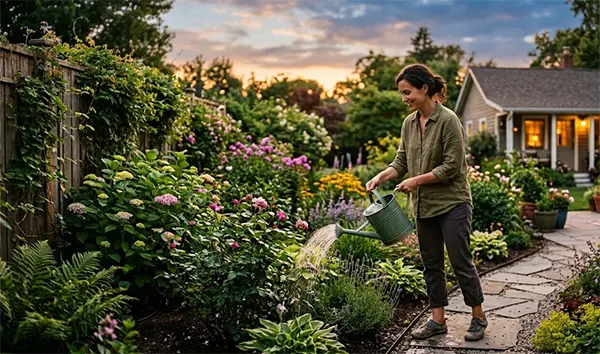
The best time to water plants in the evening is from 5 PM until sunset. That is when sunrays are soft and calming, as opposed to being aggressively harsh at noon and in the afternoon. That is the right time to ensure your plants get enough water for longer, as it will not immediately evaporate. The soil moisture retention capacity will increase.
That is when to water plants in the evening. Now, consider how to do it effectively. Don’t put it on leaves. Always water at the base of the plant so that it directly reaches the soil. Next, leaves shouldn’t be left wet overnight, as it can attract pests to build their colonies.
Focus on These Aspects While Watering Plants
In addition to the best time to water plants, you must also pay attention to the following three key aspects. These include watering deeply, watering the roots, and checking the soil. Let’s explore these before moving further!
- Water deeply: Many gardeners don’t know that they need to water as deeply as possible. Watering twice deeply is enough for most plants’ requirements. Don’t water so many times, but not at all. That will force the roots to develop mostly around the surface, making them more vulnerable to scorching heat and other dangerous factors in the environment.
- Water the roots: The second rule that you need to pay attention to is to water the roots, not the leaves. That is a crucial practice in plant care. This helps ensure deep watering and prevents diseases of the foliage due to excessive moisture.
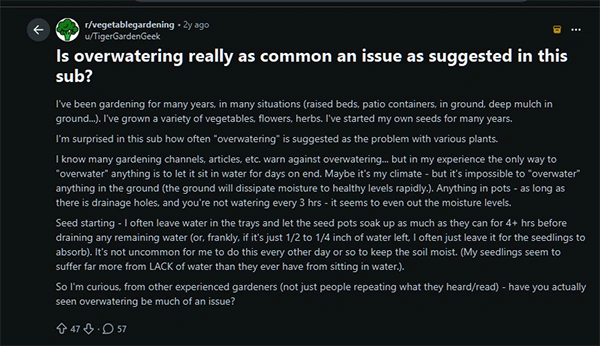
But don’t worry if you have accidentally put a little too much water in your plant. That is not going to kill it. Consider what the following redditor has to say about it.
- Check the soil before watering: Only water a plant when it feels dry at least 2 cm below the soil surface. Excessive watering or overwatering is also one of the reasons your plants might be dying!
These rules also hold true for big flower trees such as the Ashoka Tree.
How to Water Plants the Right Way
The best time to water plants is in the mornings, but using the right technique matters as well. It includes using the right dispenser, watering the base, pouring slowly, and other aspects such as those provided below.
- Use a watering can with a narrow opening: It will help you direct water precisely without wasting it or sprinkling it over unwanted places, such as the foliage.
- Water the surface of the soil base: Make sure that you pour the water into the soil directly. Watering from the top of the plant leads to the wastage of water. Soil doesn’t get enough moisture this way. And roots have to face less water reaching their nodes!
- Pour slowly: When you pour water, do it slowly. That way, you ensure the soil gets some time to soak the water, and it just doesn’t get spilt out over the rim of your pot by overflowing!
To avoid this, you can also follow the technique of watering more than once in a row, with a few minutes of gap between two consecutive watering sessions.
- Stop when water drains from the bottom: At this point, you might ask when you need to stop watering as prescribed in the 3rd step! You need to stop watering when the draining holes at the bottom begin to let the water out!
- Keep leaves dry: Always remember that you only need to water the soil, not the leaves or foliage. That helps save water, as watering the leaves is of zero consequences.
Do you have this concern: ‘Is it ok to water plants at night?’ Consider this information. Morning is best, as water will not remain around the pot for too long. The sun will eliminate it through evaporation. But when you water it at night, it will remain there for hours, attracting fungal infections and molds.
When is the Worst Time to Water Plants?
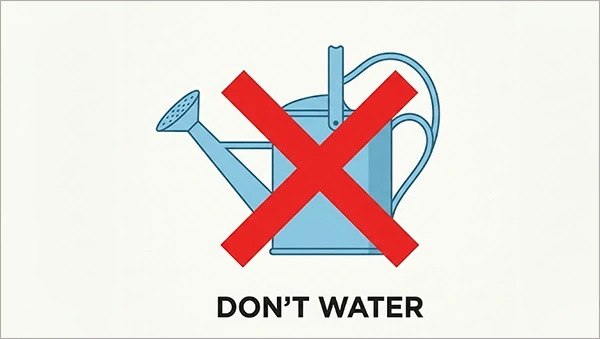
To be precise, avoid watering your plants from 10 A.M. to 4 P.M. That is because during this window the sun is at its peak, and thus the heat is maximum in the environment. Pouring cold water will shock your plants!
Thus, always water outside of this worst window. And don’t forget to avoid watering at night as well.
How Many Times Should You Water Plants in Summer?
For outside plants in your garden, you should water them twice a day. First, you should water in the morning, and second, you should water them in the evening. And keep in mind the right time mentioned above for watering your plants.
Next, when it comes to watering indoor plants, even if it is summer, don’t water without checking the moisture level in the soil. Just remember that you don’t water until the soil feels dry up to 1 to 2 inches.
These rules also apply to plants such as English Ivy, Geraniums, Coleus Plants, etc.
What Are the Signs of Overwatering?
The major signs of overwatering are yellow leaves, soggy soil, a musty smell, mushy stems, and fungus gnats. If you get any of these signs, make sure that you pour plenty of water into the soil.
- Yellow leaves: That is the first sign you shouldn’t ignore. See if lower leaves have started turning yellow.
- Soggy soil: One of the golden rules of watering plants is that you don’t water until at least 1 to 2 inches of the soil feels dry. So, if your soil constantly remains soggy, make sure to place your plant near the sunlight.
Don’t put it in direct sunlight if it is a plant like Thai Constellation Monstera or a species less tolerant of direct sunlight.
- Musty smell: Constant moisture in the soil breeds bacterial or fungal growth, which leads to a musty smell. That is not good for your home if we are dealing with indoor plants.
- Mushy stems: Another way to check if you have been overwatering is through mushy stems. The base stems will feel soft and delicate. This happens due to damage to the plant cells caused by excessive water.
- Fungus gnats: These tiny flies are only found near damp surfaces. So, watch for these flies.
Do you know? Putting in too much water is as bad as underwatering. Too much H2O means poor oxygen at the root level. And too little or no water means dry roots.
How to Deal with the Problem of Overwatering!
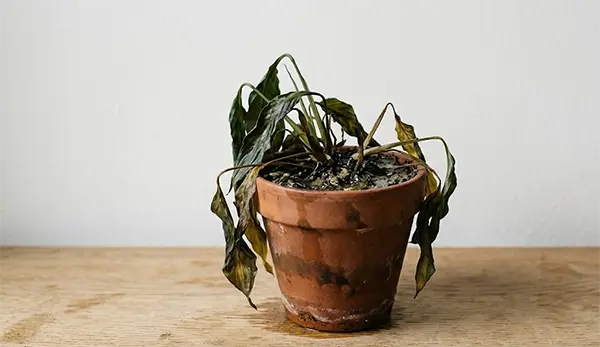
Along with learning about the best time to water plants, learning about how to fix the challenge of overwatering is also important. If you have accidentally put excessive water at the base of your plant, the simple solution is as follows.
- First, clean all the fungus on the soil surface and around the pot with a piece of cotton cloth.
- Then, place the pot near or in the sunlight, as per the plant’s ability to tolerate direct sunlight.
- Once the soil loses excessive water and feels dry, bring the plant to the shade.
- Lastly, only water your plant when it feels dry enough up to 2 inches deep in the soil.
If your plant doesn’t recover even after that, the root rot must have gone beyond your capacity to handle at home. Consult an expert or buy a new plant, and never make the same mistake again.
Conclusion
Hence, the best time to water plants is in the mornings before 10 A.M. and in the evenings after 4 P.M. Make sure that you don’t water at night. But that is not all. You also have to schedule your watering sessions as per the specific requirements of a plant. Some plants don’t need water for days. Or some want twice a day. So, just plan it according to the plant’s water needs.
What is the best time to water plants in India?
If your plant needs to be watered once a day, morning is the best time. You can water at any time from 5 A.M. to 10 A.M. Or, if it needs to be watered twice a day, do it in the morning in the mentioned window and in the evening from 4 until nightfall.
Is it better to water plants in the morning or evening?
Yes, both times of the day are best. But make sure that you only schedule your watering sessions as per the plant’s water needs.
What is one major sign of overwatering plants?
The ever-present dampness in the soil and soft stems prone to easily bending down are major indications of overwatering.
Why should we not water in the afternoon?
That is because it shocks the roots, and there is always the risk of your plant getting scorched.
Do all plants need to be watered every day?
No, not all plants have high water intake needs. For that, you just need to learn about your plant better first.
- Southern Living Plants: When to Water
- Iowa State University: When is the best time to water the garden?