

Lobelia is a perennial that is often grown as an annual plant in many places and is popularly chosen by gardeners because of its varieties. The plant belongs to the Campanulaceae (bellflower) family and was first described by Carl Linnaeus in 1753.
Lobilia has more than 400 species of flowering plants, which are native to almost all the warmer regions of the world, except eastern Europe and western Asia.
To know more about lobelia plant taxonomy, ideal growing conditions, care tips, etc read the article below.
Taxonomy and Ideal Growing Conditions for the Lobelia
Lobelia are annual or perennial herbs or undershrubs. There are lobelias as well, which are found at higher elevations in Africa. The plant is known for its beautiful flowers that bloom all year in various hues of pink, white, red, purple, and blue. It is also known for its pollinator-friendly characteristics.
For more general information, here is the taxonomic overview and ideal growing conditions of the plant:
| Botanical name | Lobelia erinus |
| Common names | Lobelia, annual lobelia, edging lobelia. Laguna flower |
| Kingdom | Plantae |
| Order | Asterales |
| Family | Campanulaceae |
| Subfamily | Lobelioideae |
| Genus | Lobelia L. |
| Hardiness | 10 – 11 USDA zone |
| Light Requirements | Full sunlight with partial shade |
| Maintenance | Low |
| Plant type | Annual, perennial |
| Bloom season | Summer, fall |
| Flower colour | Red, pink, purple, blue, and white |
| Soil | Well-drained, moist soil with slightly acidic to neutral pH levels of 6 to 7. |
| Water Requirements | Keep the soil regularly moist. In dry areas, you might be required to water the plant more often to maintain soil moisture. |
| Mature size | 6 to 9 inches tall and 9 to 11 inches wide |
| Fertilizers | Lobelias are heavy feeders and prolific bloomers. Fertilise the plant every two weeks for best plant growth and blooms. Tip: Use liquid fertiliser for flowering plants because they are rich in phosphorus, which promotes blooming. |
| Native area | Africa |
| Toxicity | Toxic for pets and humans |
Different Varieties of the Lobelia Plant
The tender perennial Lobelia erinus is usually grown as an annual. There are different varieties of lobelia plants, some of which are listed below:
| Variety | Description |
Lobelia cardinalis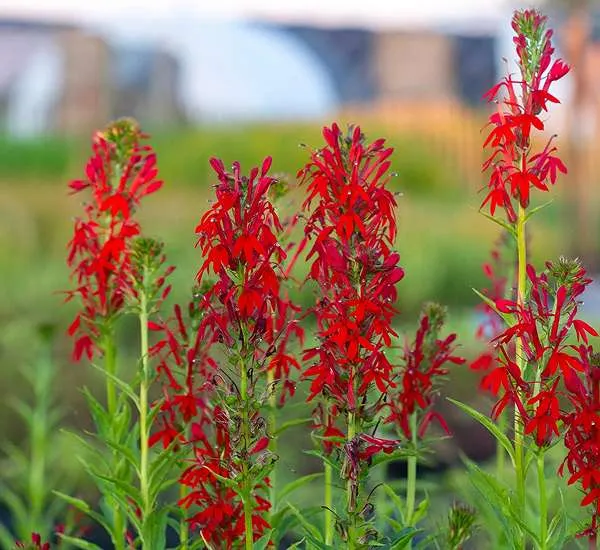 | Lobelia cardinalis is a hardy perennial with red blooming flowers. The plant has an upright growth habit and is also a pollinator-friendly plant that attracts hummingbirds. One of the major characteristics of this plant is that it reseeds easily. |
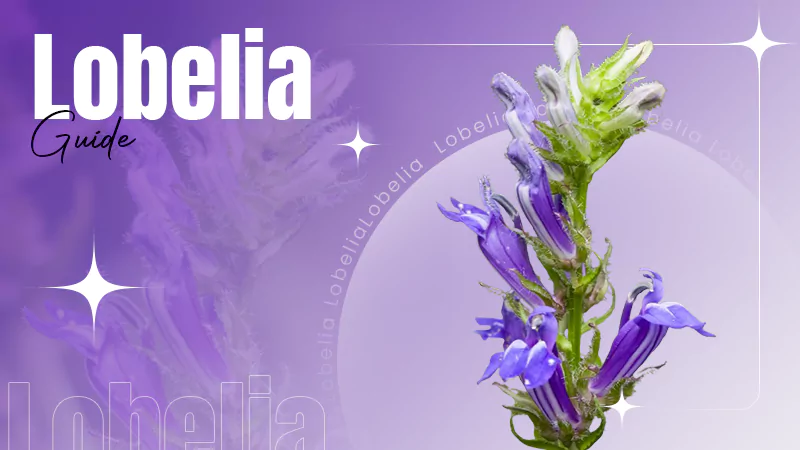
Lobelia siphilitica 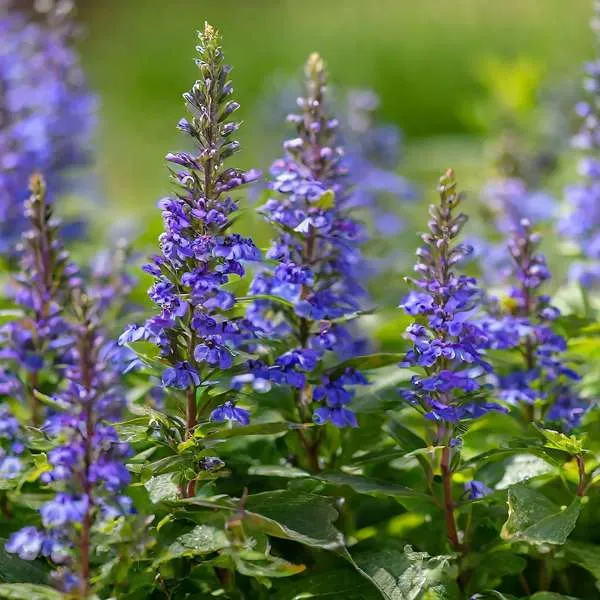 | Lobelia siphilitica is also known as the Great Blue Lobelia plant. It is a hardy perennial with blue flowers and grows upright. |
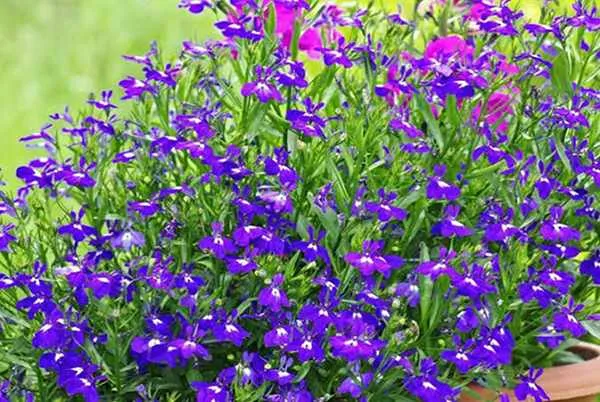
Lobelia erinus ‘Laguna’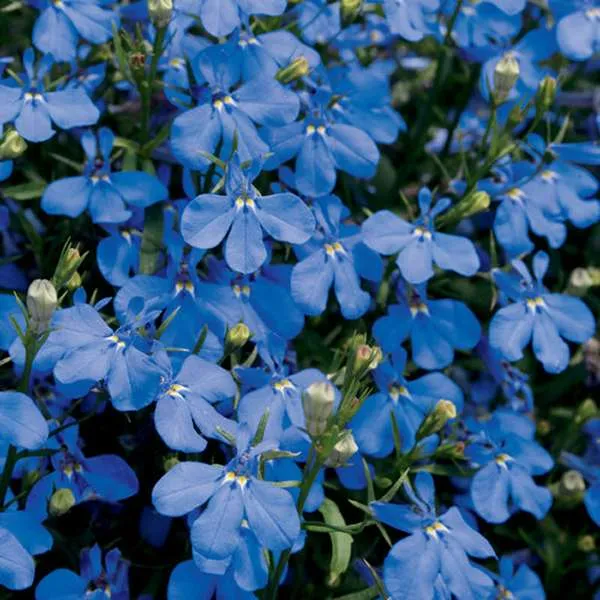 | Laguna is a tender perennial with blue flowers and has a trailing habit. It is a heat-tolerant, self-cleaning trailing annual known for its continuous bloom from spring till first frost. |
Lobelia erinus ‘Alba’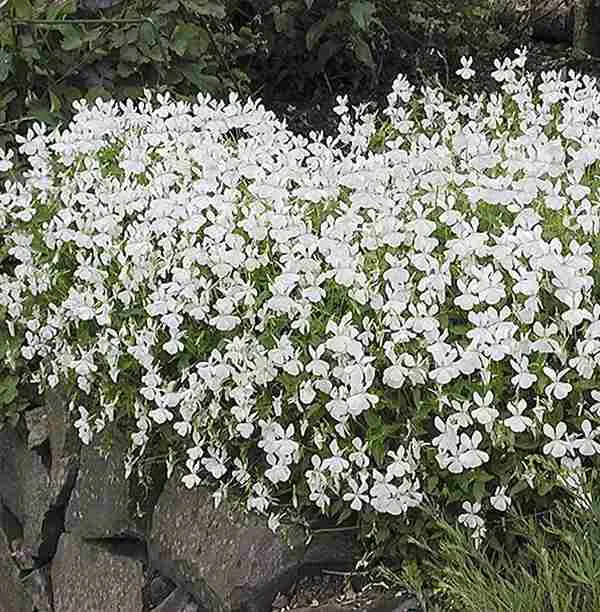 | Alba is a tender perennial with beautiful white blooms and a trailing growth habit. It is popular for its compact size and is often used by people for its aesthetic value. |
Lobelia erinus ‘Lilac Fountain’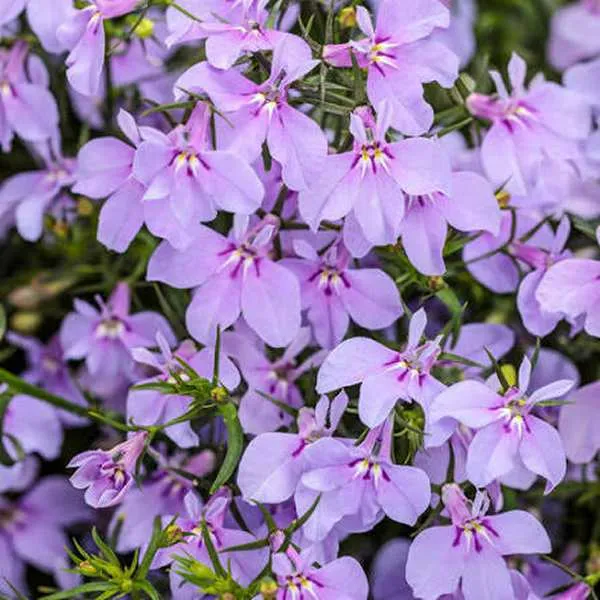 | As the name suggests, Lilac fountain blooms lilac-pink blooms and is a tender perennial with a trailing growth habit. It is a fast-growing variety that spreads 10 to 12 inches wide and 8 to 12 inches high. |
Lobelia erinus ‘Rosamund’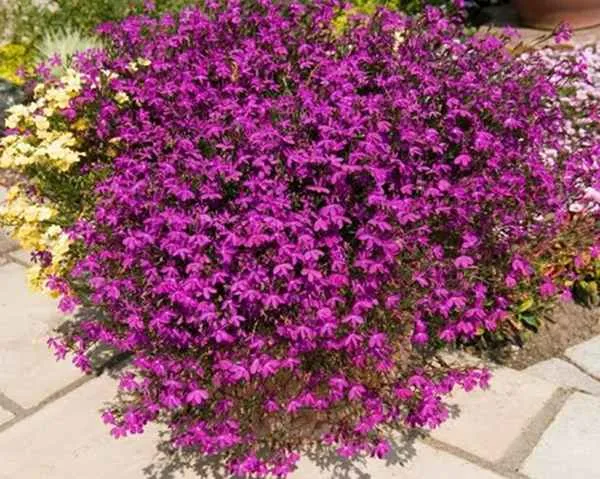 | Rosamund is again a tender perennial with cherry-red blooms and a trailing habit. The plant belongs to the compact variety, which grows around 10 to 15 cm tall and 20 to 30 cm wide. |
How to Grow Lobelia?

Growing a Lobelia plant is a low-effort task. You need to follow some simple steps to ensure a good plant. Here is a list of some steps to grow lobelia from seed:
- It is recommended to start planting the lobelia seeds indoors around 6 to 8 weeks before the last frost.
- Spread the seeds of the lobelia plant evenly in the seedling tray filled with seed-starting soil. Ensure that seeds are not buried under the soil.
- Place the tray near the window for good lighting.
- Mist the soil with water to maintain moisture in the soil throughout. Make sure that you do not overwater the soil to avoid any kind of infection.
- In the right conditions, the seed will start to germinate within 2 to 3 weeks after sowing.
- Once the spring season begins, you can plant your lobelia plant outdoors in the garden or in any suitable space.
- Be careful while transplanting the seedling to ensure no roots are damaged.
- While planting multiple seedlings, ensure that there is enough space of around 4 to 6 inches between the saplings. This will help in better air circulation and good plant growth.
- Since the lobelia plants are heavy feeders, make sure to fertilise the plants every two weeks for better blooming. Use liquid fertilisers that are formulated for flowering plants and are enriched with phosphorus. Avoid using a fertilizer that is rich in nitrogen and potassium.
Lobelia Plant Care Tips
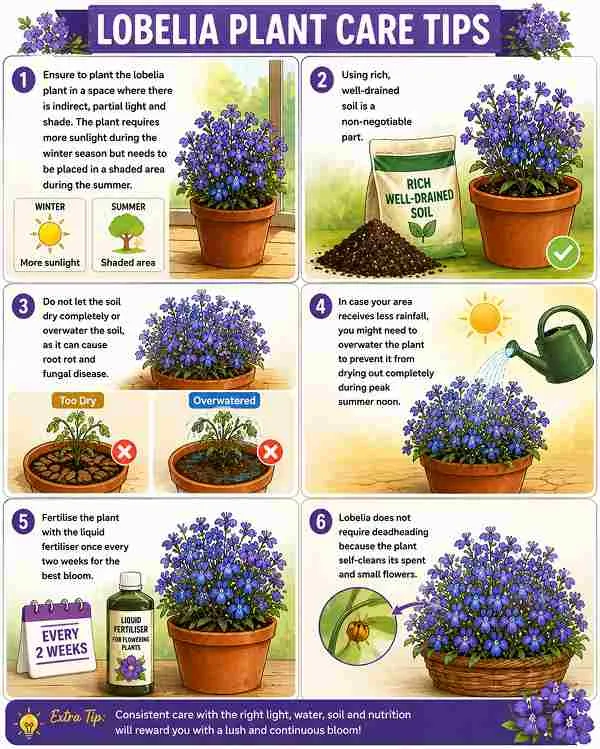
After growing the plant, its care is one of the most essential steps for good blooms and plant growth. Here are some of the care tips for the lobelia plant, which helped my plant to bloom in a much better way:
- Ensure you plant the lobelia plant in a space where there is indirect, partial light and shade. The plant requires more sunlight during the winter season but needs to be placed in a shaded area during the summer.
- Using rich, well-drained soil is a non-negotiable part.
- Do not let the soil dry completely or overwater the soil, as it can cause root rot and fungal disease.
- In case your area receives less rainfall, you might need to overwater the plant to prevent it from drying out completely during peak summer noon.
- Fertilise the plant with liquid fertiliser once every two weeks for the best bloom.
- Lobelia does not require deadheading because the plant self-cleans its spent and small flowers.
Common Pests and Problems Associated With the Lobelia Plant
The pests can attack your plants and damage them. In order to avoid the pests from attacking your plant, you need to be aware of different pests and the ways to prevent them from attacking your plant. The list of pests that can attack your lobelia plant includes spider mites and corn earworms.
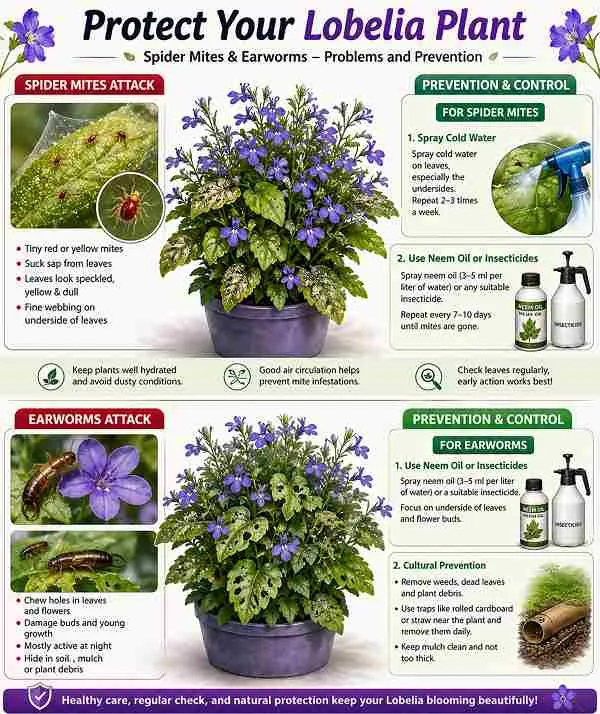
To get rid of spider mites, you can use sprays of cold water. If it is not effective, use insecticidal soap or neem oil. If corn earworms attack your plant, use insecticides or remove them manually. They are very harmful to your plant and can cause major damage, such as plant death.
The common problems that are associated with the lobelia plant are:
| Problem | Solution |
| Spotted leaves | This might happen because mites have attacked your plant. Use insecticidal soaps as soon as you spot leaf spotting to prevent it from spreading any further. |
| Browning foliage | The two most common reasons behind browning foliage are overwatering and the plant’s exposure to too much sun. To avoid the plant getting exposed to the sun too much, place the plant in a partially shaded area when growing. If it is planted in a bright area, add some shade to avoid too much sun exposure. Also, in summer, people often overwater the plant to prevent it from drying. But it turns out to be unhealthy for the plant. Avoid overwatering the plant daily. |
| Leaves curling | Leaf curling might take place because of too much heat or if the plant is experiencing any sort of drought conditions. You might need a similar solution that you used for browning foliage, and give the plant more water and shade. |
Takeaway
Lobelias are annual perennials that require minimal care and are easy to grow. The plant blooms in various hues of pink, blue, white, red, and purple, which not only makes the plant look aesthetically appealing but also makes it a pollinator-friendly plant.
The different varieties of lobelia plants make it more convenient for gardeners to choose their favourite pick. Hope you too will choose your favourite variety of lobelia plant this spring. Happy planting!
What is the preference of lobelia sun or shade?
Lobelia prefers shade during the hot noons of summer and sunlight during the winter.
Does lobelia spread?
Yes, lobelia flowers spread in the landscape, but they aren’t aggressive.
Is lobelia a perennial?
Yes, most of the species of lobelia plants are tender perennials.
Does lobelia attract butterflies?
Yes, lobelia plants are known as pollinator-friendly. They not only attract butterflies but also hummingbirds.
What are the common pests attacking the lobelia plant?
The common pests that can attack your lobelia plant are spider mites and earworms.
- Lobelia: Britannica
- Lobelias Genus Lobelia: iNaturalist
- Lobelia Flowers To Grow Together To Attract Hummingbirds: Yahoo